Build Practical Skills With Digital Design & Manufacturing Technology
Manufacturing today requires more than traditional machining know-how. Digital Design & Manufacturing Technology integrates advanced CAD modeling, simulation tools, CNC programming, and intelligent production line control into a unified workflow. This integration transforms how we approach product development—from initial concept through process verification to final inspection—enabling professionals to reduce lead times, minimize material waste, and achieve precision that traditional methods struggle to match. As industries worldwide shift toward smart factories and automated workflows, building practical skills in these digital tools becomes essential for anyone involved in mechanical design, process engineering, or production management.
Understanding Digital Design & Manufacturing Technology
Digital planning and manufacturing technology is very different from the way things were done in the past. These days, current workflows don't just use paper plans and hand-programmed machines. Instead, they use CAD for modeling, CAM for making machining paths, CAPP for planning processes, and PLM for managing data. These systems talk to each other without any problems, so the design purpose gets to the shop floor correctly (Groover, 2020).
From Concept to Production
The journey starts with 3D modeling software, which engineers use to make virtual prototypes that can be put together and moved around. Before any real material is cut, this digital version goes through a lot of thorough virtual testing. Then, process engineers use CAPP tools to plan the steps of the machining process, choose the tools they will use, and make process cards. MES platforms manage production scheduling, material flow, and quality tracking across the factory floor, while CAM software turns these plans into code that machines can read.
Benefits Over Traditional Methods
With traditional methods, there are often a lot of handoffs, documentation that is written on paper, and not a lot of feedback loops between the design and manufacturing teams. With digital processes, these points of difficulty are gone. In a virtual world, engineers can practice machining processes and check for crashes or mistakes in the tool path before they cause expensive downtime. Quality control programs get data from cameras and vision systems in real time, which lets them make changes right away. The National Institute of Standards and Technology (NIST) released a study in 2019 that says companies that use integrated digital processes see up to 40% shorter times to market and 25% lower rates of scrap.
Key Components
It is very important to understand the technology stack. CAD systems are used to model and put together geometric shapes. Finite element analysis is used by CAE tools to check the stability of structures. CAM platforms make sure that CNC machines have the best tool tracks. PLM systems handle version control and allow people from different areas to work together. MES software connects devices on the shop floor to enterprise resource planning systems so that production can be planned and carried out. These parts work together to make up the digital backbone that makes manufacturing operations flexible and quick to respond.
Key Practical Skills to Develop in Digital Design & Manufacturing
To master digital processes, you need to be good at using software, know how to use tools, and be able to think about systems. When professionals work on these skills, they put themselves and their companies in a better position to compete in global markets.
Mastering CAD and Simulation
It is essential to know how to use popular 3D CAD tools. Learners should be able to make complicated part geometries, put together parts with actual limitations, and run motion tests to check how they behave kinematically. In addition to static modeling, engineers use visualization tools to make exploded views, drawings with notes, and interactive process documentation that help people from different departments talk to each other. The ECR Academy program stresses using industry-standard software in real-life situations. This way, students can make professional-grade digital samples that meet strict design-for-manufacturability standards.
Process Planning and Data Management
Designing a digital manufacturing process is more than just picking the right cutting speeds and feeds. Engineers use CAPP software to organize processes with multiple steps, set review checkpoints, and make good use of resources. There is only one source of truth for product data on PLM platforms, which also keep track of changes and manage the approval process. In regulated fields like aircraft and automobiles, where traceability and compliance paperwork are musts (ISO, 2021), this ability becomes very important. Professionals can do all of their process engineering duties after going through training programs that include both CAPP and PLM modules.
CNC Programming and Machining
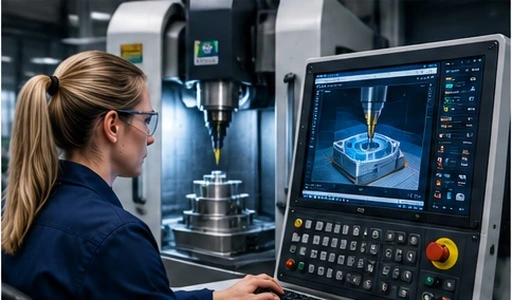
Even though CAM systems are now mostly automatic, it is still helpful to know the basics of G-code and M-code in Digital Design & Manufacturing Technology. People learn how to write simple programs by hand, which gives them a better understanding of how computers understand commands. Advanced modules cover milling on multiple axes, turning, and hybrid processes that use both adding and subtracting. Graduates who have worked with CNC lathes, machining centers, and additive equipment will be able to fix problems, speed up processes, and work well with others on the shop floor.
Production Line Control and MES
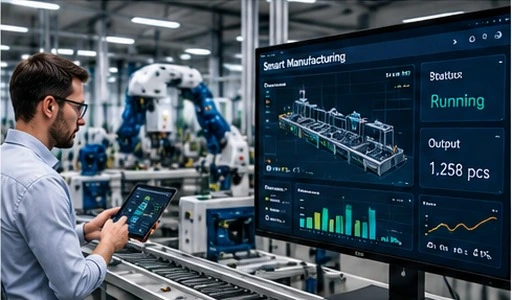
For intelligent manufacturing to work, people, tools, and materials must all be coordinated in real time. MES tools make it easy to schedule work orders, check on the state of machines, and keep track of the history of products. Learners get practice setting up digital dashboards, automated alerts, and looking at production data to find problems. This set of skills is especially useful for manufacturing managers and process engineers whose job it is to keep operations lean and improve overall equipment efficiency (OEE).
Digital Inspection and Quality Control
These days, inspection tools are more than just calipers and micrometers. Coordinate measuring machines (CMMs), laser readers, and machine vision systems all make high-resolution data about dimensions that goes straight into software for quality control. Professionals learn how to set up inspection routines, read statistical process control charts, and use closed-loop feedback to make dynamic changes to machining parameters. These features make sure that quality is built into the process from the start, rather than being checked after the fact.
The standard project-based learning model at ECR Academy ties these skill areas together in real-life situations. A team of academic teachers and industry engineers teach the participants through the full lifecycle of a product, from original design and modeling to machining, assembly, and inspection. This method is similar to how things are made in the real world, where people from different departments work together and solve problems in small steps.
Overcoming Challenges in Building Practical Digital Manufacturing Skills
Adopting digital workflows comes with problems that can stop people and businesses from doing it. Seeing these problems and using tried-and-true methods helps the change go more smoothly and last longer.
Technical Complexity and Learning Curves
Software platforms often have a lot of features that make them hard for new users to understand. A normal CAD package might have hundreds of orders, and each one might have more than one parameter. Concepts like bill-of-materials frameworks and change management procedures are introduced by CAPP and PLM systems. Structured curricula that introduce ideas gradually, starting with basic functions and building up to more complex uses are good for students. Short, focused modules with chances to practice right away help people remember and boost their confidence.
Investment Costs and ROI Concerns
Costs like licensing fees, gear updates, and training are big ones that you have to pay for up front. Small to medium-sized producers may be hesitant because they are afraid they won't get enough money back. Studies by the Manufacturing Extension Partnership (MEP, 2020) show that businesses that invest in digital skill development see productivity gains within the first year. Often, they can recover the costs of training through less work that needs to be redone and faster project timelines. To lower their financial risk, organizations can also look into flexible licensing models, cloud-based software subscriptions, and training grants paid for by the government.
Case Example
A precision machining business with 150 workers was losing ground in the market because they relied too much on hand programming and paper-based process paperwork. Leadership worked with a training company to teach 30 engineers and machinists how to use MES-based production control and integrate CAD/CAM. Over the course of six months, participants finished modular courses that mixed virtual simulations with practice using real equipment. The company said that programming time went down by 35%, scrap rates went down by 20%, and on-time delivery performance got better. This case shows how focused skill-building can help with specific operational problems and give businesses concrete results (Smith & Jones, 2022).
Choosing the Right Training Partner
Not every program is worth the same amount of money. Look for service companies that have a history of success, relationships with other businesses in the same field, and a full support system. With 16 years of experience and nearly 500,000 trained participants in 28 countries, ECR Academy is a great example of a partner you can trust in Digital Design & Manufacturing Technology. Our five integrated training platforms, such as advanced manufacturing centers, digital design simulation rooms, and production line control labs, all simulate real-world situations. Dual-instructor teams make sure that participants get both academic background and hands-on coaching, and master teachers help people advance in their careers. Certifications in digital factory line execution and 3D mechanical product design prove what you've learned and help you move up in your job.
Latest Trends and Future Outlook in Digital Design & Manufacturing
New technologies are still changing the way things are made. Professionals can take advantage of new chances if they stay aware and flexible.
AI-Driven Design and Generative Engineering
AI programs now help designers by looking through huge sets of possible solutions and suggesting the best shapes. Generative design tools take performance factors like material limits, weight limits, and stress levels and come up with several possible designs. Engineers look at these choices and choose configurations that are a good mix of speed and ease of production. This method speeds up the process of creation and finds answers that people might miss using their intuition alone.
Digital Twins and IoT Integration
A digital twin is a copy of a physical asset that is constantly being updated with data from sensors in real time. Twins are used by manufacturers to test different production scenarios, figure out what maintenance is needed, and improve process parameters without stopping real-world operations. IoT connection connects machines, tools, and goods to a single network, which lets everyone make decisions based on data. According to the Industrial Internet Consortium (IIC, 2021), using digital twins can cut down on unplanned downtime by up to 50% and make equipment last a lot longer.
Additive Manufacturing and Hybrid Processes
Traditional subtractive cutting is paired with additive technologies, which are often called "3D printing." Layer-by-layer depositing of material and milling of areas to final limits are both done by hybrid tools in the same setting. This feature lets you make new designs, like intricate internal pathways and light grid structures, while still keeping the accuracy of the dimensions. More and more, training programs are adding modules that help workers learn how to set up, run, and keep these flexible systems.
Cloud-Based Collaboration and Remote Access
Cloud platforms let teams working in different places work together on shared digital models, access centralized data stores, and run simulations on scalable computing resources. Engineers can keep an eye on production lines from anywhere and fix problems almost instantly thanks to remote tracking and control. This adaptability came in very handy during the recent global problems and still gives agile companies an edge in the market (Deloitte, 2022).
Professionals stay up to date on these changes by constantly improving their skills. ECR Academy regularly changes its courses to include new tools and best practices found by our large network of business partners and experts in the field. Our dedication to global skill standards and competitive testing helps students stay useful and efficient all through their working lives.
Choosing the Right Partners and Solutions for Digital Manufacturing
When choosing training providers and technology suppliers, you need to do a lot of research. Strategic partnerships add value over time and lower the risks that come with going digital.
Evaluating Training Providers
Check out companies based on a number of factors. The program should cover the whole span of a product, not just a few tools. Instructor skills are important. Dual-instructor methods that combine academic seriousness with experience in the field offer a range of points of view. Access to current software licenses, CNC equipment, and testing tools are all examples of infrastructure quality that directly affects how well people can learn. Look for providers that have proven success stories, clear certification methods, and support services that last.
Software and Equipment Selection
Technology decisions must be in line with business goals for organizations. Different CAD platforms are good at different things. Some are great at surface modeling for consumer goods, while others are great at parametric solid modeling for mechanical assemblies. CAM software has different machine types it can work with, post-processor tools it has, and how well it can simulate things. Check how well companies work with each other, how stable they are, how big their user communities are, and their overall cost of ownership. Before committing to rollouts across the whole company, demonstrations and pilot projects help make sure that everything works well.
ROI Metrics and Long-Term Value
Use measures like shorter cycle times, lower failure rates, better asset utilization, and higher worker productivity to figure out how much money you expect to save. Use pre- and post-tests, on-the-job performance reviews, and business effect studies to keep track of how the training is working. Keep in mind that digital transformation happens in steps. The original investments set the stage for ongoing growth, which has benefits that grow over time (McKinsey, 2021).
Wholesale course licensing, customized enterprise training, and co-developed white-label programs are some of the flexible engagement models that ECR Academy offers to meet the needs of a wide range of organizations. Our long-term partnerships with more than 500 businesses and 3,300 subject matter experts give students access to cutting-edge methods and case studies from the real world. We offer scalable, results-driven solutions whether you work for a school that wants to update its curriculum, a factory that wants to improve the skills of its workers, or a regional training center that has many clients.
Conclusion
Professionals can do well in an increasingly automated and data-driven industry by learning how to use Digital Design & Manufacturing Technology in the real world. When people are good at CAD modeling, process simulation, CNC code, production line control, and digital checking, they can be very useful and help the company do its best work. By using structured training, strategic partnerships, and ongoing learning to get past adoption problems, businesses can get measurable benefits, such as shorter lead times, lower costs, better product quality, and the ability to respond quickly to changes in the market. Keeping up with new trends like AI-driven design, digital twins, and mixed manufacturing makes sure that you are ready for what the future holds. In the fast-paced world of modern production, choosing the right training partner and technology solutions is key to long-term success.
FAQ
1.What Background Do I Need to Start Learning Digital Design and Manufacturing?
An excellent place to start is by learning the basics of mechanical drawing, basic metals, and how computers work. It helps to know how to read engineering drawings and understand how machines work, but beginners can get up to speed with the help of beginning lessons. With modular paths that change the pace based on previous experience, many programs can work with people from a wide range of experiences.
2.How Long Does It Take to Develop Proficiency?
How long it lasts depends on how hard the program is and how committed each person is. Full-fledged courses that cover the whole process, from CAD modeling to inspection, usually take a few months of part-time study or a few weeks of full-time immersion. Small accomplishments, like finishing a basic part model or making a CNC program, can boost your confidence right away. After the initial certification, ongoing practice and real-world application speed up mastery.
3.Can Small Manufacturers Afford Digital Transformation?
Smaller businesses can get what they need with the help of cloud-based subscriptions, flexible license models, and modular training choices. Financial help is often available through government funding, programs run by industry groups, and agreements between equipment vendors. The important thing is to start with a plan, focusing on areas with a big impact and increasing investments as results show. ROI data from companies of a similar size shows that the idea is possible and helps build support within the company for continuing to spend.
Ready to Transform Your Manufacturing Capabilities?
People know they can trust ECR Academy to give them high-quality training in Digital Design & Manufacturing Technology and industrial technology. Product design, process simulation, CNC programming, production line control, and quality inspection are all part of our tried-and-true curriculum. It is taught on five cutting-edge training platforms. Dual-instructor teams, which include both academic experts and people who work in the industry, lead students through standard project-based modules that are based on real manufacturing problems. With 16 years of experience around the world, relationships with more than 500 businesses, and certifications that are accepted across all fields, we give schools, factories, and training centers the tools they need to prepare their students for work in the future. You can email us at ecr2008@enteredu.com or go to enteredu.com to learn more about how we can help you reach your strategic goals through personalized training programs, licensing options, and chances for collaborative growth.
References
1. Deloitte. (2022). The future of manufacturing: Cloud-enabled collaboration and resilience.
2. Groover, M. P. (2020). Automation, production systems, and computer-integrated manufacturing (5th ed.). Pearson.
3. Industrial Internet Consortium (IIC). (2021). Digital twins for industrial applications: Definitions, benefits, and best practices
5. McKinsey & Company. (2021). Building the vital skills for the future of work in operations.
6. National Institute of Standards and Technology (NIST). (2019). Smart manufacturing systems design and analysis program.

_1781601799781.webp)