Bleeding Control and Bandaging: Complete First Aid Training Guide
When life-threatening injuries occur, every second counts. Bleeding control and bandaging represent foundational competencies in emergency response, forming the cornerstone of effective trauma care that can mean the difference between survival and tragedy. At ECR Academy, we've refined these critical skills through our Emergency Rescue Technology program—a comprehensive training framework that combines medical expertise with cutting-edge simulation platforms. Our approach transforms theoretical knowledge into muscle memory, ensuring responders can execute rapid, accurate interventions during the chaotic "Golden Hour" when outcomes are decided. Through structured training modules guided by senior Red Cross instructors and emergency rescue experts, over 5,000 professionals have learned to assess hemorrhage types, apply appropriate pressure techniques, and utilize professional equipment to stabilize casualties before advanced medical help arrives.
Understanding Bleeding Control and Bandaging Basics
Understanding the various types of bleeding is the first step in managing a hemorrhage effectively. When an artery bleeds, bright red blood spurts out in a regular way with the heartbeat. This quickly losing volume puts the person's life at risk right away. Venous bleeding looks like darker red blood that flows steady, while capillary bleeding, which is the most common type, seeps out of cuts and scrapes slowly. First responders can correctly order their actions and focus on helping the most seriously injured people first when they understand these differences.
Arterial, Venous, and Capillary Bleeding Characteristics
When there is arterial hemorrhage, you need to move right away because major arteries can drain deadly amounts in minutes. Responders need to find the pulsing flow and put focused pressure on the source of the bleeding or at certain pressure points upstream. Even tho venous bleeding is less severe, it still needs to be stopped quickly by elevating the area and applying steady pressure. Because capillary bleeding usually gets better with a simple dressing, it is the last thing that needs to be done in a mass accident situation, where triage choices decide who gets care first.
Core Principles of Effective Pressure Application
For most bleeding control situations, direct pressure is still the best way to go. The first responders learn to put sterile dressings or a clean cloth over the cut and press down on it hard for a few minutes until the blood starts to clot. When direct pressure doesn't work, pressure point techniques that focus on major arteries, like the brachial artery for arm injuries or the femoral artery for leg injuries, give you more control. Putting on a tourniquet is the last resort, only used when other ways have failed and there is a severe leg bleed or when there are multiple victims at the same time.

Bandaging Techniques for Diverse Emergency Scenarios
Professional bandaging is more than just putting cloth over wounds. For cylinder-shaped body parts like the forearms, circular bandaging works well because it spreads the pressure out evenly. Spiral bandaging can fit tapered limbs because the layers overlap and can be adjusted to fit different circumferences. Figure-eight bandaging is great for keeping joints stable while still letting them move slightly. This is especially helpful for injuries to the ankle or wrist. Bandaging that is applied over and over again covers rough areas like the scalp or fingertips by folding the material back and forth to make sure it covers everything without being too bulky.
Advanced Emergency Rescue Technologies Transforming Bleeding Control
Emergency reaction today uses more than just gauze and physical pressure. It also uses high-tech tools that improve accuracy and results. Smart bandages with hemostatic agents help blood to clot faster by reacting chemically with blood components. This cuts the time it takes to stop a bleeding by up to 40% compared to regular dressings. Minerals in these special materials, like kaolin or chitosan, start the body's natural coagulation cascade. This makes them very useful for treating people who are already bleeding problems or who are taking medicines that stop blood clotting.
Smart Monitoring and Automated Compression Devices
Real-time monitoring technology built into advanced dressings keeps an eye on the wound while it is being treated and while it is being transported, complementing Emergency Rescue Technology. Sensors check the oxygen level and let first responders know when the dressing needs to be changed to stop the bleeding before it gets worse. Automated compression devices keep the pressure level steady so that responders don't get tired. This is especially important during long extrication situations where human pressure would wear out people. These new ideas work well with Emergency Rescue Technology lessons, teaching people how to use tools safely when they are under a lot of stress.
Hemostatic Agents and Rapid Clotting Solutions
Military-grade hemostatic agents are now used in civilian emergency situations, bringing technology that has been tested on the battlefield to workplace accidents, car accidents, and disaster zones. The powders and gauzes that have been impregnated work by gathering clotting factors at the wound, which makes solid clots even when there is a lot of blood flow. Proper application techniques are emphasized in training programs. These include fully packing wounds, keeping pressure on them while the agent works, and knowing when hemostatic agents work better than normal wound care methods.
Compliance with International Safety Standards
When purchasing Emergency Rescue Technology solutions, teams must make sure that they follow well-known certification frameworks. It is ISO 13485 that controls quality management systems for medical devices, making sure that they are made consistently and can be tracked. ANSI/ISEA 108 standards set performance criteria for first aid equipment used at work, and some hemostatic products have FDA clearance or CE markings that show they have been approved by the government. These approvals reassure institutional buyers that the tools will work properly during important actions, which is both the right thing to do morally and legally.
Step-by-Step First Aid Training Guide for Bleeding Control and Bandaging
Thru organized skill-building, good training turns nervous newbies into confident first responders. The "Theory + Practice + Scenario" method from ECR Academy starts with basic information, like knowing anatomy, figuring out how injuries happen, and learning how different interventions work physiologically. This way of thinking about things stops people from memorizing things by heart and instead makes them flexible problem-solvers who can use logic to get thru new situations.
Pre-Deployment Equipment Checks and Preparation
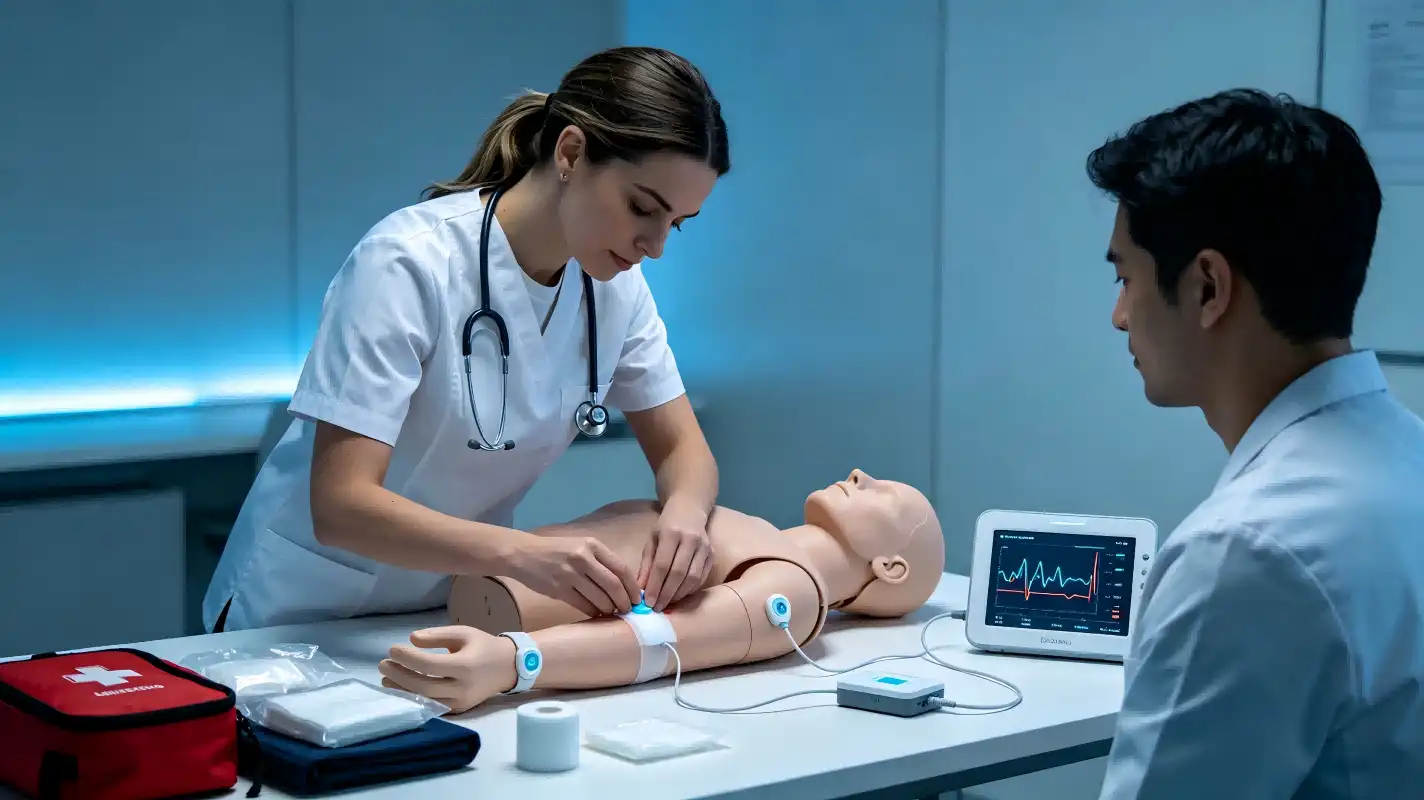
Before an accident happens, training starts with getting to know the tools. Participants learn how to carefully check first aid kits, making sure that bandages are intact, that hemostatic agents are still good, and that tourniquets work. Responders have to quickly find and use the right equipment while taking care of simulated victims in simulation exercises that are based on real events. During this part of getting ready, automatic reactions are built up that stay in place during real emergencies, when cognitive overload could otherwise make it hard to do well.
Core Bandaging and Direct Pressure Techniques
Using multi-function trauma manikins for hands-on practice lets you practice skills over and over again without putting patients at risk. People practice applying direct pressure and learn how to position their hands correctly and use the right amount of force to stop bleeding without hurting the tissue more. Bandaging modules go from simple circular wraps on the forearms to more complicated figure-eight wraps for joint injuries. Instructors give immediate feedback on technique. Teachers who are dual-qualified—they have both medical and teaching credentials—spot common mistakes early on, before they become bad habits.
Integrated Scenario Simulation Training
Realistic scenario drills bring together people's individual skills to make an organized reaction to a disaster. Multi-casualty simulations recreate workplace accidents, car accidents, and natural disasters so that first responders can practice triage, deciding which patients need treatment first, and working with their teammates while things are chaotic. Virtual simulation systems are used to supplement physical training by giving people more chances to practice outside of formal sessions. In controlled settings, participants feel the mental stress of an emergency, which helps them build both their physical and social skills.
Procurement Strategies for Emergency Bleeding Control Technologies
When buying Emergency Rescue Technology options for their businesses, institutional buyers have to make hard choices. Government departments have to find a mix between limited budgets and the need for certain skills, all while making sure they follow the rules for buying things. Large companies focus on scalable solutions, which work just as well for twenty employes as they do for two thousand. Medical institutions want to connect to electronic health record systems and trauma protocols that are already in place.
Assessing Technology Benefits and Cost-Effectiveness
When figuring out the return on investment for first aid gear, you need to look at more than just the purchase price. The total cost of ownership includes the initial purchase price, the cost of replacing consumables, the cost of teaching new employes, and the cost of upkeep. Smart monitoring systems may cost more up front, but they save money in the long run by improving supply management by keeping track of usage patterns, predicting when to restock, and stopping the waste of old products. Cost-per-training-participant should be calculated by organizations, taking into account how long equipment will last thru multiple training cycles and field deployments.
Supplier Certifications and Service Agreements
When choosing a vendor for Emergency Rescue Technology, you need to do a lot of research that goes beyond the product specs. Qualified providers keep their regulatory bodies' approvals up to date, show clear production processes, and give a lot of technical information. Service-level agreements should spell out how long it will take to fix broken equipment, when it will be replaced, and if expert help is available. Long-term deals with trusted suppliers keep prices stable and make sure that equipment is always available. This is especially important for organizations that train large groups of people every year.
Streamlined Purchasing and Vendor Negotiation
When the government buys things, they usually use formal bidding processes with clear evaluation criteria, such as technical specifications, pricing structures, qualifications of vendors, and records of past performance. Buyers in the private sector have more options because they can talk directly with sellers and negotiate better payment terms, bulk discounts, and bundled training packages. Both paths are helped by standard equipment specs that were made with the help of safety officers, emergency response team leaders, and training managers who know exactly what needs to be done.
Future Trends and Innovations in Bleeding Control and Emergency Rescue Technology
In the next ten years, new tools will likely completely change how hemorrhages are treated. AI systems that have been trained on thousands of trauma cases can look at trends in injuries and suggest the best way to treat them, which makes the job of stressed first responders easier. When machine learning systems are combined with smart dressings, they can predict how the bleeding will progress and let staff know when things are getting worse before they show any clinical signs.
AI-Powered Diagnostic and Intervention Systems
Next-generation Emergency Rescue Technology platforms have computer vision systems that look at the features of a wound thru a smartphone camera and give real-time advice on the best way to bandage it and which hemostatic agent to use. These decision-support tools are especially helpful for community rescuers who aren't well-trained or when they can't get help from a doctor. Anatomical information is superimposed on live video feeds by augmented reality applications. This shows where to put your hands for different hemorrhage control methods and highlights pressure points.
IoT-Enabled Monitoring and Predictive Analytics
With Internet-of-Things connection, medical gadgets that were once separate become part of larger information networks. Wearable sensors constantly check the vital signs of injured people and send information to both incident command centers and receiving hospitals. Predictive analytics find the people who are most likely to get worse, which starts preventative actions before things get worse for good. Tracking systems for equipment keep track of goods across all reaction assets in real time, making sure that important supplies are always available when they are needed most.
Next-Generation Hemostatic Materials and Biotechnology
As materials science progresses, it makes hemostatic agents that work better and have fewer side effects. Bioengineered materials that work like natural clotting factors stop bleeding faster and cause less inflammation. Researchers are looking into injectable foam technologies that can fully fill wound holes and stop internal bleeding that can't be stopped with normal pressure from the outside. After going thru strict clinical trials to make sure they are safe and effective, these innovations eventually make their way from specialized military uses to civilian emergency response.
Conclusion
Stopping bleeding and applying bandages are skills that can't be replaced in a complete emergency response plan. Companies need to make sure that their employes keep learning so that they can keep up with new training technologies and emergency escape tools. The Emergency Rescue Technology program at ECR Academy has been shown to work. It turns theoretical knowledge into useful skills by using expert teaching, realistic simulation environments, and organized testing systems. The fact that we've trained 5,000 professionals from government agencies, businesses, and schools shows that our method can be used on a large scale. Investing in good first aid training pays off in a number of ways, including fewer serious injuries, higher survival rates, and better safety attitudes within organizations that protect both workers and the continuity of operations.
FAQ
1. Which bleeding types require immediate tourniquet application?
A tourniquet is needed when a catastrophic limb bleeding happens, which is when damage to the arteries causes fast, life-threatening blood loss that direct pressure and wound packing can't stop. Traumatic amputations, major vessel injuries from penetrating trauma, and crush injuries with a lot of tissue damage are all common situations. Responders have to weigh the benefits of tourniquets against the risks, which include nerve damage and loss of limb function. This is why proper training is so important for making good choices about deployment.
2. How should organizations evaluate return on investment for bleeding control equipment?
An in-depth ROI study looks at more than just the buy price. Figure out how much it costs to train each responder, how long equipment lasts under normal use, how often consumables need to be replaced, and how much liability might go down if emergency response capabilities are improved. When organizations are trying to convince leadership to make an investment, they should also list the indirect benefits, such as increased employe trust, proof of regulatory compliance, and protection of image after a successful incident management.
3. What certification credentials matter most when selecting training providers?
Give more weight to instructors who have up-to-date certifications from well-known groups like the American Red Cross, the American Heart Association, or similar international groups. Dual-qualified teachers who are both medically trained and have experience teaching do a better job than clinical teachers who have only been trained in clinical skills. Make sure that training programs follow the latest evidence-based guidelines and give recognized certifications upon successful finish. This will make sure that responders' credentials meet the needs of the law.
Partner with Leading Emergency Rescue Technology Trainers
ECR Academy is ready to work with schools, corporate safety departments, and emergency management teams that are looking for full bleeding control training options. Our Emergency Rescue Technology program, which includes top Red Cross trainers, dual-qualified emergency rescue experts, and realistic training environments, has successfully trained more than 5,000 first responders from a wide range of fields. Our scalable training framework can be changed to fit your specific needs, whether your company needs a standard curriculum for training a large group of employes or custom scenarios that deal with specific operational risks. Get in touch with our team to talk about licensing options for multiple courses, on-site training, and ways to get certified that meet international standards. Visit enteredu.com or email ecr2008@enteredu.com to learn more about how working with an experienced Emergency Rescue Technology provider can help your business be better prepared for emergencies and protect the people who rely on your quick, effective reaction.
References
1. American College of Surgeons Committee on Trauma. (2018). Advanced Trauma Life Support: Student Course Manual (10th ed.). American College of Surgeons.
2. Butler, F. K., Holcomb, J. B., Schreiber, M. A., Kotwal, R. S., Jenkins, D. A., Champion, H. R., & Dubose, J. J. (2017). Fluid resuscitation for hemorrhagic shock in tactical combat casualty care: TCCC Guidelines Change 14-01. Journal of Special Operations Medicine, 17(2), 18-27.
3. Hatton, G. E., Wade, C. E., Dhiman, N., & Brasel, K. J. (2019). Prehospital tourniquet use in civilian trauma: A review of current evidence. Journal of Trauma and Acute Care Surgery, 87(4), 892-898.
4. National Association of Emergency Medical Technicians. (2020). PHTLS: Prehospital Trauma Life Support (9th ed.). Jones & Bartlett Learning.
5. Singletary, E. M., Charlton, N. P., Epstein, J. L., Ferguson, J. D., Jensen, J. L., MacPherson, A. I., & Zideman, D. A. (2021). Part 15: First Aid: 2020 American Heart Association and American Red Cross Guidelines for First Aid. Circulation, 142(16_suppl_2), S551-S579.
6. World Health Organization. (2018). Emergency Care Systems Framework: A Guide for Policy-Makers and Healthcare Facility Administrators. World Health Organization Press.


_1781601799781.webp)