AI-Based Power Inspection: Where Is the Industry Heading?
The power industry is undergoing a structural shift. AI-based power inspection has moved from a pilot concept to an operational standard across utilities in the United States and beyond. By combining autonomous robotics, computer vision, and deep learning, intelligent inspection systems now monitor transmission lines, substations, and power equipment with a precision and consistency that manual teams cannot replicate at scale. This article examines where the industry stands today, what technologies are driving change, and how training programs are equipping the next generation of grid professionals.
The Current Challenges in Traditional Power Inspection
There have always been limits to checking power infrastructure by hand. Technicians who work on high-voltage towers, underground cable tunnels, or transmission corridors that are far away are really putting their safety at risk. According to the U.S. Bureau of Labor Statistics, installing and fixing electrical equipment is one of the jobs with the highest rates of injuries. Grid inspection work is no different.
Reliability Gaps in Manual Workflows
Besides the bodily danger, the way standard inspections are done makes the data inconsistent. If two technicians look at the same insulator string, they might write down different results. It's hard to make accurate maintenance plans because of problems with documentation, late reports, and how faults are classified subjectively. When there are outages, they are usually caused by a problem that wasn't found or reported properly during a regular manual patrol.
The problem is made worse by high operational costs. When utilities keep a lot of line workers on hand for inspections, they spend a lot of money on travel, tools, and planning, all of which don't scale well as grid infrastructure grows. The need to modernize is not just an idea; it is a matter of money and operations.

How AI Is Revolutionizing Power Grid Inspection?
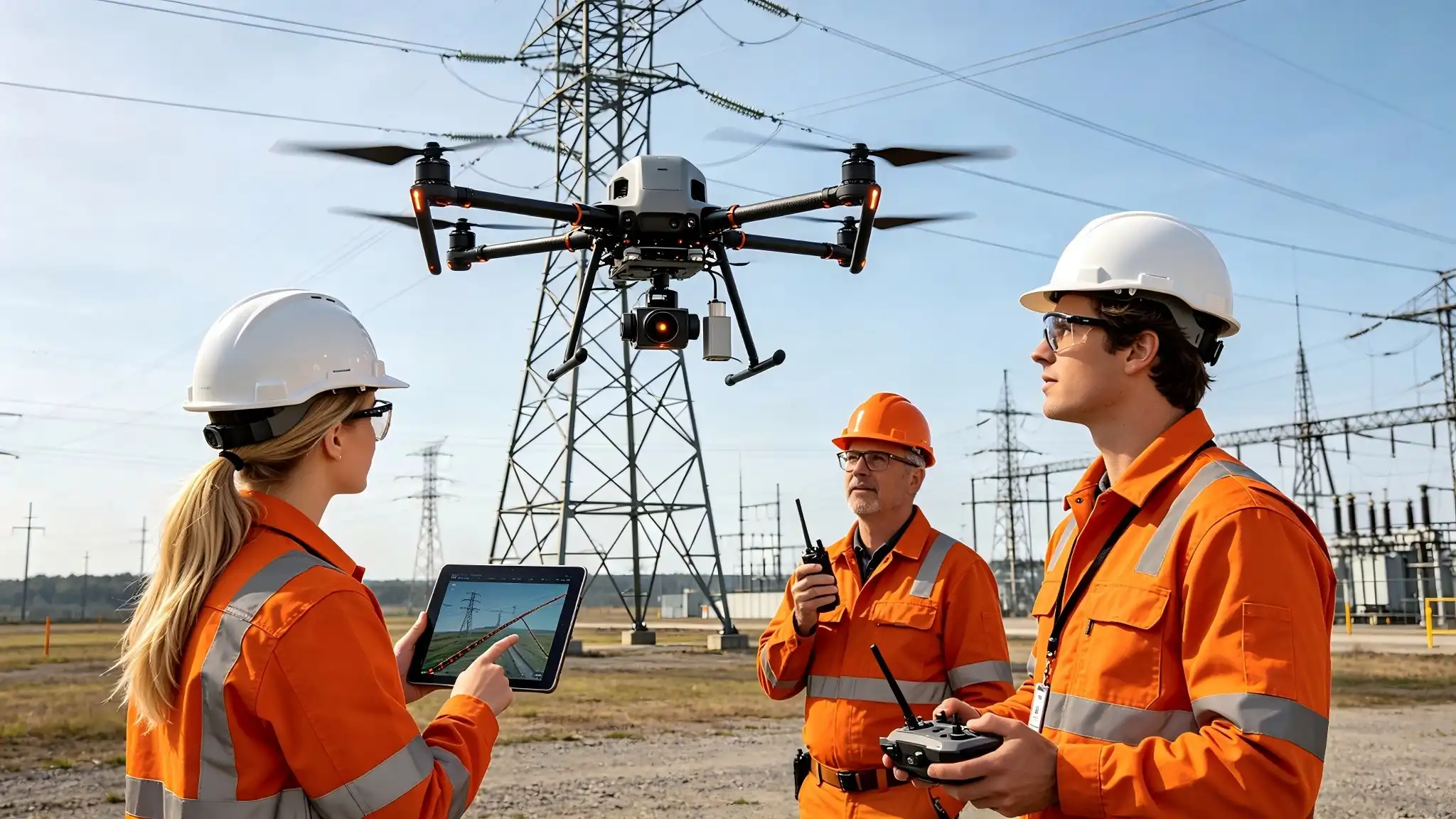
What grid scanning can do has changed since machine learning, computer vision, and self-driving robots came along. Without putting a person in danger, AI-based power inspection systems can now find tiny cracks in porcelain insulators, use thermal imaging to find transformers that are burning, and flag broken wire strands.
Real-Time Fault Detection Across Infrastructure Types
High-definition cameras and infrared sensors on inspection platforms that are flown by drones can look over kilometers of transmission line in a single trip. The mean average accuracy (mAP) of the best AI recognition models is higher than 95% for common defect categories when everything is normal. In substations, four-legged robots can move around on their own, keep an eye on set points, and send data straight to centralized management systems.
It's also important to note the change toward predictive upkeep. Instead of setting a set schedule for checks, AI platforms look at trends in sensor data to predict when equipment will break down before it does. This cuts down on unexpected power outages and increases the useful life of assets, both of which have a direct effect on the bottom line of a company.
Comparing AI-Powered Power Inspection Solutions
Not every intelligent inspection platform is the same. Drone-centered systems, fixed-sensor networks, mobile ground robots, and hybrid architectures that combine multiple modalities are all parts of the procurement landscape.
Here are the key performance dimensions that distinguish leading solutions from the rest:
- Detection accuracy and model generalization: High-quality systems try their AI models in a variety of environments, such as snow, fog, glare, and at night to make sure they work the same way every time. Detection is still possible in bad weather with multi-modal fusion that combines thermal image, visible light, and SAR.
- Integration with existing management infrastructure: Expert solutions support common APIs and protocol changers like IEC 104 or Modbus, which lets diagnostic data go straight into SCADA and grid management systems without having to pay a lot for custom development.
- Hardware durability and safety compliance: Equipment used near high-voltage lines must pass strict EMC tests and have an IP67 grade or something similar, which makes sure it can work reliably in places with weak electromagnetic fields.
- Data security and integrity: end-to-end latency verification and AES-256 encryption standards keep inspection data safe as it moves from field devices to central storage.
The total cost of ownership is directly affected by these performance dimensions. By cutting inspection time by up to 70% and allowing early problem detection that stops catastrophic failures, AI-based power inspection systems usually pay for themselves in 18 to 24 months.
When buying something, people in charge of procurement should look at more than just the specs. They should also look at the companies' plans for the future, their ability to update models over-the-air (OTA), and their history of working in similar grid environments. These things show if a technology relationship can still work as the grid gets more complicated.
Key Considerations When Procuring AI Power Inspection Systems
A technical checklist is not enough to choose an intelligent inspection solution. Directors of training centers and units in charge of production technology need to know that the technology is in line with standard operating procedures in the industry and that workers will be able to use it.
Workforce Readiness as a Procurement Factor
This is where a lot of utilities find an undervalued gap. A grid team can only use new hardware and software platforms as well as their training lets them. To use intelligent inspection tools, you need to know how to annotate data, evaluate AI models, operate robotic systems, and connect different systems. These are skills that you can't just learn from reading product manuals.
This problem is immediately addressed by ECR Academy's AI-based power inspection course. The course is based on projects and real-life situations involving inspecting power equipment. It was created using international technical skill standards and AI engineering job requirements as guides. The faculty have both experience as engineers working in the power business and experience designing lessons for schools. This way, the training is a mix of real-world situations and structured scientific knowledge.
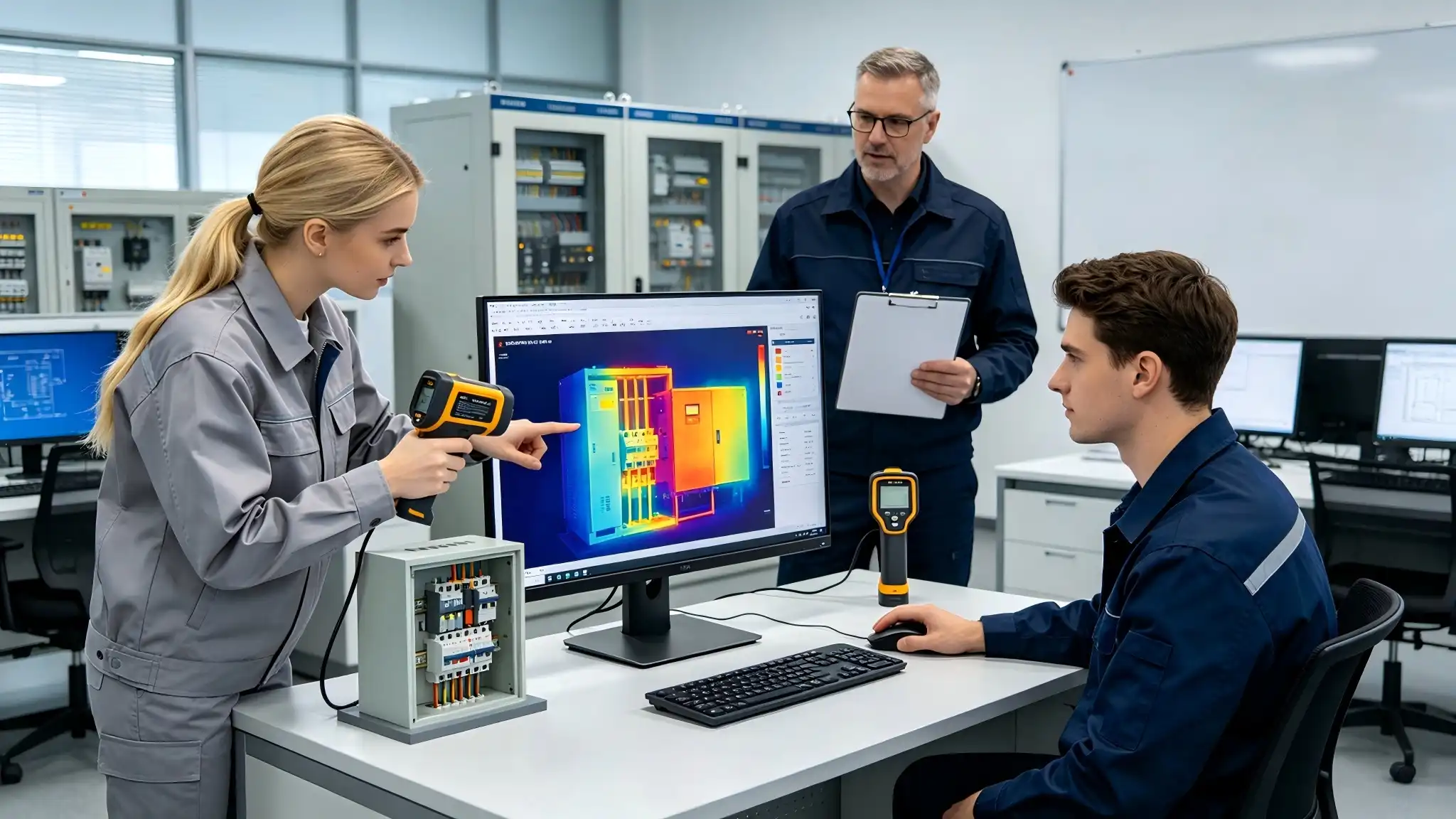
The place for learning is also unique. It combines a four-legged inspection robot, a platform for annotating data, a platform for AI algorithms, and an intelligent inspection system into a single environment that is already set up. The four-legged robot can move around on its own and can get within 10 centimeters of its target. It can also cross obstacles and be controlled from a distance. The platform for algorithms works with TensorFlow, PyTorch, and PaddlePaddle, and it has models like YOLOv5 and ShuffleNet. In a setting that looks and feels like a real grid, students work through the whole AI engineering processes, from collecting data and preprocessing it to training models, judging their performance, and setting up checking systems.
The Future Landscape: Trends and Strategic Directions
This decade will see a big change in the way grid inspection infrastructure looks as AI is added to IoT sensor networks, big data analytics, and 5G connection. Edge AI processing cuts delay in field devices to less than 100 milliseconds, which lets them send real-time reports for problems without needing to connect to the cloud. Digital twin technology lets workers see grid assets in three dimensions and connect data from inspections with the actual state of the assets.
Regulatory and safety rules that must be followed will also change. As inspections done by AI become more common, grid workers and training centers need to make sure that their courses and licensing programs keep up. If schools set up aligned training programs now, they will be ready to meet the needs of the workforce and meet industry standards as they come out.
Conclusion
It's easy to see where clever grid inspection is going. Autonomous, data-driven systems are replacing manual methods. These systems are more accurate, lower risk, and save money in a measurable way. The most important factor is how ready the workforce is. Companies that spend money on organized, standards-aligned training for smart inspection skills will be better able to get the most out of the technology they buy. The project-based program at ECR Academy gives power training centers and trade schools a real way to build that skill in a planned and large-scale way.
FAQ
1. How does intelligent inspection perform in extreme weather conditions?
These systems combine thermal imaging, visible light, and synthetic aperture radar to keep detecting things even when it's foggy, raining, or at night. This makes sure that the grid is always being watched, no matter what the weather is like.
2. Can AI inspection platforms integrate with existing SCADA systems?
Yes. Professional solutions use standard APIs and protocol changers like IEC 104 or Modbus to send diagnostic data straight to central utility management platforms without having to do a lot of custom development work.
3. What accuracy levels do leading AI defect detection systems achieve?
Under normal lighting conditions, the best systems get more than 98% accuracy for major parts like insulators and dampers, and in field tests, they get mAP scores of over 95% across common fault categories.
4. Can beginners complete ECR Academy's AI Power Inspection course?
Yes. The combined platform is already set up, and the course starts with basic data processing and moves on to annotation, model training, and system rollout. There is a Python programming module to help students who have never coded before through the AI-based power inspection curriculum.
5. What roles do graduates typically pursue?
People who finish the program are ready for jobs like AI Application Development Engineer, Data Annotation Engineer, Intelligent Inspection System Operations Engineer, Machine Vision Algorithm Engineer, and Smart Grid Technology Engineer.
Partner With ECR Academy for AI-Based Power Inspection Training
With 16 years of experience teaching skills across 28 countries, ECR Academy is a reputable provider of AI-based power inspection training. Our project-based curriculum, industry-credentialed faculty, and integrated four-legged robot platform give students the skills they need to get a job and meet the needs of real grid inspections. Our team is ready to make a program that fits your workforce and compliance needs, whether you work for an industry association, a vocational school, or a utility training center. To start a conversation, email us at ecr2008@enteredu.com or go to enteredu.com.
References
1. U.S. Bureau of Labor Statistics. Occupational Outlook Handbook: Electrical and Electronics Installers and Repairers. 2023.
2. International Electrotechnical Commission. IEC 61850: Communication Networks and Systems for Power Utility Automation. 2020.
3. IEEE Power & Energy Society. IEEE Transactions on Power Delivery: Machine Learning Applications in Grid Fault Detection. 2022.
4. Electric Power Research Institute (EPRI). Unmanned Aerial Systems for Transmission and Distribution Inspection. 2021.
5. International Labour Organization. World Employment and Social Outlook: The Role of Digital Technology in Energy Sector Workforce Transitions. 2022.
6. National Renewable Energy Laboratory (NREL). Predictive Maintenance Strategies for Electric Utility Infrastructure Using AI Analytics. 2023.


_1781601799781.webp)