AI-Based Power Inspection Skills: What Will Future Roles Require?
The power industry is undergoing a fundamental transformation. AI-based power inspection has moved from experimental pilot projects to mainstream operational practice, with utilities across North America deploying drones, quadruped robots, and deep learning algorithms to monitor transmission infrastructure. This shift raises an urgent question for training directors and workforce planners: what skills will your teams actually need to remain effective, compliant, and competitive? Understanding the answer is no longer optional — it is a strategic imperative for every organization managing grid assets at scale.
Understanding AI-Based Power Inspection: Core Concepts and Technologies
From Manual Patrols to Intelligent Monitoring
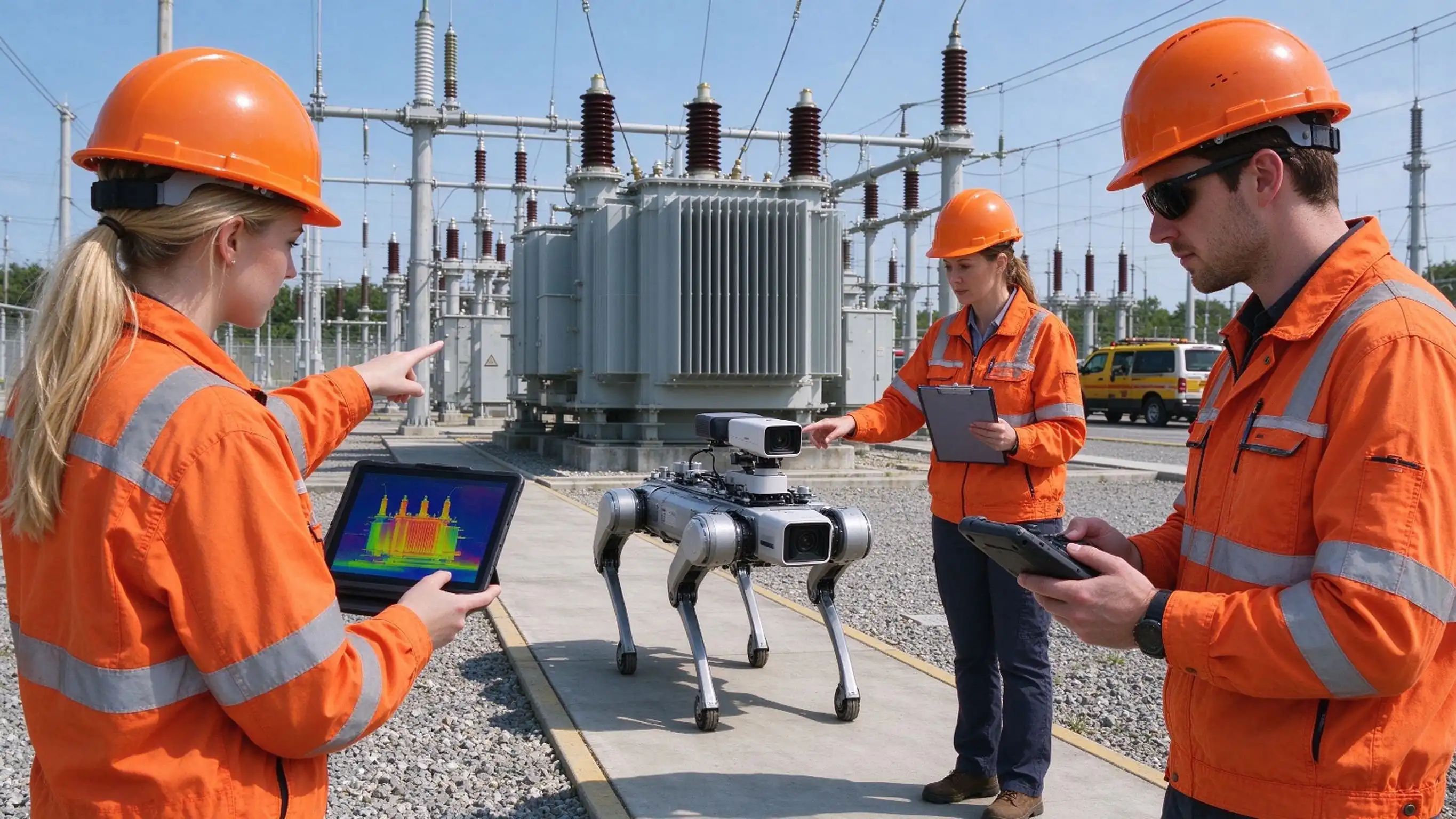
For years, trained workers had to climb structures or drive along routes to do line inspections. These methods are unsafe and give inconsistent data quality. UAVs, four-legged robots, thermal cameras, and real-time machine vision algorithms are used in AI-based power inspection to replace or supplement these processes. In normal situations, top-level systems can recall more than 98% of defective parts like insulators and conductors. This is a standard that manual patrols rarely meet consistently.
There are four main steps in the workflow: getting the data, intelligently annotating it, drawing conclusions from the data, and reporting. Sensors take high-definition pictures and heat readings; defect types are labeled by annotation platforms; faults are classified and located by deep learning models, usually YOLOv5 or similar designs; and inspection management systems put together the results so that maintenance crews can be sent out. Leading systems regularly achieve mean average accuracy (mAP) levels above 95% for object recognition, with edge-processing latency levels below 100 milliseconds.
These platforms also meet communication standards like IEC 61850 and have IP67 hardware ratings, which means they can be used in places with a lot of electromagnetic interference, like near live transmission equipment.
Key Skill Sets Needed for Future AI-Based Power Inspection Roles
Technical Competencies That Define Readiness
To fill the gap in workers in intelligent grid checking, you need to do more than just learn how to fly a drone. It covers a lot of different technical areas that interact in ways that standard electrical training schools haven't thought of. People who want to work in this area need to be able to handle four different types of skills.
Here are the main groups of skills that will be needed for the next generation of inspection jobs:
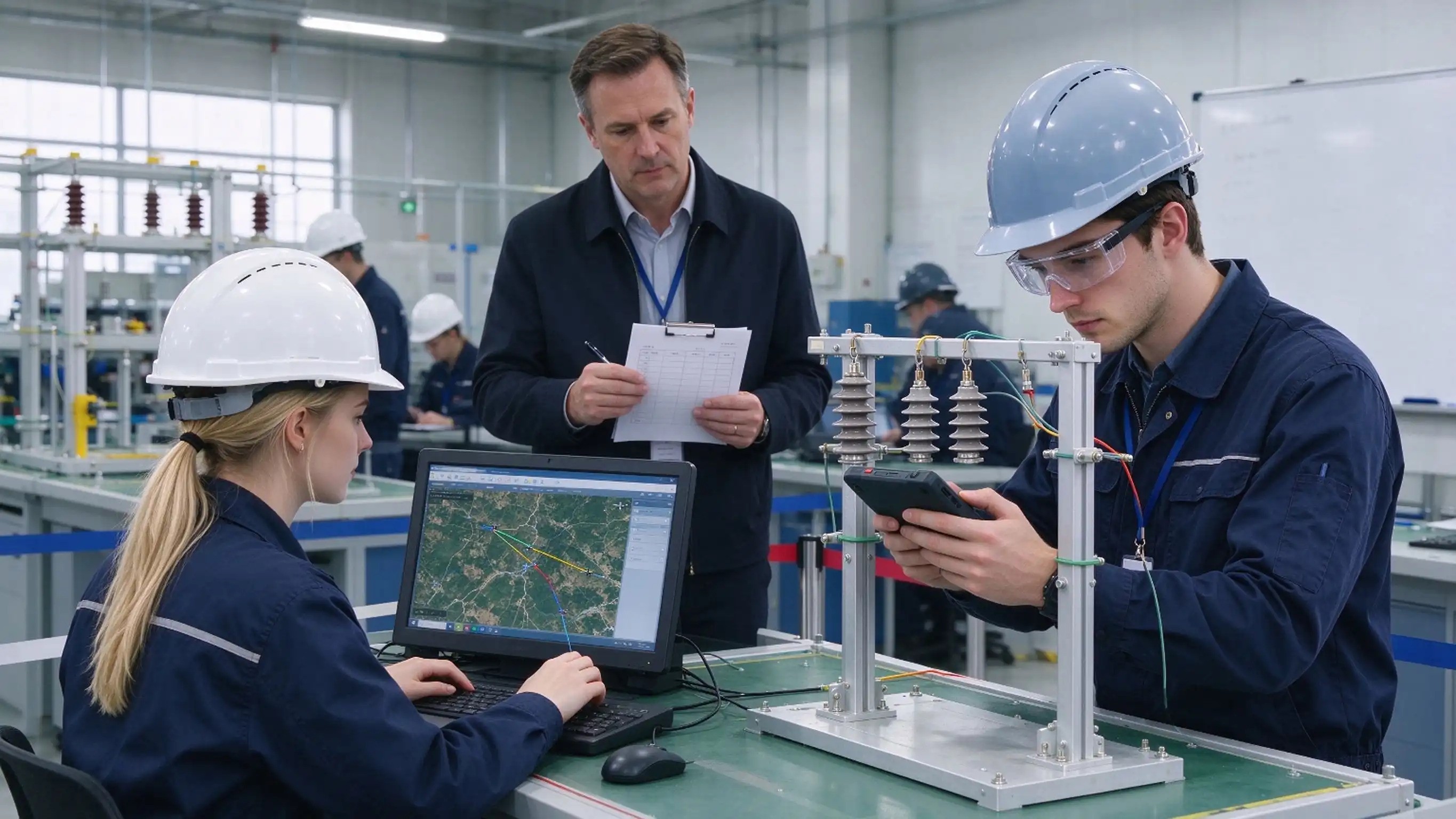
- Data processing and annotation proficiency: Practitioners must be able to use tools that support image annotation, object detection labeling, and semantic segmentation to collect, clean, and name images of power equipment. Creating rules for annotations and doing quality checks are daily chores that should not be overlooked.
- AI model training and performance evaluation: Teams use deep learning frameworks like TensorFlow, PyTorch, and PaddlePaddle to train AI models and evaluate their performance. They set the settings for models like YOLOv5 and ShuffleNet, keep an eye on training runs, and use transfer learning to fix overfitting, all while inspecting power in specific ways.
- Intelligent inspection system operation: In addition to working with algorithms, professionals need to be able to run robotic inspection platforms, plan routes for four-legged robots, understand 3D visual alarm outputs, and incorporate AI findings into workflows for managing enterprise assets.
- Cross-functional communication: To turn model outputs into maintenance decisions that can be carried out, you need to work with grid engineers, safety officers, and procurement managers, some of whom may not have experience with machine learning.
All of these skills are needed to be ready for a job in smart grid inspection, but there isn't a traditional certification program that covers them all at the moment.
Comparing AI-Based and Traditional Power Inspection: Skill and Accuracy Perspectives
Why the Performance Gap Matters for Procurement Decisions
There is a lot of evidence that clever inspection works. Manual checks aren't always consistent over big areas, and when people are tired, they can't always find faults. This is especially true for finding micro-cracks in porcelain insulators or early-stage conductor strand degradation that thermal imaging can reliably see.
Industry usage data shows that AI-driven systems cut review cycle times by about 70% compared to traditional methods. Continuous AI tracking makes predictive maintenance possible, and it usually pays for itself in 18 to 24 months by avoiding catastrophic failures that cost money and hurt the company's image.
This information has a direct bearing on training center leaders who are deciding which skill development goals to prioritize: teams trained on AI-based power inspection workflows add measurable practical value that makes the curriculum investment worthwhile. The lack of skills is not an idea; it directly leads to missed problem detection, late repair dispatch, and the risk of unplanned outages that could have been avoided.
Implementing AI-Based Power Inspection Systems: What Professionals Should Know
Practical Deployment and Continuous Skill Development
Putting in place an intelligent inspection capability is more than just buying hardware. Setting up the infrastructure, integrating the software with current SCADA systems, and training models using pictures of equipment at the site all need to be done in a planned order. Standardized APIs and protocol changers like IEC 104 or Modbus let diagnostic outputs go straight to central management platforms. However, professionals who know both IT design and the process of physical inspection are needed to set them up.
The correctness of models doesn't stay the same. Over-the-air (OTA) updates let systems add newly labeled defect types to the central training database. This means that inspection teams need to know how to add quality annotations that make models work better over time. Forward-thinking training programs need to make this a permanent part of the learning process instead of just a one-time task for new employees.
Future Trends: How AI Is Shaping the Evolution of Power Inspection Roles
New Job Architectures and Interdisciplinary Demands
The grid of 2030 won't need fewer skilled workers; it will need workers with different kinds of skills. AI application development engineers for industrial inspection, machine vision algorithm engineers, intelligent inspection system operations engineers, and smart grid technology experts are some of the new jobs that have been created by autonomous inspection systems in the last five years. These job titles are real job categories, not just rebranded versions of existing jobs.
The role design is getting more complex as IoT, digital twin models, and cybersecurity convergence are added. Inspection data is now part of bigger operating technology ecosystems, and a breach can affect real assets. Teams that are in charge of AI-based power inspection need to know more about hacking in addition to being experts in their field.
Companies that put money into structured, standards-based training programs now will have a clear talent advantage as the smart grid transition speeds up.
Conclusion
The move to grid inspections that are run by AI is speeding up, and at the same time, the skills that workers need to have are changing. In the next ten years, the most important jobs in power infrastructure management will go to people who learn how to properly annotate data, train models, operate robotic inspection systems, and connect different systems. The only ones that can meet that standard are training programs that are in line with international technical standards, teach using real tools, and put students in real testing situations.
FAQ
1. What AI technologies are used in intelligent power inspection?
Intelligent inspection platforms use convolutional neural networks (CNNs) to sort images into groups, LiDAR point clouds for clearance analysis, thermal imaging to find thermal anomalies, and multi-modal data fusion to keep working even when it's foggy, dark, or bad weather. UAVs and robots with four legs are the main tools for collecting data.
2. How does an organization transition from manual to AI-driven inspection?
A typical step-by-step process for transition includes evaluating the infrastructure, deploying the system in a pilot project on a particular corridor or substation, adding defects to libraries that are unique to the site, training and validating the model, and finally integrating it fully into operations. Instead of coming after technical rollout, staff training should happen at the same time.
3. What does an AI-based power inspection training program cost, and what is the ROI?
Costs of the program depend on the size of the group and how it is used. The operational return on investment (ROI) is supported by the fact that inspection cycles are 70% shorter and deployments in utilities have shown payback periods of 18 to 24 months through failure prevention and reallocating labor.
4. Can existing grid technicians transition into AI inspection roles?
Yes. Professionals with backgrounds in electrical engineering who have never used machine learning can still benefit from programs that build skills in a step-by-step way, starting with basic data concepts and moving on to model training and system integration.
Advance Your Team's Intelligent Inspection Capabilities with E.C.R Academy
With over 16 years of experience, relationships with more than 500 businesses, and a track record of certifying more than 300,000 students in 28 countries, E.C.R Academy is a reputable AI-based power inspection training provider. On a fully integrated platform that combines four-legged robots, data annotation tools, and AI algorithm settings that are in line with international standards, our AI-based power inspection course provides project-based training. Contact our experts to learn more about on-site and university service options that are right for your team's needs. You can email us at ecr2008@enteredu.com or go to enteredu.com to access our resources.
References
1. IEEE Power & Energy Society. (2023). Intelligent Inspection Technologies for Electric Power Systems. IEEE.
2. International Electrotechnical Commission. (2022). IEC 61850: Communication Networks and Systems in Substations. IEC.
3. U.S. Department of Energy. (2023). Grid Modernization Initiative: Workforce and Technology Integration Report. DOE Office of Electricity.
4. Electric Power Research Institute (EPRI). (2022). Drone-Based Transmission Line Inspection: Performance Benchmarks and Deployment Guidelines. EPRI.
5. World Skills International. (2023). Occupational Standards for AI Engineering and Intelligent Systems Applications. WSI Technical Committee.
6. North American Electric Reliability Corporation (NERC). (2023). Reliability Standards for Transmission Operations and Maintenance Workforce Competency. NERC.


_1781601799781.webp)