MagicLab Embodied AI Humanoid Robot
Product Features
Highly Biomimetic Motion Control with Up to 50 DoF
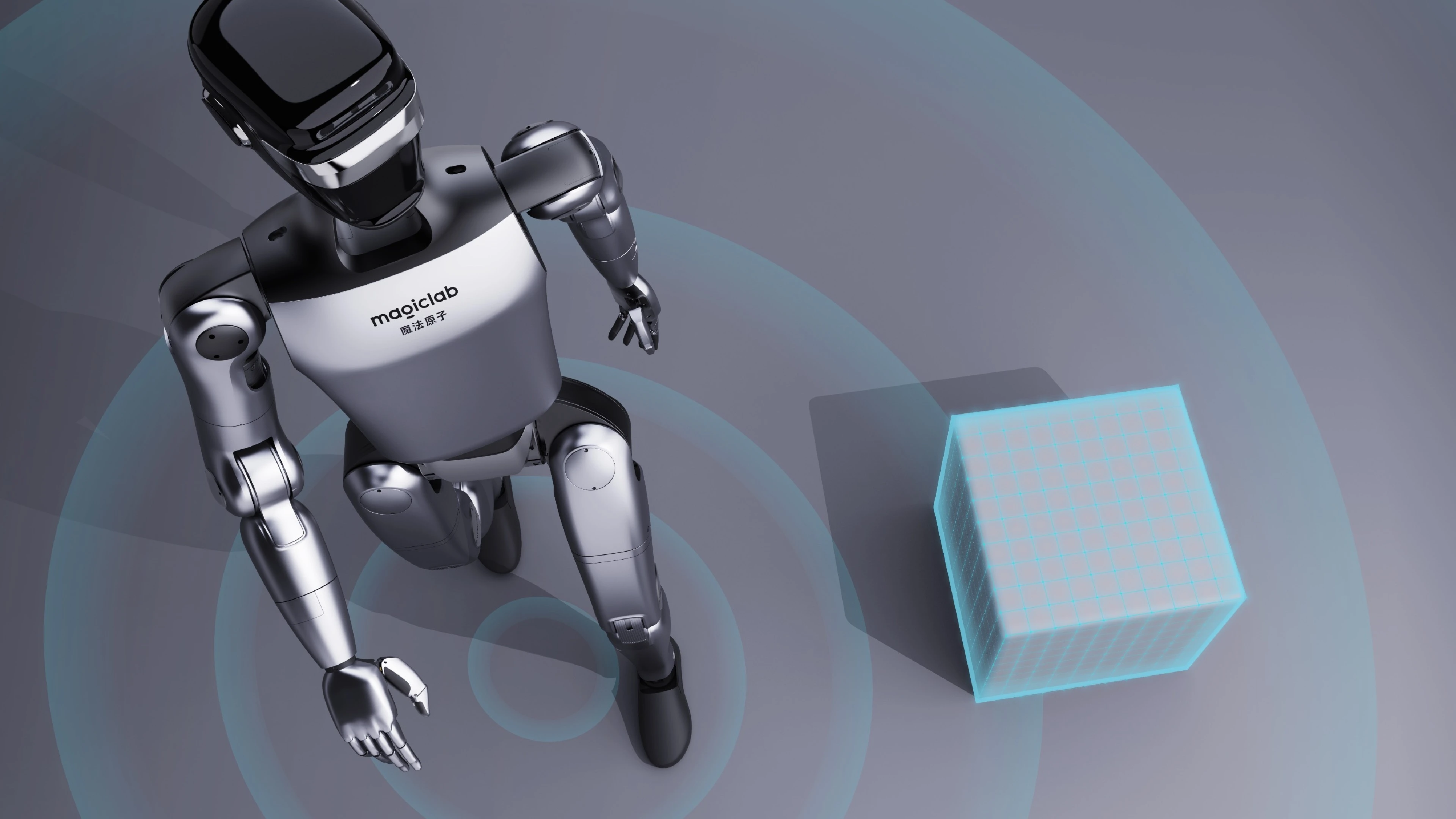
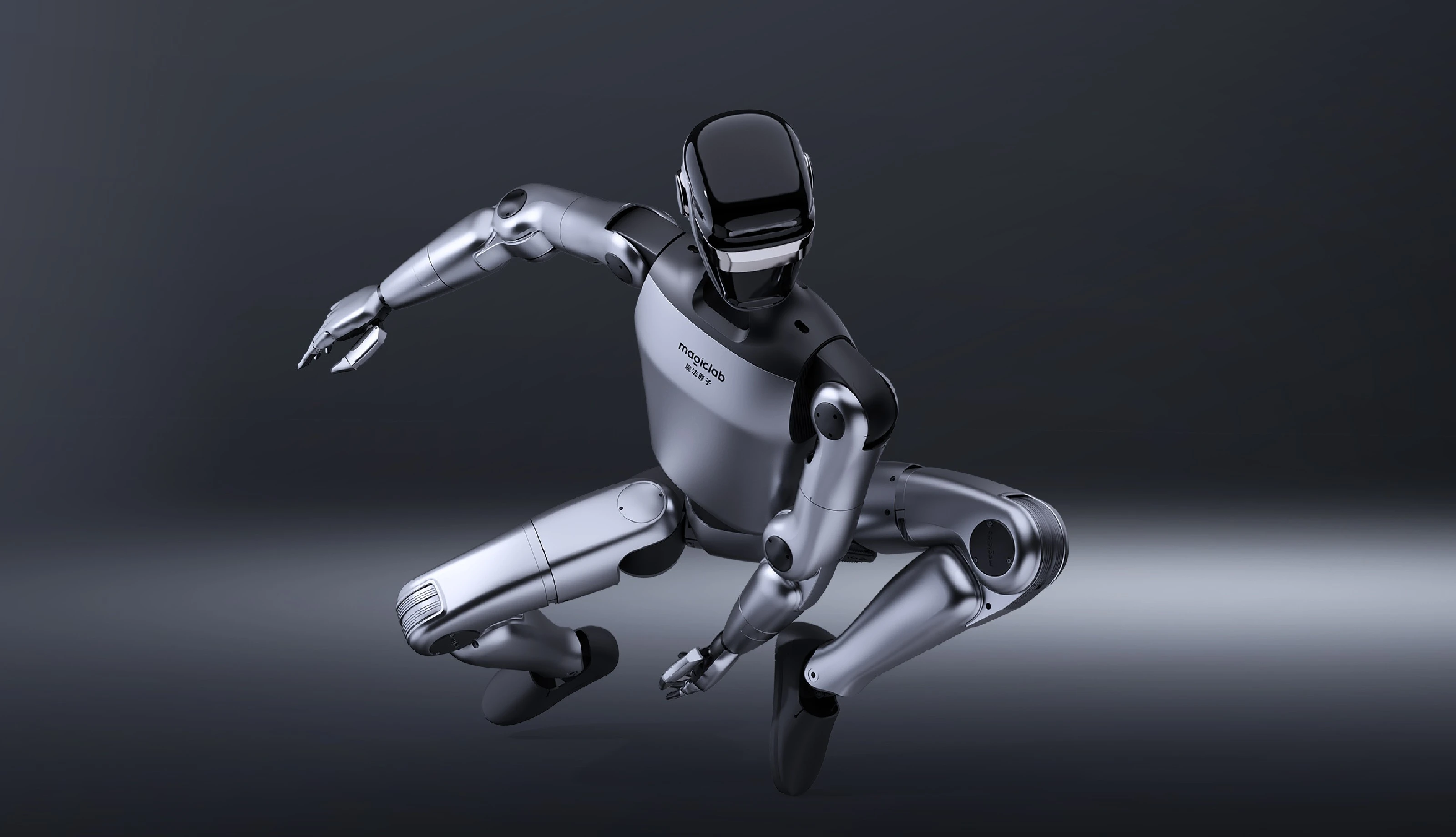
The V1 development edition supports up to 50 joint degrees of freedom (24 DoF in the standard edition) and features a peak knee joint torque of 130 N·m. It supports mixed torque, velocity, and position control. The robot can perform complex motions such as human-like walking, running, and standing up after a fall. Its movements closely resemble those of a human, providing a range of experimental opportunities for teaching humanoid robot gait control and motion planning.
100 TOPS Onboard AI Computing Power
Equipped with an NVIDIA Jetson Orin high-performance computing module and an 8-core high-performance CPU, the robot provides 100 TOPS of AI computing power. It can run AI algorithms such as object detection, visual recognition, voice interaction, and autonomous navigation in real time onboard, meeting the requirements of on-device AI model inference.
Multimodal Perception and Autonomous Navigation
The robot integrates 3D LiDAR, a depth camera, a binocular fisheye camera, and head-mounted tactile sensors for environmental perception. Equipped with MagicLab’s independently developed positioning and navigation system, it supports autonomous mapping, path planning, and dynamic obstacle avoidance, and can walk steadily on different terrains, including level ground, grass, gravel, and steps.
Open Development Ecosystem and Simulation Support
The robot provides secondary-development interfaces and an SDK, with access to low-level joint control, sensor data, and high-level motion interfaces. It is compatible with Python, ROS, and ROS 2 development environments. It supports simulation platforms such as Isaac Sim and MuJoCo, covering the full R&D process from simulation training to deployment on the physical robot.
High Reliability and Convenient Deployment
The robot can stand up after a fall and has durable joint and body structures suitable for frequent operation in teaching and competition settings. It supports OTA remote updates and is powered by a high-capacity 10,000 mAh smart battery. The robot can be carried by one person and quickly moved between classrooms, laboratories, and competition venues.
Equipment Specifications
|
Parameter |
Specification |
Parameter |
Specification |
|
Height × Width × Thickness (Standing) |
1369 × 422 × 200 mm |
Total Weight (with Battery) |
Approx. 40 kg |
|
Total Joint Degrees of Freedom |
24 (up to 50 in development edition) |
Thigh + Lower Leg Length |
0.6 m |
|
Single-Arm Reach |
Approx. 0.5 m |
Maximum Arm Payload |
3 kg |
|
Maximum Knee Joint Torque |
130 N·m |
Head Z-Axis Joint Range |
±40° |
|
Waist Z-Axis Joint Range |
>160° |
Knee Joint Range |
0°–152° |
|
Hip Joint Range |
P ±160°; R −30° to 110°; Y ±160° |
Computing Platform |
NVIDIA Jetson Orin |
|
Basic Computing Capability |
8-core high-performance CPU (100 TOPS) |
Perception Sensors |
3D LiDAR + depth camera + binocular fisheye camera |
|
Head Tactile Sensors |
Supported |
Smart Battery |
10,000 mAh |
|
Operating Time |
Approx. 2 hours |
Wireless Communication |
Wi-Fi 6; Bluetooth 5.2 |
|
Demonstration Motions |
Human-like walking, human-like running, standing up after a fall |
Voice Interaction |
Voice commands; chatbots |
|
Secondary Development |
Supported |
OTA Updates |
Supported |
|
Warranty |
12 months |
Development Environment |
Python; ROS; ROS 2 |
Application Scenarios
Humanoid Robot Teaching in Vocational Colleges and Universities
Suitable for core courses in vocational colleges and higher education institutions in fields such as AI Technology Application, Intelligent Control Technology, and Robotics Engineering. Teachers can use the robot for theoretical and hands-on instruction in courses including “Humanoid Robot Motion Control,” “Robot Perception and Vision,” “ROS 2 Robot Programming,” “Human-Robot Interaction Technology,” and “Introduction to Embodied Intelligence.” Students can carry out experiments involving gait tuning, visual recognition, voice interaction, and autonomous navigation on physical hardware.
Research Experiments and Embodied AI Algorithm Validation
For universities and research institutes, the robot can serve as an algorithm validation platform for humanoid robot gait planning, reinforcement learning, perception and navigation, multi-agent coordination, embodied intelligence, and related research. It provides access to low-level joint and sensor interfaces and is compatible with simulation environments such as Isaac Sim and MuJoCo. It supports the full R&D process from simulation training to deployment on a physical robot, while its 100 TOPS onboard computing capability supports on-device AI model inference.
Commercial Demonstrations and Intelligent Guided Tours
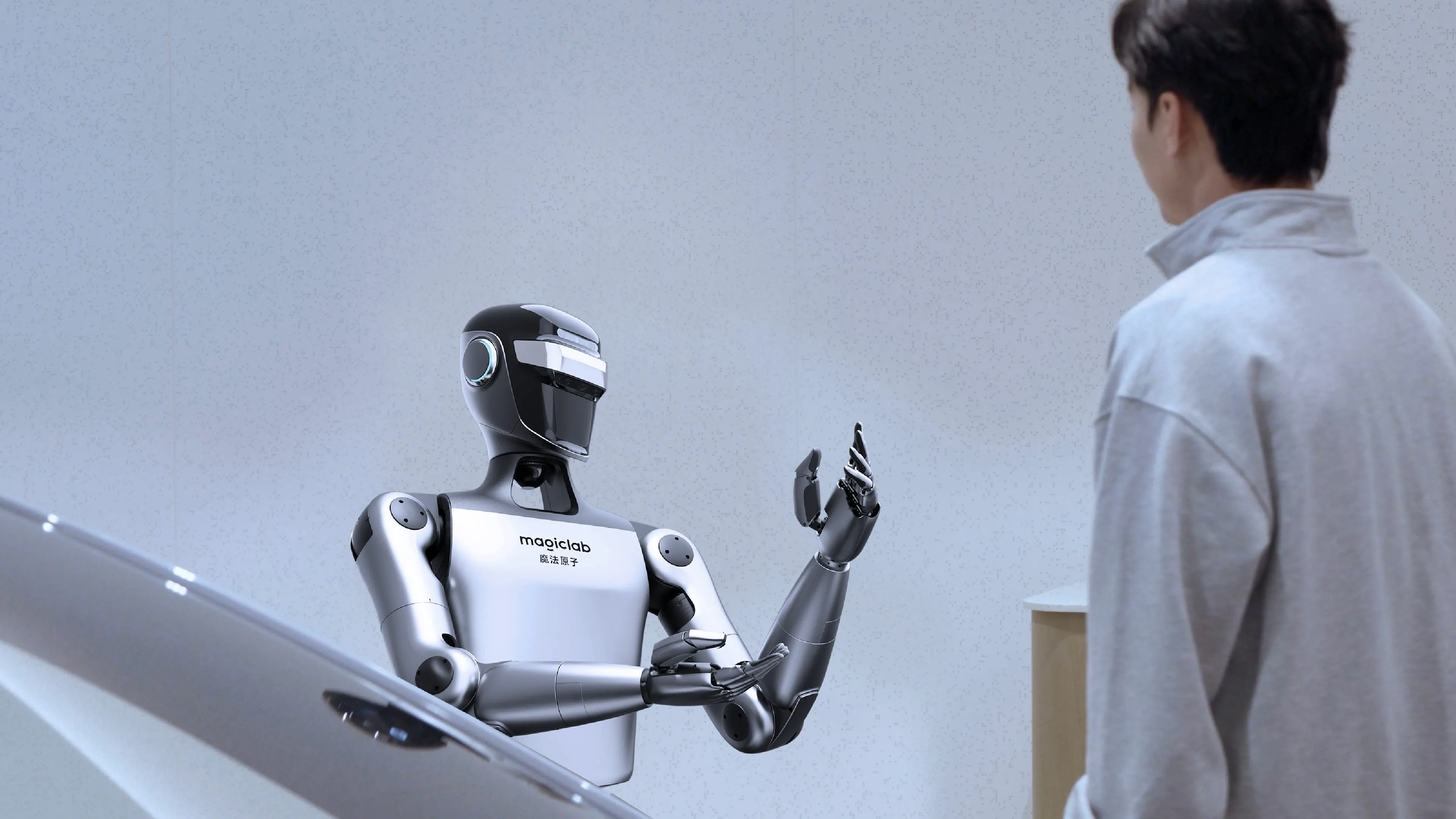
The robot can provide intelligent guided tours and interactive experiences in corporate showrooms, museums, science and technology museums, scenic attractions, and convention and exhibition centers. It supports interaction methods such as voice interaction and facial recognition. Its independently developed large AI model supports multilingual intelligent dialogue, providing immersive visitor experiences and helping improve service quality and the technological image of these venues.
FAQ
1. Can learners with no prior experience use the robot? Which programming methods are supported?
A: Yes. The robot offers development paths at different levels. Beginners can use a mobile app for remote operation and motion demonstrations; introductory learners can use Python for motion sequencing and simple task development; advanced developers can use ROS/ROS 2 to develop complex applications such as visual recognition, path planning, and multi-robot collaboration.
2. How resistant is the robot to falls? Could student operating errors damage it during class?
A: The robot can stand up after a fall, and its joints and body are designed to withstand frequent operation in teaching and competition environments. It supports OTA remote updates for continued performance improvement. However, supervised and proper operation is recommended. High-risk motions on hard surfaces should be avoided, and joints and fasteners should be inspected regularly.
3. Does the robot support multi-robot collaboration? What teaching resources are available?
A: Yes. It supports multi-robot collaboration, including robot formations and cooperative tasks. Teaching resources include development documentation, technical tutorials, open-source example code, and simulation environments, with ongoing updates. An integrated “Learn–Practice–Compete–Assess” solution is also available for vocational colleges, undergraduate institutions, and research institutes, covering laboratory construction, curriculum development, and teacher training. Specific supporting resources can be customized through consultation according to institutional needs.


_1781601799781.webp)