Intelligent Mental Health and Career Development Assessment System
Product Overview
The Intelligent Mental Health and Career Development Assessment System integrates artificial intelligence, multimodal biometric sensing, cloud computing, and other advanced technologies into an integrated solution comprising “hardware terminals + cloud service platform + application systems.” It provides Contactless emotion recognition, multidimensional physiological signal collection, intelligent assessment of psychological status, comprehensive vocational competency assessment, and practical training in psychological counseling skills. The system can be applied to mental health services and talent development in educational institutions, enterprises and public institutions, healthcare, and other settings, supporting the digital and intelligent upgrading of mental health services.
Core Product Features
Multimodal Contactless Sensing
Integrates facial micro-expression recognition, pulse wave analysis, electrodermal measurement, motion and posture capture, and other technologies. The main device can collect multidimensional psychophysiological data without invasive wearable devices. A supplementary wearable sensing terminal provides additional precise physiological data, balancing ease of use and data accuracy.
Comprehensive Service Coverage
Covers the complete service process, including psychological screening and early warning, individual self-regulation, peer support, simulated counseling training, vocational competency assessment, and crisis intervention management. Functional modules can be deployed independently or combined flexibly, and service solutions can be customized for different scenarios.
Combined Objective and Subjective Assessment
Adopts a dual-track assessment approach combining assessments by professionals with AI-based quantitative analysis. The AI system can provide multidimensional quantitative data, including 12 emotion indicators, 8 facial expression indicators, and 4 physiological indicators. These complement professionals’ qualitative assessments and help improve the objectivity and accuracy of assessment.
High-Security Data Architecture
Follows the ethical standards of psychological services and data security regulations. It uses multiple safeguards, including hierarchical access permissions, encrypted data storage, de-identification of personal information, and disk encryption, to help protect the security and confidentiality of personal psychological information throughout the process.
Standardized and Open Integration
Adopts a browser/server (B/S) architecture, supporting access from PCs and mobile devices. Standardized data interfaces enable integration with existing teaching, office, and healthcare systems. It also supports customized feature development and implementation for different scenarios and workflows.
Core Product Specifications
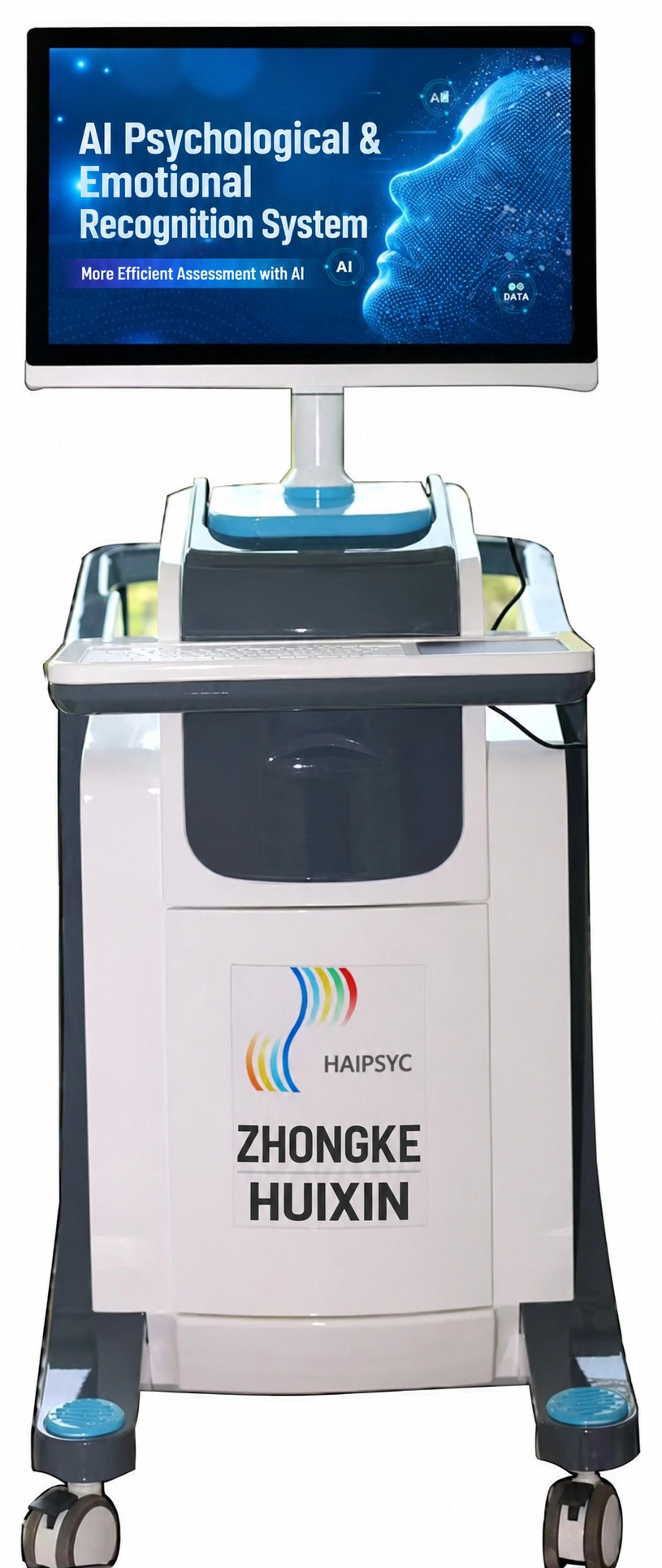
AI Facial Emotion Recognition System
The AI Facial Emotion Recognition System is an integrated mobile psychological assessment device designed for rapid, contactless psychological status screening and assessment.
|
Item |
Specification |
|
Form Factor |
Medical-style integrated instrument cart with a 21.5-inch touchscreen all-in-one computer |
|
Hardware |
Processor ≥ RK3588; RAM ≥ 64 GB; Android 13 or later |
|
Connectivity |
Wi-Fi and Bluetooth; one each of a full-size USB port, LAN port, data port, and HDMI port |
|
Recognition Capability |
Recognizes 478 facial landmarks; calculates eye aspect ratio, pupil size, mouth aspect ratio, blink frequency, duration of eye closure, and related indicators |
|
Assessment Indicators |
12 emotion indicators, 8 derived emotion indicators, 8 facial expression indicators, 4 physiological indicators, and 5 behavioral indicators |
|
Assessment Efficiency |
Rapid psychological status screening for one person in as little as 50 seconds; automatically generates a mental health assessment report and crisis-risk assessment results |
|
Security Features |
Unexpected power-loss protection, automatic system recovery, and disk encryption for data security |
Multimodal Human-Factor Sensing Terminal
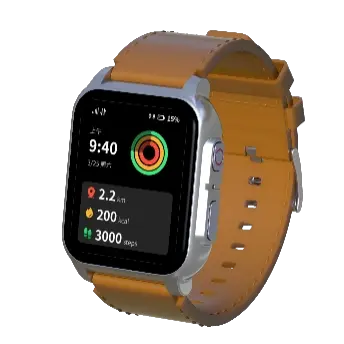
The Multimodal Human-Factor Sensing Terminal is a wearable physiological monitoring device that collects multidimensional physiological and behavioral data for long-term psychological status monitoring and detailed analysis.
|
Item |
Specification |
|
Dimensions and Weight |
Terminal: 48.5 × 36.5 × 14 mm; wristband: 25 × 260 mm; weight: 20 g |
|
Battery Life |
48 hours of continuous operation in both local recording and real-time transmission modes; 2 hours per charge |
|
Storage Capacity |
Built-in 32M storage; stores up to 120 hours of data when all sensors operate at full load |
|
Pulse Wave Sensor |
Sampling rate: 100 Hz; one green LED, one red/infrared LED, and three photodiodes |
|
Electrodermal Sensor |
Sampling rate: 4 Hz; AC excitation frequency: 24 Hz; measurement range: 0.01–100 μS |
|
Skin Temperature Sensor |
Sampling rate: 1 Hz; measurement range: 0–50°C; measurement accuracy: ±1°C |
|
Motion Sensors |
3-axis accelerometer + 3-axis gyroscope; sampling rate: 20 Hz; supports posture recognition and energy expenditure calculation |
|
Environmental Sensors |
Supports measurement of temperature, humidity, and air pressure |
|
Data Transmission |
Supports BLE 4.2; equipped with vibration alerts and NFC functionality |
Mental Health and Career Development Cloud Platform
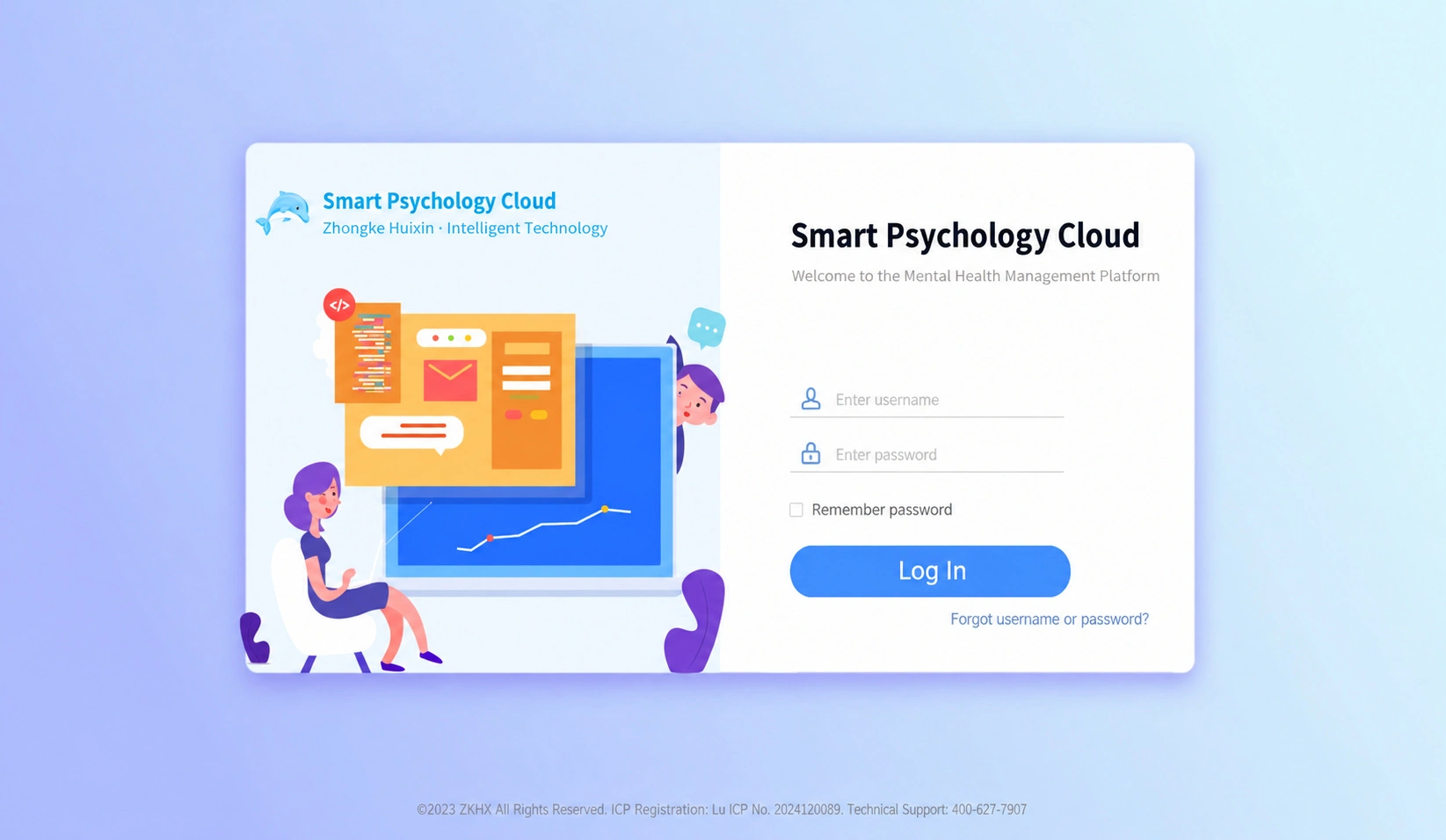
The Mental Health and Career Development Cloud Platform is the core service platform. It integrates functions across the entire psychological health management process, enabling connected hardware devices, unified data management, and online service delivery.
|
Item |
Specification |
|
Architecture |
B/S architecture, supporting access from PCs and mobile devices |
|
Core Modules |
Psychological profile management, psychological screening and assessment, psychological counseling training, intelligent stress-reduction intervention, connected-device management, crisis intervention assessment, psychological professional database, and other modules |
|
Assessment Scales |
Includes ≥230 professional psychological assessment scales covering mental health, personality traits, career preferences, and other dimensions |
|
Data Capabilities |
Supports multidimensional statistical analysis and visualization; automatically generates standardized assessment reports with Word/PDF export |
|
Access Management |
Supports multi-level, role-based permissions for administrators, counselors, teachers, users, and other roles |
|
Expandability |
Supports integration with IoT devices, including emotion recognition systems and wearable terminals, and customized feature development |
Typical Application Scenarios
Mental Health Education and Practical Training in Educational Institutions
Can be used for student mental health screening, routine monitoring of psychological status, practical training in mental health courses, and peer counseling skills training. It helps institutions develop standardized, digital mental health service systems, strengthen students’ self-help and mutual-support capabilities, and improve the quality and efficiency of mental health education.
Employee Psychological Well-Being in Enterprises and Public Institutions
Suitable for psychological assessment during onboarding, routine stress and emotion monitoring, support for Employee Assistance Programs (EAP), and occupational mental health management. It helps organizations improve employee care, identify psychological risks, and strengthen team resilience and work effectiveness.
Professional Training in Psychological Counseling Skills
Provides simulated counseling training, skills assessments, and case supervision for psychological counselors, mental health teachers, and student counselors. Combined with multidimensional AI feedback, it helps improve the focus, scientific basis, and efficiency of counseling skills training.
Vocational Competency Assessment and Talent Development
Integrates the internationally used COMET vocational competency assessment framework and can be applied to recruitment assessment, job suitability analysis, and employee career development planning. It evaluates vocational competencies across eight dimensions: intuitiveness, functionality, use-value orientation, economic efficiency, work-process orientation, social acceptability, environmental friendliness, and creativity.
Psychological Crisis Screening and Intervention
Supports rapid psychological screening of large populations. The system can automatically identify high-risk individuals and issue tiered alerts, together with standardized crisis intervention plans and referral procedures, helping enable early detection, early assessment, and early intervention.
FAQ
1. Can the system’s psychological assessment results replace a professional clinical diagnosis?
A: No. The results are intended only as screening references for psychological status and have no clinical diagnostic validity. If assessment identifies clear signs of psychological abnormalities, consultation with a professional mental health medical institution is recommended promptly.
2. Does AI facial emotion recognition require active participation from the person being assessed?
A: The system uses contactless facial emotion recognition. The person only needs to sit naturally in front of the device, without completing a questionnaire or wearing any equipment. A full assessment can be completed in as little as 50 seconds, making it convenient for rapid screening of large populations.
3. How is psychological data protected on the cloud platform?
A: The platform uses multiple safeguards, including encryption during transmission and storage, and hierarchical access control, and follows the ethical standards of psychological services. All personal psychological information is de-identified, and only authorized personnel may view relevant content according to their assigned permissions, protecting data security and personal privacy.
4. Can the system’s functions be customized for different scenarios?
A: Yes. Its modular architecture allows functional modules to be combined flexibly for education, enterprises, healthcare, and other sectors. It can also integrate with an organization’s existing business systems to support customized workflows and service models.


_1781601799781.webp)