Humanoid Robot (Education Edition) Training Platform
Product Features
22-DoF Biomimetic Motion Control
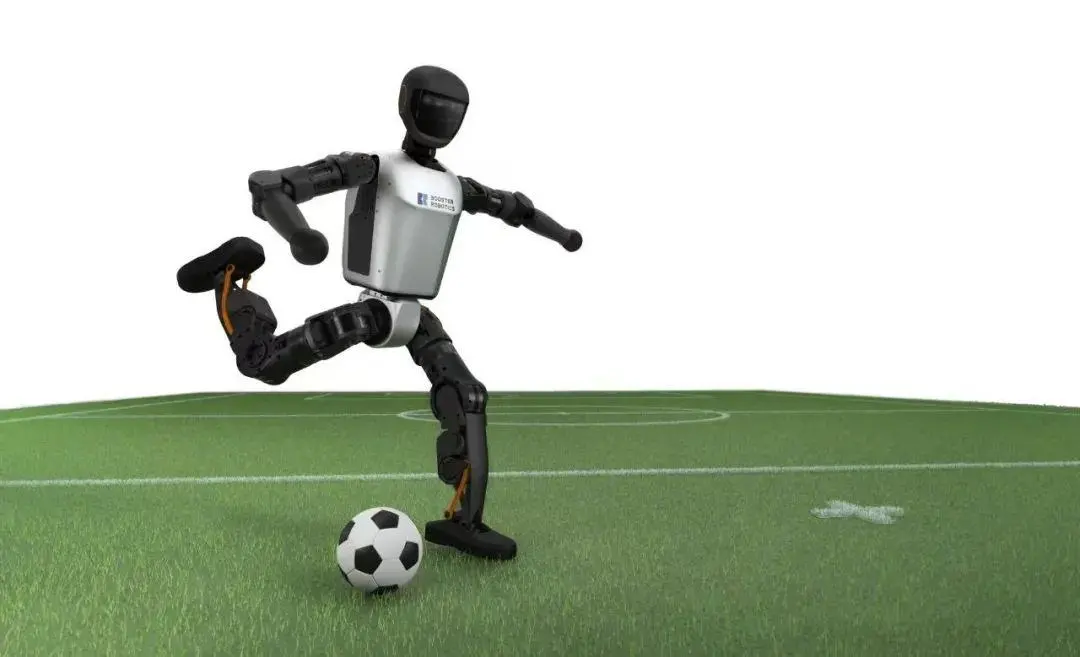
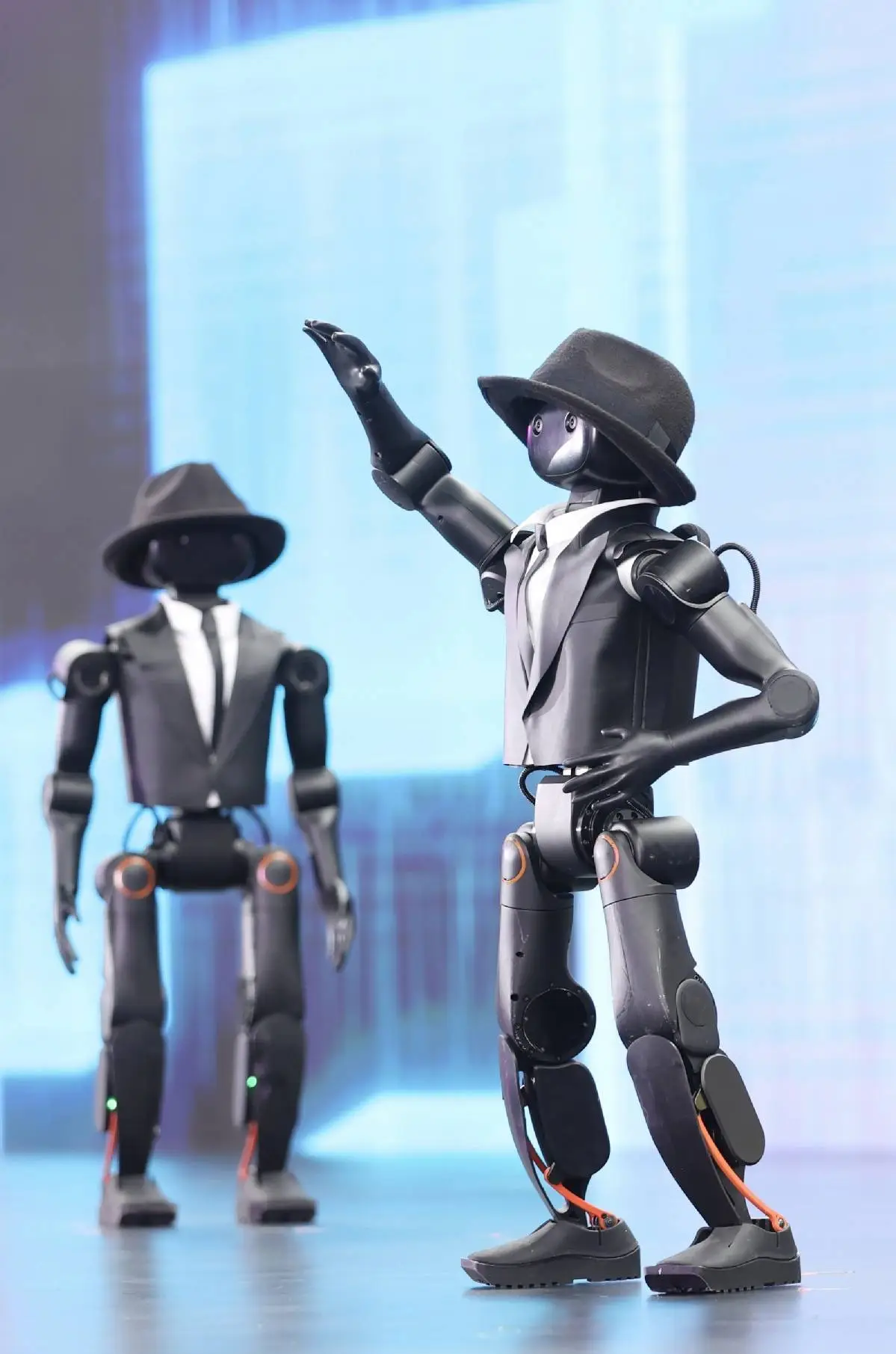
The robot is equipped with 22 joint degrees of freedom and supports mixed torque, velocity, and position control. With a wide joint range of motion, it can perform stable bipedal walking, running, ball kicking, dancing, the “moonwalk,” and other complex motions. Its motion capabilities closely resemble human movement, providing a rich experimental platform for teaching humanoid robot gait control and motion planning..
117 TOPS Onboard AI Computing Power
The Education Edition provides 117 TOPS of AI computing power and can run AI algorithms such as object detection, visual recognition, voice interaction, and autonomous navigation in real time on the robot.
Multimodal Perception and Human-Robot Interaction
Integrates a stereo depth camera, 9-axis IMU, circular 3-microphone array, speaker, and touch sensors to provide comprehensive environmental perception and interaction capabilities.
Open Development Ecosystem and Simulation Support
Provides development interfaces and SDKs, with access to low-level joint control, sensor data, and high-level motion interfaces. It is fully compatible with Python, ROS, and ROS2 development environments.
Competition-Grade Reliability and Portable Deployment
The robot has passed 30 hours of continuous 500 N-level impact testing and more than 100 hours of continuous operation verification on physical units. It can self-right after a fall and features a durable, impact-resistant structure capable of withstanding frequent operation in teaching and competition environments. The robot can be carried by one person and comes with a dedicated transport case, allowing rapid relocation between classrooms, laboratories, and competition venues without disassembly.
Equipment Specifications
|
Parameter |
Value |
Parameter |
Value |
|
Height |
Approx. 95 cm |
Total Weight |
Approx. 19.5 kg |
|
Overall Dimensions |
95 × 40 × 18 cm |
Thigh + Lower Leg Length |
46 cm |
|
Single-Arm Reach |
39 cm |
Total Degrees of Freedom |
22 |
|
Degrees of Freedom per Leg |
6 |
Degrees of Freedom per Arm |
4 |
|
Head Degrees of Freedom |
2 |
Max. Peak Knee Joint Torque |
60 N·m |
|
Joint Encoder |
Dual encoders |
Joint Control Mode |
Mixed torque / velocity / position control |
|
Computing Platform |
NVIDIA Jetson Orin NX 8GB |
AI Computing Power |
117 TOPS |
|
Vision Module |
Stereo depth camera |
IMU |
9-axis IMU |
|
Voice Module |
Circular 3-microphone array + speaker |
Touch Sensor |
Supported |
|
Battery |
48 V, 5 Ah lithium battery |
Runtime |
Approx. 80 min (walking at 0.4 m/s) |
|
Charging Time |
≤1 hour |
Audio Alerts |
Low-battery alert; joint overtemperature alert |
|
Wireless Communication |
Wi-Fi 6, Bluetooth 5.2 |
Wired Communication |
Gigabit Ethernet (RJ45) |
|
Development Environment |
Python, ROS, ROS2, API/SDK |
Simulation Support |
Isaac Sim, MuJoCo, Webots |
|
Hip Joint Range of Motion |
P -171° to 126°; R -22° to 89°; Y ±59° |
Knee Joint Range of Motion |
0° to 127° |
|
Ankle Joint Range of Motion |
P -50° to 20°; R ±20° |
Standard Accessory |
Dedicated transport case |
Application Scenarios
Vocational and Higher Education Teaching
Suitable for core courses in vocational colleges and higher education institutions in programs such as Artificial Intelligence Technology Application, Intelligent Control Technology, Robotics Engineering, and related fields. Teachers can use the robot for theoretical instruction and hands-on training in courses such as “Humanoid Robot Motion Control,” “Robot Perception and Vision,” “ROS2 Robot Programming,” “Human-Robot Interaction Technology,” and “Introduction to Embodied Intelligence.” Students can complete experiments such as gait tuning, visual recognition, voice interaction, and autonomous navigation on a physical hardware platform, supporting an integrated “Learn-Practice-Compete-Assess” teaching framework.
Robot Competitions and Multi-Robot Coordination
K1 is the same robot model used by the champion and runner-up teams in the KidSize division of RoboCup 2025. It supports millisecond-level multi-robot group control and can serve as a standard hardware platform for robot football competitions, humanoid robot innovation competitions, and related events. Teams can use the ROS2 development framework to complete fully autonomous competition tasks such as visual recognition, path planning, tactical coordination, and shot decision-making. The robot supports self-righting after falls and recovery from impacts, enabling operation in high-intensity competitive environments.
Research Experiments and Embodied Intelligence Algorithm Validation
For universities and research institutes, the robot can be used as an algorithm validation platform for humanoid robot gait planning, reinforcement learning, perception and navigation, multi-agent coordination, embodied intelligence, and related research. Low-level joint and sensor interfaces are open, and the robot is compatible with simulation environments such as Isaac Sim and MuJoCo, supporting a complete development workflow from simulation training to deployment on the physical robot. Its 117 TOPS onboard computing power supports edge AI model inference and helps shorten the validation cycle from algorithm development to physical-robot testing.
FAQ
1. Can beginners use the robot? What programming methods are supported?
A: Yes. The robot provides multiple development paths. Beginners can use the mobile app for remote control and demonstration-based learning, and quickly experience the robot through built-in example motions. Entry-level learners can use a graphical interface or Python for motion sequencing and simple task development.
2. How durable is the robot against falls? Is it easily damaged by student operating errors in the classroom?
A: Before release, the robot has passed 30 hours of continuous 500 N-level impact testing and more than 100 hours of continuous operation verification on physical units. It can self-right after a fall, and its joints and body structure are designed for durability. In high-intensity competitive environments such as RoboCup football, the robot can continue operating reliably despite frequent running, falls, and collisions, demonstrating its reliability. However, supervised and standardized operation is still recommended. High-risk actions on hard surfaces should be avoided, and joint and fastener conditions should be checked regularly.
3. Does the robot support multi-robot collaboration? What teaching resources are provided?
A: Yes. It supports millisecond-level multi-robot group control for scenarios such as multi-robot football competition, formation dance, and collaborative tasks. Teaching resources include a complete curriculum system, development documentation, video tutorials, open-source sample code, and simulation environments, with ongoing updates. An integrated “Learn-Practice-Compete-Assess” solution is also available for K12, vocational colleges, undergraduate education, and research institutions, including laboratory construction, curriculum development, and teacher training. Specific supporting resources can be customized according to institutional needs.


_1781601799781.webp)