Why Mold Manufacturing Technology Matters in Automotive Production
Every vehicle that rolls off a line carries hundreds of parts shaped by a tool built months earlier. They explain mold manufacturing technology to college directors and plant training managers as the discipline of designing, machining, and proving those tools — the steel cavities that turn polymer pellets and metal ingots into repeatable components. It matters because a body panel, a connector housing, or a battery tray is only as consistent as the mold behind it. Tolerances of ±0.005 mm to ±0.01 mm, mirror finishes at Ra 0.05 μm, and cavity lives past one million shots all start at the tool bench, not on the assembly line.
Understanding Mold Manufacturing Technology in Automotive Production
What the Discipline Actually Covers
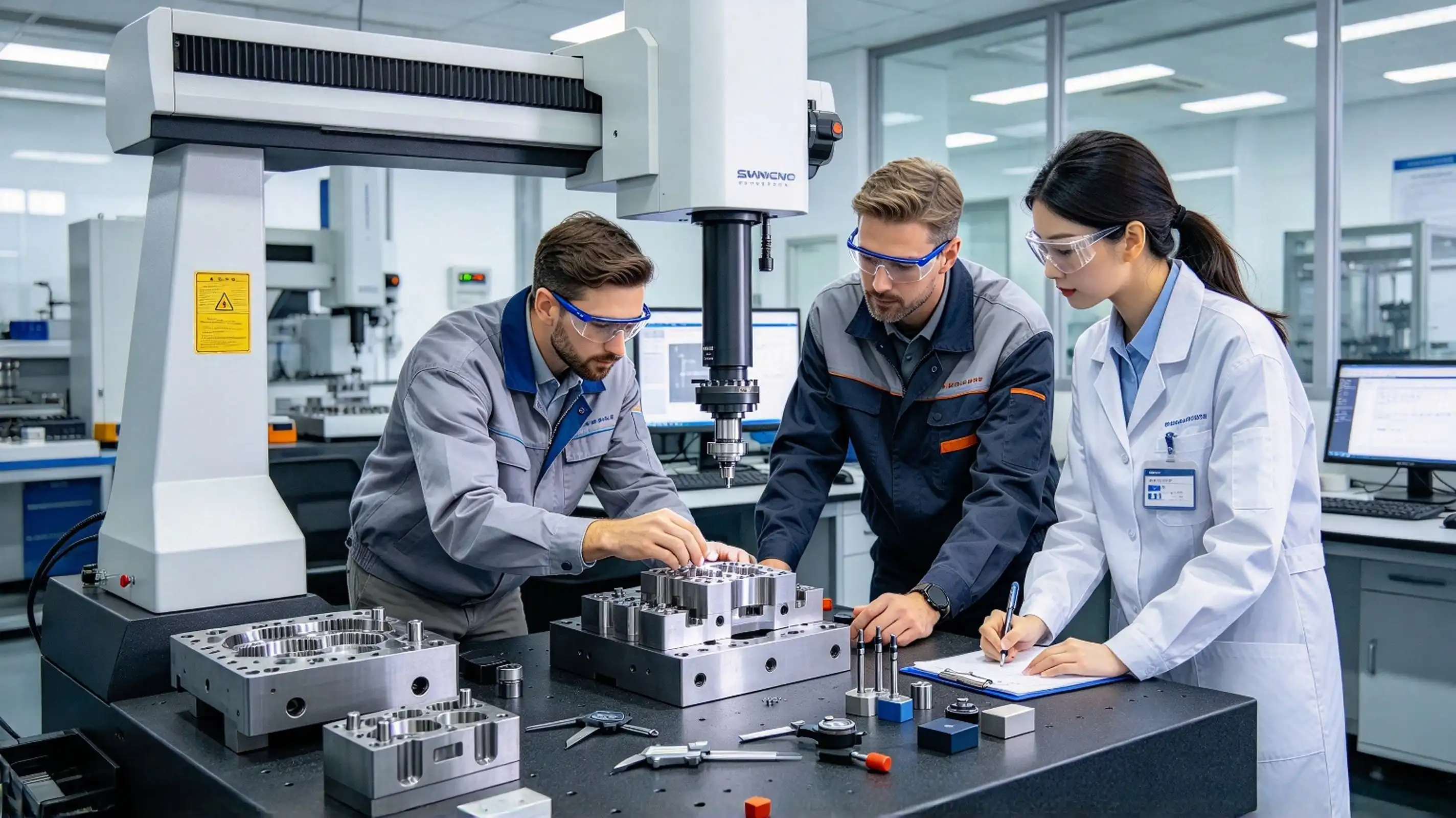
The first step in mold work is to make a part drawing. After a test run, the last step is to have a tool that works well. I show program leaders how to do five things: read the structure, plan the process, machine the parts, put the whole thing together, and check it before commissioning. Each stage makes it clear what the next step should do. The process design decides the splitting line, gates, cooling structure, and ejector plan. Some of these options are milled, ground, wire-cut, and sinker EDM to make steel. When putting together and marking, mating spots touch. It is when the coordinate measure machine data is compared to the model that the loop is closed. People will not be able to find the tool once it gets to the press because they skipped a step.
Tool Steels and Polymers That Do the Work
The choice of steel comes after considering the molding material, required tool life, and production volume. P20 is already hardened to about 28–32 HRC and can be used for large plastic molds in small to medium production runs. In aluminum die casting, a cavity can wear quickly because of thermal cycling, but H13 can handle hot-work conditions. It can be heat treated to about 48–52 HRC. S136 is suitable for optical parts because its corrosion resistance supports a clean, polished cavity surface. It can also be used for PVC and other demanding materials. When it comes to visible automotive parts, glass-reinforced polyamide is used for components such as under-hood parts, while PC/ABS blends are used for visible interior panels. Higher steel hardness and better surface finishes can be important because glass-filled materials increase gate and cavity wear.
Injection Molding, Die Casting, and Stamping
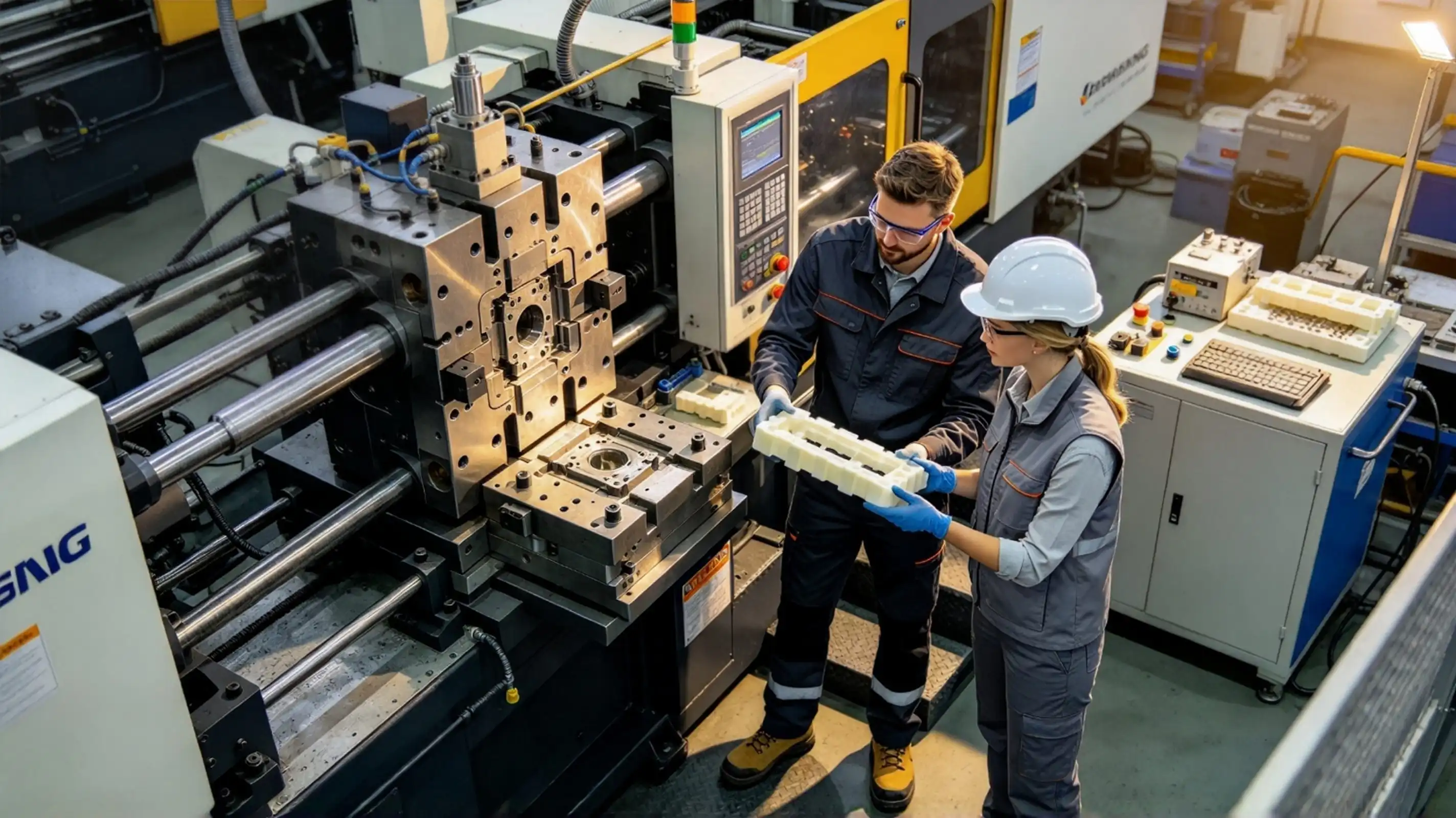
Most tools used in the auto industry can be put into three groups based on how they work. When thermoplastics are pressed into a two- or three-plate mold, injection molding can make joints, housings, and lenses. The cycle time is measured in seconds. In die casting, magnesium or aluminum is melted and pushed into a solid steel die under a lot of pressure. This is good for transmission housings and structural nodes that need to be very stiff but have thin walls. A punch and a die are used in stamping to press two pieces of sheet metal together. This can make body panels, brackets, and battery enclosures faster than any molding cell. For molding, it's draft angles and cooling; for die casting, it's managing thermal stress; and for pressing, it's controlling the blank holder and making up for the spring back.
Evolution and Trends in Mold Manufacturing Technology for the Automotive Industry
Where Conventional Mold Building Runs Out of Road
In the old way of making tools, you cut, measure, make changes, and cut again until the hole fits the model. That makes sense for simple shapes, but not for parts that have deep ribs, undercuts, or cooling lines that can't follow the surface. We can't always keep lead times of four to twelve weeks when changes to the design come in late. It takes skilled workers hours that are harder to find in shops to do spotting by hand. During ramp-up, when a tool runs but moves out of range, the rate of scrap goes up. This is most clear to me in shops that still plan their cutting steps by hand and rely on one skilled fitter to fix all of their fit problems.
Hybrid Additive Manufacturing and Conformal Cooling
It changed the way we talked about cooling because of metal additive manufacturing in mold manufacturing technology, which is usually laser powder-bed fusion with maraging or H13-class powders. A tool can have channels that extend through the steel and follow the cavity surface instead of using straight drilled channels. Reports from shops and machine builders say that cycle times were cut by 20% to 40%. In thick parts and deep cores, where heat builds up, the gains were the biggest. Costs stay low because the conformal section can now be printed while the rest of the block can be machined in the traditional way. Properly designed and processed inserts can maintain dimensional stability after cooling, but printed components still need qualification. To qualify, printed pieces need to be checked for density, hardness, and heat treatment. This adds to the cost.
Smart Molds, Sensors, and the Digital Thread
Tools with sensors built in can be used as sources of info. So that users can see drift before parts go out of specs, a cavity pressure and temperature monitor sends a report after every shot. The scientific molding method that links machine settings to part quality is backed up by this data, which is used for statistical process control. On the design side, mold flow modeling now runs early enough that a gate can be moved before the steel is cut. A CAD file, a CAM toolpath, an inspection report, and trial-shot data can all use the same model. This means that when a drawing is changed, it goes back up the chain instead of beginning from the beginning. When shops keep that thread together, they can answer questions about guaranties faster and cut down on the number of trial rounds from a few to one or two.
Comparing Mold Manufacturing Technologies for Automotive Applications
Injection Molding vs. Die Casting vs. Stamping
The first things that can be compared are the material and the shape of the walls, not the machine itself. Because it makes complex parts that need to look good, like a light-guide lens or a textured interior bezel, injection molding is the best way to make them. For a low cost, die casting is the best way to make a metal part that is strong, good at moving heat, or good at blocking electromagnetic waves. This is the case for structural hubs and motor housings made of metal. For making a lot of flat or shallow three-dimensional sheet parts, like floor panels and bracket families, stamping is the best method. The same thing happens with tools. Of course, a single-stage pressing die will cost less than a multi-cavity injection mold for a part that can be seen. Most of the time, a big die-casting die will cost the most.
Mold Making vs. Additive Manufacturing
Tooling and additive manufacturing are only direct alternatives in a limited range of applications. For tests and low-volume parts, printing a part in PA12 or a filled photopolymer saves money on tooling and speeds up the process. A mold is better for making parts after a few thousand units, because it can lower the cost per part and provide a more consistent surface finish. To make up the difference, we can use printed tooling inserts. This is because a conformal insert dropped into a normal mold frame can cool the part without the need for a fully printed tool. I tell them to look at four numbers before they buy: how much the tool costs, how much each part costs at the target volume, how smooth the surface needs to be, and how long it takes to get the first part that can be sold. It's not right to compare things based on a single number.
Matching the Process to Production Volume
Volume bands help procurement teams sort things out. If you only need 500 parts a year, it makes sense to print or cut the stock. A simple metal or P20 tool with one cavity can work if you need between 500 and 10,000 parts, depending on the part and tool requirements. It won't cost you too much. If you make more than 100,000 parts, it will save you time and money to have hardened H13 or S136 cavities built to Class 101 standards. These limits are very low for most car programs, which is why a buy order will often say that a tool will last for millions of shots. With a family mold or a modular insert method, more than one part number can be held between bands on the same frame. Not just the first order, but also the whole program will cost.
Procurement Considerations: Selecting Mold Manufacturing Services and Equipment
Certifications, Metrology, and Audit Trails
Claims of approval need proof to back them up. Both IATF 16949 and ISO 9001 just say that there is a system for quality. They don't say how well a shop cuts holes. Ask for an example of a first-article package, information on how to write an inspection report, and a plan for when to calibrate the gages. A rule called ISO 20457:2018 tells us how much error a process can hold for plastic parts. There is a uniform language for surface roughness that can be used by both a spec sheet and a picture standard. It is called VDI 3400. You should write down the hardness after the heat process, not before. A short list should include suppliers who answer with facts instead of words.
Contract Manufacturing vs. In-House Tooling
The risk is different when you outsource a growth, but it's still there. Contractors who make tools can make a lot of them, have tools that a plant might not have, and know how to use a lot of different part families. In return, the buyer has to follow someone else's plan and can't see what's going on every day. When you have your own tools, you can keep information close at hand and get feedback faster between design and build. You keep spending money on high-speed CNC, EDM, and measuring tools, though, and these tools become less useful as the needs change. A lot of car suppliers choose a split that is a mix of the two: important or high-volume tools stay inside, and extra or specialized work goes outside. This is a good way to cover busy times without having to buy a new machine center and keep skills up to date.
What a Training Partner Should Provide
Technicians who work with mold manufacturing technology need more than tools alone; they also need process knowledge, practical skills, and an understanding of quality requirements. Anyone in charge of a program should compare these main benefits to see if the E.C.R. Academy curriculum is better than another one.
- Full-process training runs from structure reading and planning the process, as well as cutting, putting things together, trying them, and checking for quality. The lessons are broken up into units that are based on projects. Each team works on a different project, and when they're done, the result is written down. So, instead of learning theory first and then practicing, a new worker learns the skills they need in the order they are taught.
- Teaching combines professional instructors, business experts, and skill coaches who work together to teach, backed by five training sites that cover mold assembly, CAD/CAM, CNC machining, EDM, and finishing. Simulated and real machines are used together so that students can practice a routine before using a machine and have a plan when they get to the bench.
- Learners who complete assessment can get a vocational training certificate that can help them get jobs in quality control, mold drawing, equipment operation, fitter assembly, and debugging forming equipment. We work with businesses, schools, industry groups, and other groups to make sure that the jobs in the area are filled by the right people.
Most buyers want to know if a course covers the whole process. These three things will answer that question. Do teachers know what's going on in the business? Do college grads leave with skills that companies will value?
Environmental and Operational Advantages of Modern Mold Manufacturing Technology
Energy, Scrap, and Material Yield
Molds change the amount of power that each part of a plant needs. When both cavities cool at the same rate, the cycle is shorter, and the machine needs less time per unit to make the cycle go faster. This is made easier by conformal cooling and putting the gates in the right place, which lowers the pressure needed to fill a part. Fuel and trash are both important. Waste makes new programs lose money. You can save money by getting a tool that stays within tolerance from the start. Runner scrap is a small part of cold runner output in hot runner systems. Toolmakers are being asked for cycle-time and scrap data along with the price more and more by buyers who care about supply chain emissions.
Cycle Time and Part Durability
Clock time adds up over the course of a program. When a 30-second cycle is cut short by two seconds, more than 500 hours of press time are freed up. A plant can sell or save this time. The same thing holds up over time. It takes a lot longer for a cavity made from verified H13 with the right hardness to hold up against heat checking and washout than one made from a grade that hasn't been checked. It also keeps the amount of dimensional drift low over the whole run. This way, the seller can keep their word about accepting production parts, since a part that was within tolerance at start will still be within tolerance at job one. When a tool's durability is claimed, it should come with a material proof and a plan for maintenance.
Lean Flow and Workforce Safety
The mold state is what keeps a lean line lean. When a tool throws flash or short shots, it can cause repair loops, buffer stock, and press stops that were not planned. These all make takt time go off. Variation is kept out of the process by upkeep that is tied to how many shots are fired. It comes with safety. As part of sinker EDM, high current and dielectric fluid are used. High-speed grinding throws chips around and makes heat. Dies are used to move heavy steel. Before a new user gets to the control panel, they should learn how to use the machine guards, lockout/tagout, and handle fluids. There is less chance of an accident now. I see following safety instructions as an important part of knowing how things work, not just another thing to do.
Conclusion
Mold manufacturing technology tells us how repeatable, cost-effective, and long-lasting an auto part can be. This is the chain of events that determines whether a tool can hold ±0.005 mm, whether its cooling lines follow the hole, and whether it can be used a million times without losing dimensional stability. It comes in three groups: injection molding, die casting, and stamping. They are chosen based on their material, shape, and size, not on how they look. There is a different tooling reason for each family. For buying, it's important to have clear lines between work that is done in-house and work that is done by contractors. It's also important to have well-documented steel types and metrology. With the right gates and even cooling, less energy is used per part and less waste is made per production run. None of this works without people who can read a structure, plan a process, make to specifications, and fix a tool at the press.
FAQ
1. Which materials dominate automotive mold manufacturing?
For large to medium-sized tools, P20 is often used for plastic molds. H13 is best for hot-work applications and die casting, while S136 is suitable when corrosion resistance or an optical polish is required. Glass-reinforced polyamide can increase gate and cavity wear, so harder steels and appropriate surface finishes may be preferred. Aluminum is often used for bridge tools and test models, but it is generally less suitable for high-volume production tooling.
2. How does mold technology lower production costs?
The most important factors are three key levers: cycle time, tool life, and ramp-up quality. Cycles can run faster when cooling is more efficient, which means that each part needs less machine time. When you heat treat tools correctly and use verified steel, they can last longer. This means that the cost of the tool can be spread over more shots. Rigorous testing helps reduce ramp-up scrap. Together, these factors can change the cost per unit without changing the basic production method.
3. Should I choose injection molding or 3D printing for automotive parts?
The production volume is a major factor. You do not need to buy specialized production tooling to print samples or small quantities. A mold can provide a better surface finish and a lower cost per part when you make more than a few thousand units. One way that many programs use printed parts is to verify that the design works. Once the design is finalized, a production tool is used to make the parts.
Talk to E.C.R Academy About Your Mold Manufacturing Technology Plan
Send the E.C.R Academy team your program outline, and we will map our modules onto your calendar, your software stack, and your tolerance targets. As a mold manufacturing technology supplier to technical colleges and enterprises since 2010, we have trained close to 500,000 participants. Email ecr2008@enteredu.com or visit enteredu.com to request a course outline and a deployment plan for your next intake.
References
1. Kalpakjian, S., & Schmid, S. R., Manufacturing Engineering and Technology, Pearson, 2014.
2. Rees, H., Mold Engineering, Hanser Gardner Publications, 2002.
3. Osswald, T. A., Turng, L.-S., & Gramann, P. J., Injection Molding Handbook, Hanser, 2007.
4. Kazmer, D. O., Injection Mold Design Engineering, Hanser, 2016.
5. ASM International, ASM Handbook, Volume 16: Machining, 1989.
6. Wohlers Associates, Wohlers Report 2023: 3D Printing and Additive Manufacturing Global State of the Industry, 2023.