Why Model Making Matters in Industrial Design Training
It's important to learn industrial design by making models. Models turn ideas into real things that people can test, judge, and hold. A drawing or CAD file cannot convey how something truly feels or how nicely it fits together. That way, issues may be identified before money is spent on equipment, and trainees learn to make decisions based on facts and not simply how a thing appears. This is an excellent habit for students, instructors, OEM teams, procurement managers, engineers and new enterprises. Models assist solve problems with goods. We speak about the best methods to accomplish things at each level and how training may help you improve.
How Model Making Solves Real Product Problems
Turning Requirements into Tangible Decisions
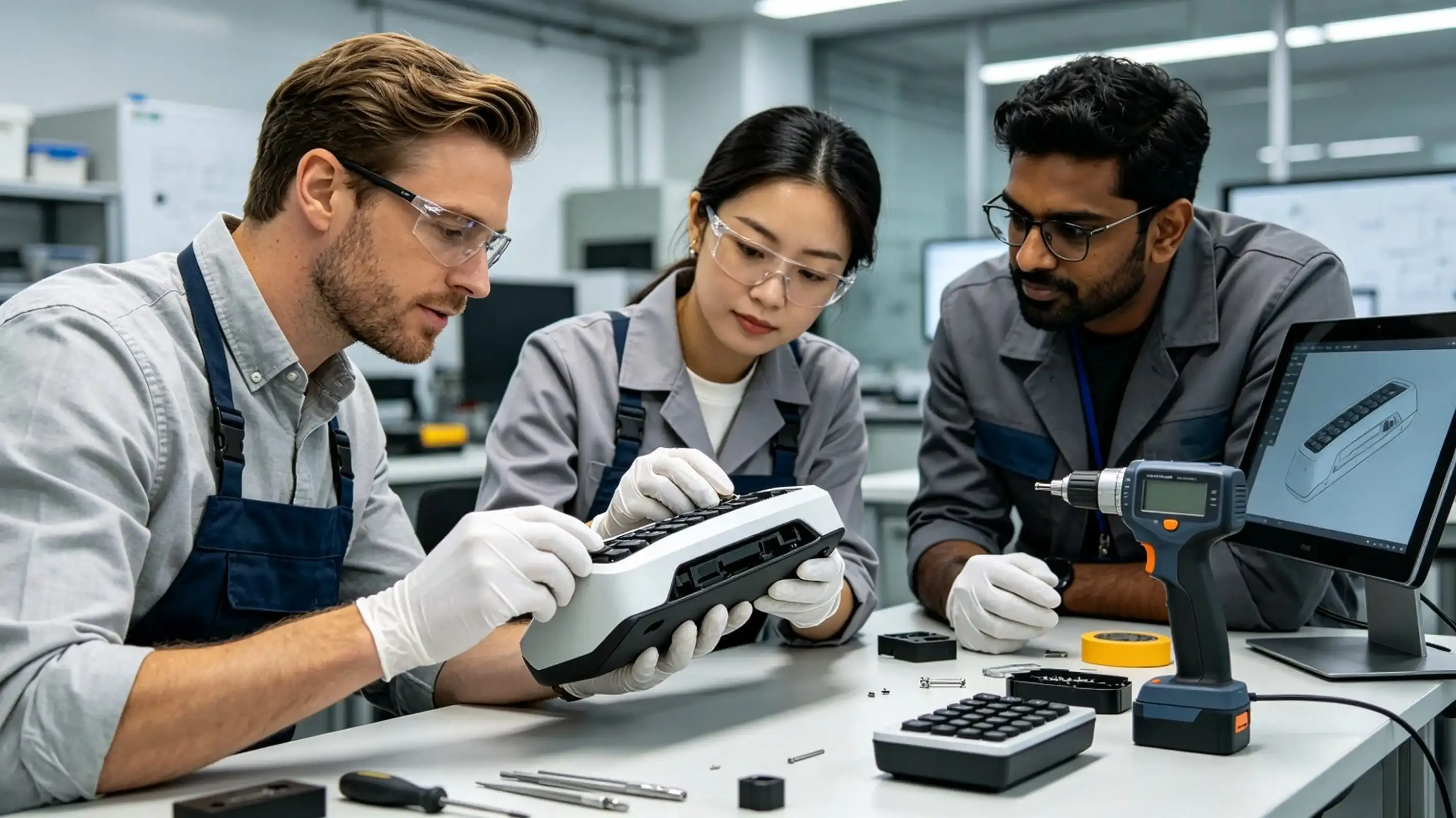
To be able to produce a product, consumers need to know what they want, what the brand wants, what the technical restrictions are and how much the product should cost. That list is transformed into a pickable form. Drawing things makes it extremely plain very fast things that are hard to see. A handle can be too thick, a control too far away, or two internal elements might be grinding against each other. When objects are viewed in their genuine size, designers may also examine how things appear in terms of scale and organization. It is far more expensive to remedy such faults after the fact than to detect them before engineering and tooling get off. A group may also arrange two or three ideas side-by-side on a model and use it to examine their function, simplicity of use, how they appear and how well they fit with the brand all at the same time. Human-centered design tells us that designers should not merely anticipate what people will think, but instead test their ideas on actual people. This approach works with it.
Sketches, CAD, Renderings, and Prototypes Work Together
Various tools for various jobs. A good method to get some thoughts going is to do a concept drawing. CAD models are fantastic because they feature exact geometry, making it easier to keep track of modifications and offer you files that vendors and teams working in other countries can access. Drawings will indicate color and finish so you can give your OK early on. Prototypes made in real life may demonstrate factors like size, weight, balance, comfort and how hard it is to push, turn or lift. Screens cannot do this. If you look at these tools as rivals, you’re missing a few things. Ulrich and Eppinger, in Product Design and Development, page 405, state that analytical prototypes are not the same as physical prototypes and should not be utilized for the same purposes. Another essential insight is from Houde and Hill’s 1997 chapter, “What Do Prototypes Prototype?”. A prototype might test a product’s purpose, appearance and feel, or function. Pick the tool that works for the task.
A Practical Model-Making Workflow
The sound process starts before any foam is cut. First, determine what the product is supposed to accomplish, who it is for, where it is going to be used, how much of it will be produced, how much it should cost and how it will be evaluated. See what your competitors are up to and what the industry is looking for next. Then sketch, CAD, and do digital layouts and concepts. Choose the correct kind of model for the job: engineering prototype, form-and-fit model, appearance model or ergonomic model. Build it, run it through your benchmarks, write down what you observe and then tweak it. Version control is vital at each phase, so maintain images, notes and dated files and make sure that team input translates into obvious changes at specific moments. A lot of teams also have an industrial design consultant or agency look over the test plan before they start building.
Key Benefits of Model Making in Industrial Design Training
Practical Problem Solving and Material Awareness
There is a lot you can learn by creating things by hand that you cannot learn in a classroom. People in training learn how to mold clay, cut foam board, examine the layer lines on a 3D printed product and bend thin walls. They assist you grasp space and size that might help you develop new forms of items. In terms of making decisions it’s not what you like, it’s what the facts indicate. In our Product Model Making program students learn to create clay models, prototype models and 3D printed models to bring design concepts to life. Finally, recording what they learn from each test helps them make better decisions. They carry this behavior to work with them, where designers need to justify their decisions.
Ergonomic Judgment and a Shared Reference
It’s impossible to judge how pleasant something will be to use from a screen. Trainees utilize a physical model to measure the difficulty of reaching, holding, standing, seeing and moving around with medical equipment, tools, appliances and wearable technology. The aim is defined by body measures, e.g. the range between the 5th and the 95th percentile. Then the model tests whether the product really satisfies that aim. And the model allows people who purchase, engineer, create and build goods something to talk about. “Everyone on the team gets the same surface, seam or button to point to so they don't have to argue about it. This means we can all understand each other better. This is a common reference and is highly beneficial to those who work in various workplaces.
Early Design-for-Manufacturing Lessons
People may also learn to think about building things from models. Trainees observe genuine restrictions in things like joints, wall thickness, coatings and how things are assembled. ISO 2768-1 defines broad tolerances for measurements of lengths and angles but not the specifics of each tolerance. People learn to utilize this sort of standard by using technical drawings. This book, by Boothroyd, Dewhurst and Knight, demonstrates that the fewer the pieces, the simpler it is to assemble. The easiest way to prove this is with a model that has a lot of screws. One of our programs is the Product Design Engineering Application. It educates pupils about the assembly of goods, manufacturing processes and material selection. This way students may understand how decisions around shape impact how things are created.
Model-Making Methods, Materials, and Manufacturing Readiness
Low-Cost Materials for Early Exploration
For early models, you don't need expensive tools. They can test shapes, sizes, and fits by hand for hours with foam board, cardboard, clay, and wood. Clay is good for surfaces that flow because it lets trainees add and take away stuff. Molds made quickly from foam board that look like housings and controls work well. Wood is good for stands and handles because it doesn't change shape. Since these things are cheap, students can make a lot of them and throw away the ones that don't work. When people quickly compare things, they are better able to decide what to do before they commit to a pricey finish or machine process.
Digital Fabrication Methods Compared
Adding things together is what ISO/ASTM 52900's seven process groups include. For prototyping, FDM (material extrusion), SLA (vat photopolymerization), and SLS (powder bed fusion) are three common methods. FDM is a quick and cheap way to check the fit, but it shows layer lines. SLA makes surfaces smoother and details more fine, which is good for parts that look good. It's possible to test how well strong nylon parts work with SLS because it doesn't need any support structures. CNC cutting is great for making parts out of solid stock, and laser cutting is quick for making flat panels. Choose one based on its accuracy, surface finish, durability, speed, part size, and cost, and then match it with the one the model needs to back up.
Prototypes That Prepare a Product for Production
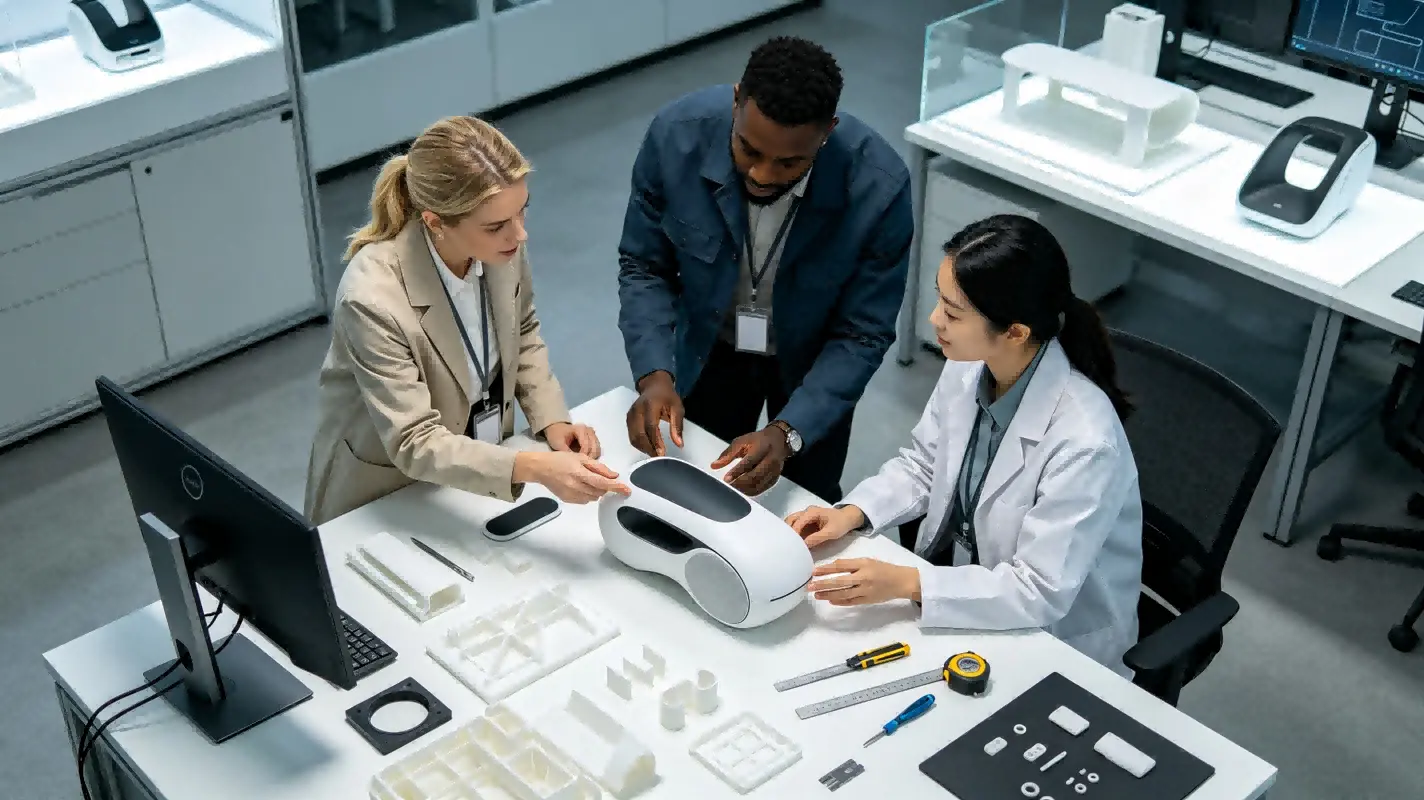
Looks models use paint, coatings, textures, clear parts, and printed logos to show what a product will look like. You can test access for assembly and service with engineering and functional prototypes that have electronics, mechanisms, and fasteners. Before the design freeze, teams check the shape, fit, alignment, order of assembly, and how the parts fit together. They check the edges, seams, how long it will last, and how easy it is to clean. At this point, finding tricky geometry or extra parts makes it less likely that you'll have to do more work. When you give a clear package of models, CAD files, drawings, specifications, and finish samples, the supplier can give you a more accurate quote. This is because they can see what the buyer really wants.
Applications and Common Mistakes in Industrial Design Model Making
Consumer Electronics and Medical Devices
For IoT and consumer electronics, prototypes are used to see how the casing fits, the controls, the ports, the displays, the batteries, and how they feel in your hand. A housing might appear beautiful in CAD but might not feel right when you grasp it. It could be hard to view the screen or get to the battery too. Medical gadgets need particular attention in cleaning, access and usage. IEC 62366-1 addresses ways to make medical equipment more user friendly. Teams utilize physical models to understand how people handle and use a product before they start actual testing. The individuals who will be using the product, the hazards, the regulations, the materials, all affect the end aim.
Machinery, Furniture, and Other Categories
People often inquire about how the operator of the machine or tool should stand, reach, see, conduct maintenance and wear safety gear. Furniture, appliances, packaging, vehicle parts, wearable gadgets and outdoor gear are a few examples of products that may need full-scale, reduced-scale or environmental models. We need chairs to do full scale testing with actual people. First, build a scale model of a huge appliance to understand the proper sizes. Then you may make a full scale model. "If you choose the proper scale and setting you may keep expenses down and put the test in the right spot to answer the question. You may design the exam in advance to save time, since each category awards a different sort of form.
Common Mistakes to Avoid
There are many errors. Teams have a final presentation mentality while constructing models, therefore errors arise later than expected. Why do they construct a model with no test goal? It’s a waste of time and materials.” They concentrate on the quality of the surface, whereas the important question is how it fits together, how well it performs or how ergonomic it is. They also don’t follow production restrictions, check feedback registers or choose a technique based on pricing alone. Before each build, make sure fidelity is in line with the question you laid out and note down the findings. This will help you avoid these blunders. For worldwide B2B and regulated projects the most crucial thing is formal design reviews and modifications that can be tracked.
Building Capability, Choosing a Partner, and Looking Ahead
Training Built on Real Constraints
Some important parts of good training are design theory, sketching, CAD, workshop practice, testing, and writing up what you've done. Projects should have real limits on things like time, money, materials, safety, and the number of things that can be made. Students should write down what they think, how they will test it, and what they will change. Our program in industrial design is based on this idea. Drawing for design and product engineering is taught in the first part of the course. The next steps are to use design engineering, make product models, and design products digitally. Teachers and people who are experts in business design work together to teach. Workbenches, a dust collector, and 3D printing tools can be found in the model-making workshop. These can be used to make clay, prototypes, and 3D printed models. It's possible to get ready for jobs like 3D modeler, industrial designer, plus more.
Choosing a Design or Training Partner
Before you ask for proposals, jot down clear goals for your product type, your target market, the number of items you want to make, the stage of development, the goals for your prototype, the process, and the time frame. Then, compare candidates based on their case studies, how much they know about design-for-manufacturing, their CAD and prototyping skills, their documentation, how well they manage quality, how private they are, how well they can work from home, and how clear their pricing is. Companies that do both industrial design and engineering can see a project through to production transfer. Styling services are all about how something looks. Trainers should also be checked in the same way. Since 2010, E.C.R. Most of the people we've trained and tested are from China and 28 other countries. We also work with more than 500 businesses.
Future Trends in Training and Model Making
User testing, measurable requirements, manufacturing validation, and writing down design decisions are more important than the quality of the presentation. Generative design, AI, CAD simulation, and rapid prototyping are all ways to come up with new ideas faster. But the product still needs to be checked in person to make sure it works, is safe, represents the brand well, and can be made. More and more people are also thinking about sustainability, which includes things like models that can be used again, prototyping materials that can be recycled, less waste, being able to fix things, and life-cycle thinking. It's getting more and more important for global teams that work from different places to have standardized files, clear specifications, remote reviews, and local prototyping partners. People who have learned these habits are now ready to work on making new products for the next few years.
Conclusion
As you learn industrial design, you should make models because they let you test your ideas. Even before they are made, the tools have issues with their size, function, ergonomics, assembly, and manufacturing. Trainees are also taught how to use facts to make decisions. To get the best results, sketches, CAD, renderings, and prototypes should all work together. Based on the choice that is being made, the prototypes' level of detail changes. Early tests should be done with cheap materials. Later tests should be done with FDM, SLA, SLS, CNC machining, and laser cutting. Mistakes like building without a test goal waste time and effort because different types of products are used for different things. Trainers teach designers how to communicate clearly with engineers, suppliers, and buyers by giving them drawing, CAD, workshop practice, and real-life documentation tasks to do.
FAQ
1. What is model making in industrial design?
It's helpful to test things like shape, size, ergonomics, function, assembly, and materials by making real models out of foam, clay, or 3D printed parts.
2. Why use physical models when CAD already exists?
CAD works well and is simple to change. You can see and feel the scale, weight, balance, and comfort of the model in real life. Teams do their best when they use both.
3. Which prototype types should buyers know?
Look and finish tests are done by models who look good. This type of model checks how well you can hold and reach. To make sure the design can be made, functional and engineering prototypes are used to test how things work and how they're put together.
4. What affects a prototyping quote?
The price depends on the type of material, process, quantity, level of finish, and the number of changes that need to be made. Partner can give you a good quote if you give them a clear brief, test goals, and CAD files.
5. Can beginners join your program?
Yes. The first part is an introduction to design and the basics of putting things together. Drawing engineering plans, making models, and digital design are the next steps. It helps to know how to do simple things with art and computers.
Plan a Stronger Industrial Design Training Path with E.C.R Academy
You could teach a school, a product team, or a design studio how to shape things. E.C.R. Academy has a program in industrial design that is taught by both business design experts and subject teachers. The program has options that were made by both groups, as well as course licensing and custom in-house training. If you want to compare industrial design companies, email ecr2008@enteredu.com with the type of product you want to buy, your goals, and a timeline. Visit enteredu.com to learn more about our course.
References
1. Product Design and Development (Ulrich & Eppinger), 2016
2. Handbook of Human-Computer Interaction, "What Do Prototypes Prototype?" (Houde & Hill), 1997
3. Product Design for Manufacture and Assembly (Boothroyd, Dewhurst & Knight), 2010
4. ISO/ASTM 52900, Additive Manufacturing: General Principles, Fundamentals and Vocabulary, 2021
5. IEC 62366-1, Medical Devices: Application of Usability Engineering to Medical Devices, 2015
6. ISO 2768-1, General Tolerances for Linear and Angular Dimensions, 1989