Virtual Reality Interactive Application Development in Industrial Automation
In industrial automation, virtual reality interactive application development is the process of making 3D, real-time software that lets people use, inspect, and fix industrial equipment in a virtual space. The developers link the virtual scene to user interfaces, PLC logic and data from the equipment. Then a student may practice a job without stopping a manufacturing line or putting himself in risk. This is the convergence of automated engineering, 3D graphics and digital twin work as we view it at E.C.R. Academy. This tutorial speaks about the stages, the various technologies available, the expenses, the return on investment, selecting a partner and the skills your team will require.
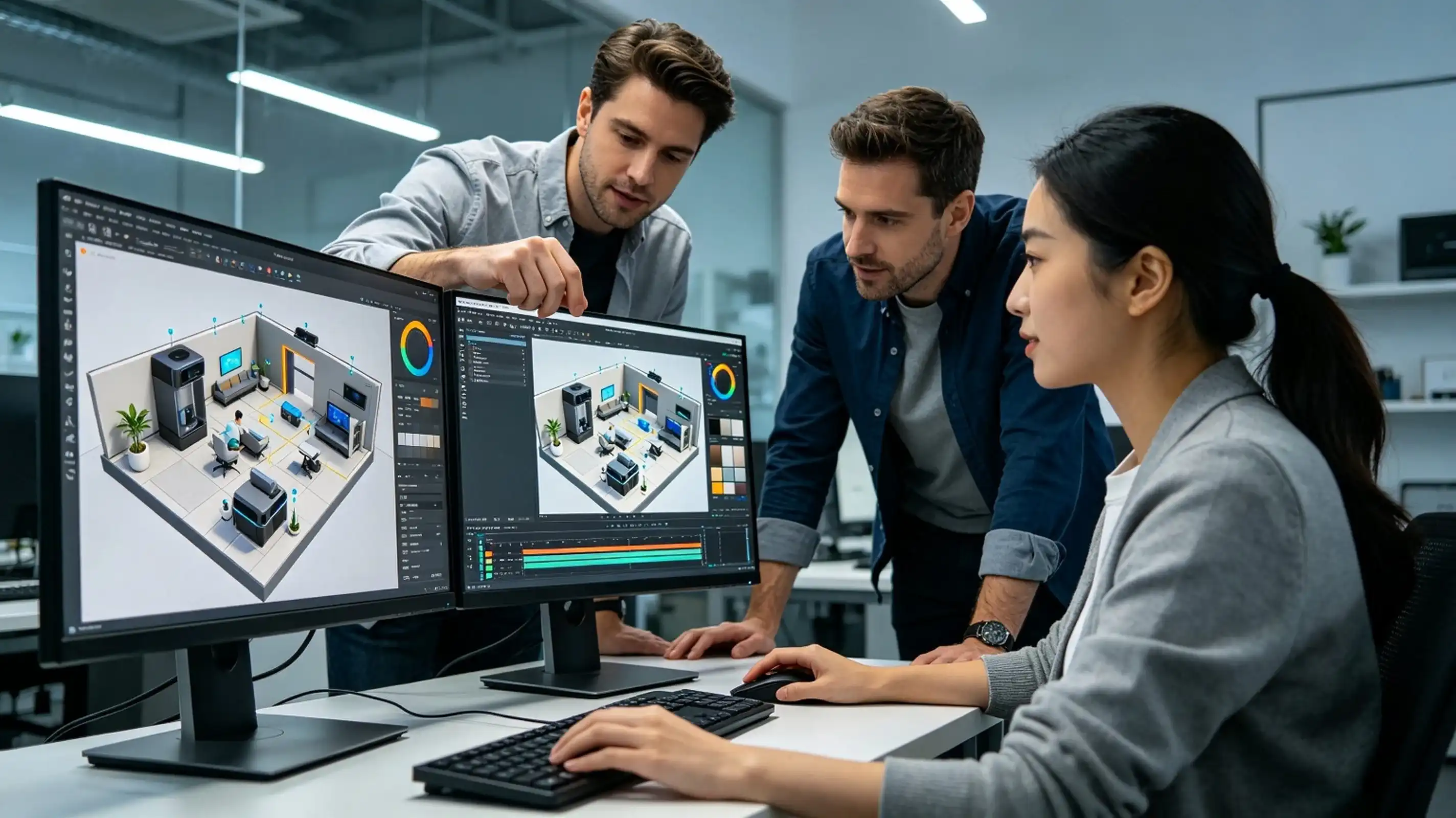
What Virtual Reality Interactive Application Development Means in Industrial Settings
A Plain Definition
In virtual reality interactive application development, 3D industrial assets, real-time simulation, user input, and feedback in the form of sound or vision are all put together in one program that works. When used in a factory, the program could copy a machine, a maintenance procedure, the layout of the plant, or a safety incident. The person does more than just watch. The person using the software picks up tools, flips switches, reads gages, and makes choices. The software then keeps track of each action. These programs are made by developers using game engines or web graphics technology. They are then linked to control logic or fake data. We want a practice area that is safe, can be used again and again, and works like the real equipment.
How It Differs from Manuals and 360-Degree Video
Manuals and 2D drawings that don't change can only explain how to do something. This kind of video has a fixed view and doesn't let the learner change anything. Every action in an interactive app has a response. The program can show what will happen and record the mistake if a trainee skips a lockout step or opens a valve at the wrong time. Then, trainers can look at the task's time, error count, and status as to whether it's finished. Jensen and Konradsen's 2018 review of headset-based education and training showed that this method works best for learning practical skills but not so well for learning facts. Most industrial work depends on actions that have been practiced, so that pattern makes sense.
Where Industrial Teams Use It
Operator training, maintenance instructions, safety drills, planning the layout of a factory, remote customer demonstrations, and digital twin visualization are all common uses. Demonstrations are how machine makers show buyers in faraway cities how their products work. Plant trainers practice things like emergency stop sequences that would be too dangerous or expensive to actually do. Before putting in hardware, engineers test layouts and control logic with virtual lines. A 2020 study by PwC on soft-skills training found that people who learned in VR learned up to four times faster than people who learned in a classroom. Since that study didn't look at how to run a machine, I see it as a sign of interest rather than a promise for every technical course.
Process, Technologies, and Interaction Design
From Requirements to Deployment
Each project should have business goals from the very start. These should be about who will use the app, what problem it solves, and how the team will know it was successful. After that, the developers examine the safety standards, standard operating procedures, manuals, CAD drawings, PLC and HMI workflows and the CAD designs. Then students build little 3D models and pick a platform and plan how the models interact with each other and code the app. Test with field experts before deploying so that operators may find out the things that are not correct quickly. A comprehensive approach also includes acquiring new users, providing administrators with the tools they need to secure data, managing technology, and upgrading when procedures or equipment change. That last one is what keeps the app from drifting away from the real plant.
Engines, Standards, and System Links
Generally, Unity is better for cross-platform training, Unreal Engine is better for lifelike sceneries. WebGL is Khronos Group's 3D graphics rendering API for web browsers. It performs well in classrooms and shared laboratories. In 2019, Khronos released OpenXR 1.0 , a royalty-free standard for headsets. It allows several types of devices to execute the same application. In business, an app may connect to data from a PLC, SCADA, MES, LMS or CAD system. The IEC 61131-3 standard is the rulebook for programming PLCs and contains languages such as ladder diagram. “Buyers must test the performance, security and offline use of the product before buying.
Interaction Design Around Real Tasks
Build it for work, not for gaming. Operators require controls that are straightforward to comprehend, prompts that make sense given the circumstances surrounding their job, and unambiguous feedback following each action. A excellent app helps the user through examination, selecting the proper tool, activating switches, discovering defects and what to do in an emergency. The training strategy needs to know how many errors were made and the time used for each job. Comfort is vital too. Stable reference points, a slow moving camera, readable text and sitting or teleport modes may help reduce motion sickness. Designers also have to consider things like gloves, noise, illumination, shared headsets, role permissions and the security of private plant data. I usually advise teams to do early testing with a genuine technician, since that individual is going to challenge every label.
Delivery Models, Costs, and Implementation Planning
Custom, Off-the-Shelf, In-House, or Outsourced
Custom development costs more and requires more preparation but it works with proprietary machinery, intricate procedures and rigorous data regulations. Off-the-shelf software will work if you simply require basic themes or a first pilot, but it restricts revisions and system linkages. Even with an in-house team, you still need professionals in software, 3D creation, user experience, testing, support and more. Outsourcing accelerates work and brings expertise. A hybrid approach typically works well. Your engineers know how the process works, and a team from outside the organization understands how to code and build 3D models. If a school doesn’t have any VR programmers, it may choose to educate its own instructors rather than buying a closed product.
What Drives the Cost
The price is defined by the number of scenarios, the complexity of the 3D assets, the depth of simulation, the target hardware, the number of users, localization, reporting, security and support. I wouldn't give you a price on the field since there's so many factors that influence it. A reliable quote distinguishes discovery, user experience design, 3D modeling, programming, integration, testing, deployment and maintenance. Buyers provide process documentation, CAD files, target devices, user numbers, locations, security regulations, timeframes and acceptance criteria to suppliers so that costs are right. Don’t only inquire what the construction price is, ask for the total cost of ownership too, since there will be ongoing maintenance and updates after launch.
A Phased Plan with a Focused Pilot
Phasing lowers the risk of procurement. First, find out if the idea is possible. Then, make an interactive prototype. Next, make a "minimum viable product." Finally, make the app available to more people. And finally, keep making it better. To start, choose one important machine or process. When you try to model a whole factory, you get worse feedback than when you just test one station well. Reviewers like operators, technicians, engineers, safety managers, and trainers should be brought in to make sure the language and realism are correct. Set goals for frame rates, offline use, who owns the content, version control, and headset management before the pilot ends. This way, there will be fewer unanswered questions when the next phase starts.
Measuring Return, Choosing a Partner, and Watching Trends
Measuring Return on Investment
Set a base before you launch. Keep track of the current training time, the speed of onboarding, the number of mistakes, downtime, travel costs, and instructor hours. Once the pilot is over, look at the same numbers from more than one training cycle. Learners can add up completion rates, test scores, remembering how to do something, making the same mistake more than once, and finishing a task the first time. Manufacturers and distributors can also keep track of activities like remote demonstrations and less shipping of equipment. Don't just count the cost of development; also count the cost of ownership. Think of the first results as test data, and then confirm them over time. It's impossible to say for sure that things are getting better without a starting point, and the finance team will notice.
Choosing a Development Partner
A well-done demo doesn't show that you can deliver. Find out if they have worked on automation projects, training simulations, OpenXR, Unity or Unreal Engine, CAD conversion, system integration, or cybersecurity before. Make a scorecard that includes things like technical skill, communication, documentation, testing, clear pricing, ownership terms, and support coverage. Ask the partner how they keep private CAD files safe, make sure simulations are accurate, deal with restricted networks, and keep track of who owns the source code. Ask for case studies, prototypes, references, milestone plans, and service terms after launch, and then make sure they are correct. Put the answers in the contract so that everyone knows what to expect.
Trends Worth Tracking
Digital twins can connect virtual scenes with real or fake data from a plant to help with commissioning, remote engineering, and planned maintenance. Teams can use the same words for this work thanks to ISO 23247, the 2021 standard series on digital twins in manufacturing. Virtual instructors and adaptive training paths are two AI-assisted features that may show up in more products. However, content that is safety-critical still needs to be reviewed by experts. Multiple users can connect engineers, customers, and distributors from different sites, and mixed reality and lighter headsets may make use easier in the field. Manage identities, make sure data is shared correctly, and keep track of data will become more important as projects get bigger.
E.C.R Academy Course: From PLC Programming to Metaverse Simulation
Curriculum and Projects
From PLC programming to metaverse virtual simulation, our Virtual Reality Interactive Application Development course travels. With TIA Portal for S7-1200 controllers, learners write PLC programs that cover setting up projects, configuring devices, using ladder logic, and simulating. They make 3D scenes of factories with layouts, lighting, materials, and models of the machines that work there. After that, they build monitoring and control interfaces and connect the PLC to the scene. A smart factory material sorting system with conveyors, robotic arms, and sensors, and a multi-liquid mixing system with pipeline valves, level sensors, stirring motors, and heating devices are the two main projects that students work on during their training. At the end of the course, there are tests, improvements to communication and rendering performance, and publication.
Platform with Virtual-Physical Mapping
The Industrial Digital Twin Engine Platform is used for training. It is a browser-based B/S platform made with HTML5 and WebGL. It lets PLC programs and virtual scenes talk to each other and control each other in real time, so a real device and its virtual twin can move together. The modules cover programming PLCs, making scenes with equipment model libraries, setting up communication, making interactions, and publishing. Learners don't need to install any clients. A computer with an i5 processor, 8 GB of memory, a graphics card that can handle WebGL, and Windows 10 or higher with the most recent versions of Chrome or Edge is what you should get. That small footprint works well in shared school labs and training rooms at work.
Faculty, Standards, and Partner Types
The course is taught by engineers from business and academia, and it follows international standards for technical skills. Anyone can start because the lessons are broken down into steps and there are lots of hands-on activities. A material package includes 3D models of equipment, examples of PLC programs, and virtual scene templates. Partner organizations that are targeted include businesses, schools, industry groups, and other groups. Nearly 500,000 people from China and 28 other countries have been trained and tested by E.C.R. Academy since 2010. We've worked with over 500 businesses and hired more than 3,300 experts. When students are done, they know how to do digital twin work, virtual simulation, smart manufacturing, and industrial automation.
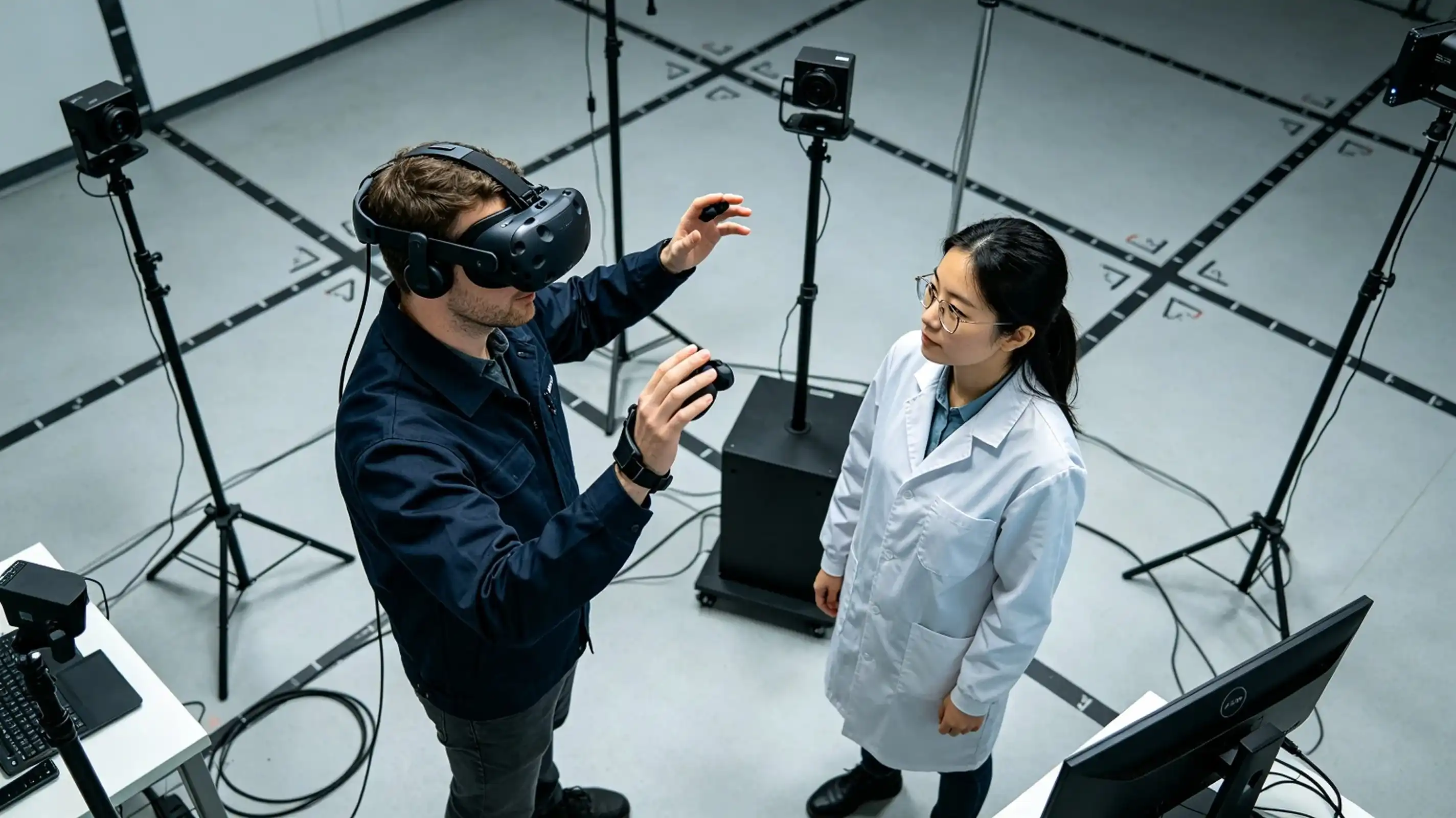
Conclusion
In industrial automation, virtual reality interactive application development creates 3D, real-time programs that let people practice using equipment, connect to PLC and plant data, and keep track of performance. Every step of a project is planned out, from gathering requirements and assets to selecting a platform, designing interactions, testing, and launching. Different needs are met by different engines, WebGL, OpenXR, and industry standards. Costs and delivery models are based on the number of scenarios, the level of integration, and the support. There is less risk and more trust in the results when there is a phased pilot on one machine, a baseline measurement, and a scored partner review. Digital twins, AI features, and multi-user sessions all point to a wider use, but safety content still needs to be checked out by a professional. To learn new skills, there is a course that combines PLC programming with browser-based virtual-physical synchronization. This course links control logic to virtual scenes.
FAQ
1. Can I take this course with no background?
Yes. For beginners, the course has a planned way for them to learn. With a lot of hands-on exercises, it builds on what you already know and goes from there.
2. What computer do learners need?
The platform only needs a browser to work, so the requirements are pretty low. If you want to use WebGL, you need a CPU that is at least an i5, 8 GB of memory, Windows 10 or higher, and the latest versions of Chrome and Edge. You need at least an i3 CPU, 4 GB of memory, a graphics card that can handle WebGL, and Windows 7 or higher.
3. How do learners get course materials?
The course gives you a set of materials that includes 3D models of industrial equipment, examples of PLC programs, and virtual scene templates. It also teaches people how to find industrial materials and work with them on their own. When a project calls for them, learners can make their own materials or buy licensed ones.
Partner with E.C.R Academy for Virtual Reality Interactive Application Development
If you are looking for a virtual reality interactive application development company to train your staff or students, E.C.R. Academy would love to hear from you. Experts from both the business world and academia teach our course, which combines PLC programming with browser-based digital twin scenes. Visit enteredu.com or email ecr2008@enteredu.com with the number of people on your team and the skills you want them to have. We will talk about the scope of the course and the different ways your business, school, or association can partner with us.
References
1. Khronos Group, OpenXR 1.0 Specification, 2019
2. Khronos Group, WebGL 2.0 Specification, 2017
3. PwC, The Effectiveness of Virtual Reality Soft Skills Training in the Enterprise, 2020
4. Education and Information Technologies, A Review of the Use of Virtual Reality Head-Mounted Displays in Education and Training (Jensen and Konradsen), 2018
5. International Organization for Standardization, ISO 23247 Series: Automation Systems and Integration, Digital Twins for Manufacturing, 2021
6. International Electrotechnical Commission, IEC 61131-3 Programmable Controllers, Part 3: Programming Languages, 2013