Why Mechanical Design, Manufacturing & Automation Skills Matter Today
The core of any contemporary production floor is Mechanical design, manufacturing & automation expertise. The gap between employees who have these abilities and those who don't has never been bigger as firms move from manual labor to digitally linked manufacturing processes. The U.S. Bureau of Labor Statistics (2023) notes that there is considerable demand in manufacturing for precision machining and CNC jobs, and median pay have continuously been higher than the national average. If you’re running a vocational training program or leading an engineering team, knowing why these skills important is the first step to establishing a workforce that's equipped for today's industrial realities.
Understanding the Foundations of Mechanical Design and Manufacturing Automation
Before judging a training program or buying choice, it's helpful to know what these fields are for and how they work together on a real production floor.
Core Mechanical Design Principles
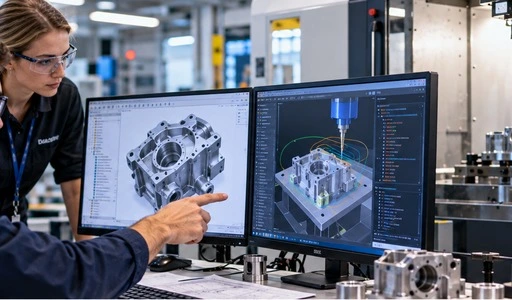
Mechanical design is the process of turning part requirements such as size, tolerances and material quality into a manufacturable product. CAD systems like as Autodesk Inventor, PTC Creo and Dassault Systèmes SOLIDWORKS provide engineers the ability to verify the geometry is correct and test the item's performance before a single chip is cut. Organizations that use digital design tools at the beginning of the product development process may reduce the number of design revisions required by as much as 30%, according to Deloitte’s 2023 Manufacturing Industry Outlook.
Fundamentals of Manufacturing Automation
This is termed factory automation when machines are operated with little to no human intervention using control systems like CNC processors, PLCs and servo motors. The control architecture that drives the majority of production cells throughout the globe originates from the top names in the industry, such as FANUC and Siemens. For example, a CNC lathe from FANUC can produce thousands of pieces in a succession with dimensional errors of just micrometers, a reproducibility no human can achieve.
Why Integration Matters
When mechanical design data is delivered directly into a CNC machining environment, process engineers eliminate errors and save time. This connection between design intent and machining execution is the productivity advantage that procurement experts and training directors alike should be striving for.
Key Skills and Technologies Driving Modern Mechanical Design & Automation
The tools and methods available in 2026 have changed significantly compared to even five years ago, and staying current with them determines competitive advantage.
Leading CAD and CAM Tools
Parametric modeling in PTC Creo is suitable for sophisticated assembly design. Autodesk Fusion 360 is CAD and CAM in one, accessible via the cloud. Dassault Systèmes’ CATIA is still the de facto standard for aeronautical structural design. For machining preparation, CAM software produces toolpaths that feed directly into CNC controllers, eliminating the need for manual G-code writing for complicated surfaces and saving programming time substantially.
Industry 4.0 Technologies on the Shop Floor
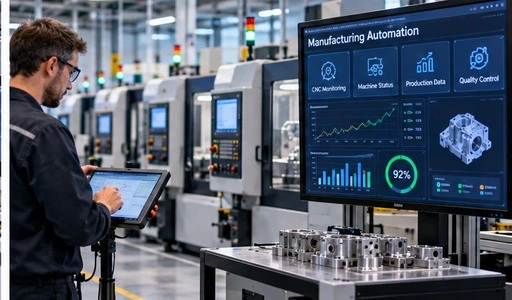
In mechanical design, manufacturing & automation, IoT-enabled sensors now send real-time data on spindle load, temperature and vibration into factory execution systems (MES). AI-assisted toolpath optimization changes the cutting settings throughout the cycle to conserve the tool life. Collaborative robots provide part loading between manufacturing processes. Combined, these technologies enable a production cell to function more independently, which is why training programs must teach digital manufacturing principles as well as conventional CNC capabilities.
independence, which is exactly why training programs must cover digital manufacturing concepts alongside traditional CNC skills.
The Skill Gap That Costs Production Time
The manufacturing industry in the U.S. might be short 2.1 million qualified people by 2030, according to a 2022 analysis from Deloitte and the Manufacturing Institute. The hardest-to-fill positions need a blend of CNC programming expertise, process planning capability and understanding of digital quality tools. This is exactly the skill set that organized training in mechanical design and industrial automation is intended to provide.
How to Choose the Right Mechanical Design and Automation Solutions for Your Business
Choosing the right training program or automation system requires clarity about what your operation actually needs, both now and in the next three to five years.
Mechanical Design vs. Electrical Design: Clarifying Scope
The mechanical design is concerned with geometry, choice of material, tolerances and planning of machining processes. The electrical design includes the control circuits, wiring and sensor integration. Most automation projects want both, although procurement teams tend to undervalue the mechanical scope when budgeting. Clearly defining the scope up front eliminates vendor misalignment and budget overruns during execution.
Automated vs. Manual Manufacturing: Weighing the ROI
Automated machining cells have greater upfront equipment costs (a five-axis machining center may cost more than $500,000), but provide better repeatability, faster throughput and cheaper per-unit labor costs during a multi-year production cycle. For low-volume high-variety products when the time spent on preparation is more than the machining time, manual procedures are nevertheless cost-effective. The choice is driven by production volume, part complexity and the capabilities of the workforce, not automation for automation's sake.
Supplier Selection Criteria
There are certain practical matters to pay attention to while looking for a dependable provider of both equipment and training programs. Here are the main factors that are always used by procurement teams:
- System compatibility: Confirm that the training platform or automation system integrates with your existing CNC controllers (FANUC, Siemens, Heidenhain) and, where relevant, your MES or ERP environment.
- Vendor track record: Brands such as Mitsubishi Automation and ABB publish documented case studies and reference customer lists. Request these and verify independently.
- After-sale support: Equipment that requires scheduled calibration and preventive maintenance needs a supplier with local or regional service capacity, not just remote support.
These criteria protect both the equipment investment and the training outcomes that depend on it.
Maximizing ROI Through Strategic Procurement of Mechanical Design and Automation Services
A smart way to buy things isn't just to find the cheapest one. It is about keeping the organization's money safe throughout the whole program or piece of equipment's life.
Outsourcing vs. Building Internal Capability
When you outsource mechanical design services to a reputable engineering or training partner, you cut down the time to become skilled and have access to proven courses and tool sets. For us to establish our own capability fully, we need to recruit competent teachers with two qualifications: those who can teach theory and those who can demonstrate how to operate a genuine machine. These educators are usually so hard to find. A hybrid methodology is typically the greatest long-term outcomes, with outside specialists training internal educators on a systematic schedule spanning 12 to 18 months.
Evaluating Turnkey Training Programs
A complete program should include the whole process, from analyzing part drawings to planning the work, setting CNC machines, making sure the simulations are correct, and actually cutting the parts. This is exactly what the mechanical design, manufacturing & automation study at ECR Academy does. The program has four training labs for CNC turning, CNC milling, machining centers, and digital production. It uses a standard project-based model and is taught by a faculty team of college teachers, business engineers, and master-level trainers. Learners who meet the requirements get diplomas in CNC turning and milling that can help them get jobs in the general equipment manufacturing, automobile, aerospace, and mold-making industries.
Negotiating Training Contracts
Contracts for training programs should not be based just on Contact hours. Rather, quantifiable results should be included, such as pass rates for certificates, scores on skill tests, and accuracy criteria for machining. CNC control software and CAM tools are often updated, therefore be sure to have refresher cycles for the curriculum. Penalty clauses for late deliveries or pass rates below goal are meant to protect the customer without deterring excellent suppliers."
Real-World Applications and Case Studies
Procurement leaders and program heads are more likely to believe evidence from real operations than theory.
Siemens Digital Industries Training Integration
Siemens has written down its own technical training programs for automation engineers. These programs use virtual commissioning and digital twin environments to prepare them before they work on real equipment. People say that the measurable result is less time spent commissioning machines because engineers already know how they work when they get there.
FANUC's Certified Education Program
FANUC has a network of certified education partners around the world that use real FANUC controllers to teach structured CNC programming and robotics. Partner schools say that students who learn how to use real control systems are better prepared for production roles than their peers who only learn how to use generic simulation software.
Addressing Common Implementation Challenges
Instructor qualification is the most common thing that stops people from using training programs effectively. It's hard for instructors who know a lot about theory but haven't taught a workshop in a while to answer practical questions. This is directly dealt with by ECR Academy's dual-instructor model, in which enterprise engineers co-deliver modules with teaching faculty.
Conclusion
CNC machining, process programming, and digital manufacturing skills in mechanical design, manufacturing & automation are not optional additions to a manufacturing workforce—they are table stakes for any operation that wants to stay productive and competitive. The evidence from labor market data, automation adoption rates, and documented training outcomes all point in the same direction: organizations that invest in structured, full-process training programs produce better-prepared workers and see faster returns on their equipment investments. The choice is not whether to build these skills, but how to do it efficiently and with a reliable partner.
FAQ
1. What background do learners need before starting a CNC machining course?
A basic ability to read mechanical drawings, foundational knowledge of metal materials and common machining methods, and basic computer operation skills are recommended. Programs like ECR Academy's course include introductory support for learners who need to strengthen their foundation before entering core modules.
2. What industries hire graduates of CNC and digital manufacturing programs?
Graduates regularly enter roles in general equipment manufacturing, automotive component machining, precision mold manufacturing, aerospace part production, and technical sales or service support for CNC equipment and cutting tool companies.
3. How does simulation software fit into practical CNC training?
Simulation allows learners to verify toolpaths, check for collisions, and optimize cutting parameters before operating a live machine. This step reduces material waste, protects equipment, and builds learner confidence before actual machining begins.
Start Building Your CNC and Digital Manufacturing Capability with E.C.R Academy
Ready to put your mechanical expertise to work on a CNC? With 16 years of expertise in global skills education, ECR Academy has trained approximately 500,000 participants in China and 28 countries, and over 300,000 learners have received recognized skills certifications. ECR Academy combines education with the real demands of the business – with 500+ partner enterprises, 3,300+ experts’ help and 60,000+ learning resources available. Our Mechanical Design, Manufacturing & Automation Course Combines Part Drawing Analysis, Process Planning, CNC Programming, Simulation Validation And Practical Machining Via Standardized Project-Based Training. Professional CNC turning, milling, machining centre and digital manufacturing labs, lecturers, enterprise engineers and master mentors allow learners to develop real world skills for careers in modern manufacturing. Contact ECR Academy at ecr2008@enteredu.com to explore the course and start your future-ready skills journey today.
References
1. U.S. Bureau of Labor Statistics. Occupational Outlook Handbook: Machinists and Tool and Die Makers. 2023.
2. Deloitte & The Manufacturing Institute. The 2022 Deloitte and Manufacturing Institute Skills Gap and Future of Work Study. 2022.
3. Deloitte. 2023 Manufacturing Industry Outlook. 2023.
4. FANUC Corporation. FANUC CNC Education: Certified Partner Program Overview. 2022.
5. Siemens Digital Industries. Virtual Commissioning and Digital Twin in Industrial Training. 2023.
6. International Organization for Standardization. ISO 12100: Safety of Machinery — General Principles for Design. 2010 (reviewed 2021).


_1781601799781.webp)