What Should MES Operations Engineer Training Cover Today?
When manufacturers invest in digital transformation, one role becomes the linchpin of the entire operation: the mes operations engineer. This professional keeps Manufacturing Execution Systems running smoothly across continuous, high-stakes production environments. Yet many companies struggle to find engineers who combine technical depth with real manufacturing knowledge. Effective training must bridge that gap — covering MES architecture, database management, system integration, fault handling, and smart manufacturing technologies — so engineers can operate confidently from day one without relying on costly external support.
Understanding the Core Responsibilities of MES Operations Engineers
As a company moves toward digitalization, the mes operations engineers becomes the most important person in the company. This person makes sure that Manufacturing Execution Systems work well in high-stakes, constant production settings. Still, a lot of businesses have trouble finding engineers who are both technically sound and know a lot about how to make things. That gap needs to be filled by good training that includes MES architecture, database management, system integration, fault handling, and smart manufacturing technologies, so engineers can start working with confidence right away and not need to rely on expensive outside help.
ERP systems and the shop floor are connected by manufacturing execution systems, which coordinate work orders, quality data, machine signs, and the ability to track materials in real time. The engineer who is in charge of this layer has a lot of operational weight.
What Does an MES Engineer Actually Do Each Day?
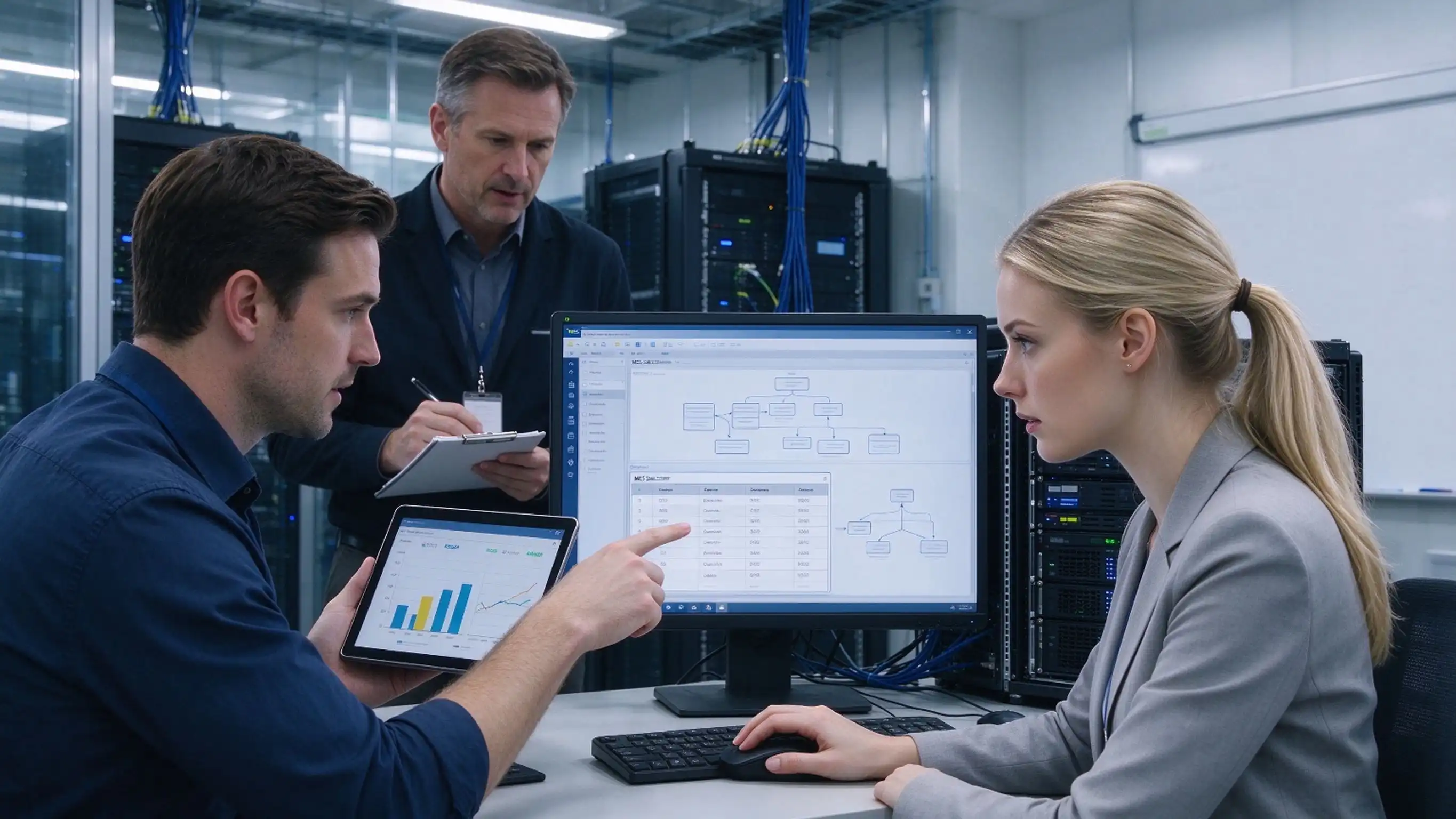
Everyday tasks include a lot more than just clicking screens. A good manufacturing systems engineer checks the health of servers, controls the performance of databases, fixes bugs in integration interfaces, reacts to fault alerts, and makes sure the system is available 24 hours a day, seven days a week. MESA International says that unplanned MES downtime can quickly lead to wider production stops. This means that being able to respond quickly to faults is a must.
Some important success standards for this job are:
- System uptime: Keeping availability at or above 99.9% in environments where production runs all the time.
- Mean Time to Repair (MTTR): Getting incidents fixed faster by following structured methods for handling faults.
- Integration accuracy: Making sure that data can flow both ways between MES, ERP, WMS, and machine systems.
- Data integrity: Making sure that production traceability records meet audit and reporting needs is an important part of data security.
Because of these duties, training needs to go far beyond just being familiar with ideas. Before they go onto a live production floor, engineers need to work with real systems in real-life situations.
Comprehensive Training Curriculum for Modern MES Operations Engineers
A well-thought-out program builds skills in stages, starting with the basics of the system and moving on to database work, monitoring practice, and integration development. This level of detail just can't be matched by generic IT training.
The Four Skill Pillars Every Training Program Should Include
The mes operations engineer course at ECR Academy was created by business mentors and academic teachers. It is organized around four skill areas that are all connected. The lessons are based on what people actually need to know to do their jobs, not just general ideas. This means they can be used right away in factories that make electronics, equipment, and auto parts.
Here are the core competency pillars this program develops:
- MES system fundamentals and architecture: Students learn about the ISA-95 and MESA frameworks and how to classify modules such as work order management, production reporting, material traceability, quality control, and equipment management. They also practice business workflows for both discrete and process manufacturing scenarios.
- Database management and SQL development: The training covers database management and SQL development in both SQL Server and MySQL settings. It covers DDL/DML operations, multi-table joins, stored procedures, index optimization, backup and recovery, access control, and making custom reports for managing production data.
- System monitoring and fault handling: Engineers use automated tools to create inspection processes, set up exception alerts, practice emergency reaction plans, and use live-environment simulations to learn how to tune performance and plan for capacity.
- System integration and interface development: OPC UA/DA, SECS/GEM, MQTT, Modbus, and SCADA data capture are some of the industrial communication protocols that are covered, along with useful interface development that connects MES to ERP, WMS, PLC, and AGV systems.
These pillars work together to create full-stack MES capability, which means being able to run, maintain, develop, and fix problems with manufacturing information systems on your own.
Aligning MES Engineer Training with Industry 4.0 Realities
The use of smart factories keeps growing. Over 86% of manufacturers polled by Deloitte's 2023 Global Manufacturing Competitiveness Index said that going digital was one of their top strategic priorities. That investment needs a workforce that can keep it going.
Where Smart Manufacturing Technologies Enter the Curriculum
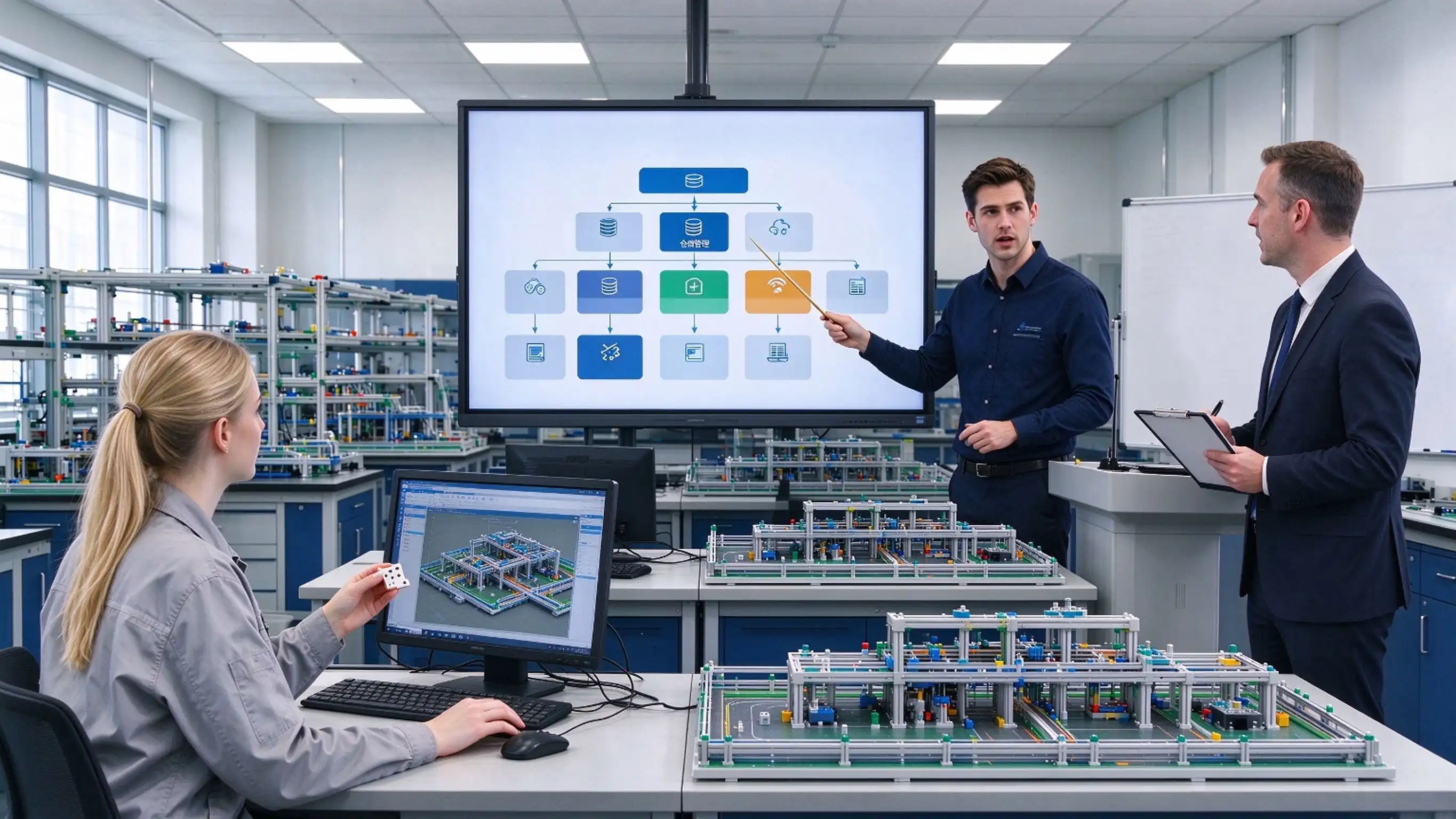
The program at ECR Academy combines ideas about smart manufacturing, the Industrial Internet of Things, and digital twins directly into technical training. These ideas are not added on as extras, but are used in the context of mes operations engineer operations. Learners see how MES dashboards use real-time data from linked machines, how digital twin environments help test systems before they go live, and how cloud-connected MES designs are different from on-premise solutions.
This method makes sure that the skills learned will still be useful in the future, so an engineer trained today will still be able to do their job as workplace processes change. Cross-functional collaboration skills, like telling production managers about technical limitations and helping with change management during system upgrades, are always being looked at. This is because technical skill alone isn't enough to keep operations stable.
What Sets ECR Academy's Training Model Apart
There are different kinds of mes operations engineer training classes. A lot of general courses talk about MES ideas in a general way, without relating them to any specific system design or factory situation. This lack of communication is annoying for training managers who need engineers who are ready to work on systems that their factories already have.
A Three-Stage Learning Model Designed for Real-World Readiness
There are three steps of learning at ECR Academy: technical theory, virtual modeling, and enterprise-oriented practice. This order makes sure that students fully understand ideas before using them in simulated problem cases and then moving on to tasks that are more like those that happen in real life.
The learning environment supporting this model includes:
- MES teaching system: Built from popular MES products and lets you use key features and real production processes.
- Database lab environment: Features SQL Server and MySQL for practicing setting up, managing, and improving performance.
- Interface development simulator: Simulates the merging of ERP and WMS and requires practice with testing and handling errors.
- Fault injection system: Creates real-life fault situations to help train people in how to handle emergencies and make maintenance decisions.
The whole plan is based on combining industry and schooling. Enterprise mentors give students information about how things are made, and academic instructors give students information about how to learn. Because of this, the program doesn't feel like a vendor demo or a textbook lesson; it feels like getting ready for a real job.
How MES Training Supports Recruitment, Retention, and Business Continuity
Investing in training has benefits beyond just learning new skills. For manufacturing companies going through the digital transformation process, being able to grow their own talent lowers their reliance on hiring people from outside the company and the chance that knowledge gaps will stop production.
Building a Sustainable Internal Talent Pipeline
Engineers can become mes operations engineers, MES Implementation Engineer, MES Development Engineer, or Manufacturing Data Analyst after they finish organized MES training. Each of these jobs makes a direct contribution to the security of output and the optimization of the system.
Companies that spend money on training that is recognized and backed by certification also see better employee retention. Engineers are more likely to move up in their company if they are given structured development opportunities and credentials that are recognized by the industry. Since 2010, ECR Academy has provided professional training and evaluation services to almost 500,000 people in 28 countries. Of these, over 300,000 have earned recognized skills certifications, which is a track record that supports the credibility of credentials in hiring and performance talks.
Conclusion
The field of mes operations engineering combines understanding of industry with skills in digital systems. To close the skills gap in this field, training needs to be technically sound, based on real-world situations, and in line with how production settings work in the real world. Architecture basics, database practice, integration development, and smart manufacturing technologies are all taught in programs that make engineers who can start contributing right away and keep getting better. If makers find the right training partner, they can build that skill in-house instead of hiring someone from outside the company, which would be more expensive and riskier.
FAQ
1. What background do learners need before enrolling?
People who want to take the ECR Academy mes operations engineer course should already know a little about computers, have a basic understanding of databases, and be aware of how manufacturing is becoming more digital. Having worked on a shop floor before is good, but not necessary.
2. How long does the training typically take?
The length of the program depends on how it is delivered: on-site business training, blended online lessons, or teaching at the base. Get in touch with ECR Academy directly to talk about scheduling options that work with your business schedule.
3. Can the curriculum be customized for our specific MES platform?
Yes, ECR Academy works with businesses, schools, and industry groups to make sure that content is suitable for different system settings and production situations. You can do small-group pilot training to make sure it works before rolling it out to more people.
4. What roles do graduates typically pursue?
Completers are trained for jobs like Manufacturing Data Analyst, MES Operations and Maintenance Engineer, MES Implementation Engineer, and MES Development Engineer, all of which are in high demand as the use of smart factories grows.
5. What certifications support career credibility?
Certifications from MESA International that are aligned with the industry and relevant IT service management frameworks are seen as standards. The certificates offered by ECR Academy are based on real-life performance standards created by its global training network.
Partner with ECR Academy to Develop Your MES Engineering Talent
Businesses, schools, and industry groups that want to build their own digital production capabilities can get customized mes operations engineer training from ECR Academy. Our programs work with your systems, your production setting, and your workforce goals. They are backed by 16 years of global experience and more than 3,300 expert collaborators. You can email our team at ecr2008@enteredu.com or go to enteredu.com to learn more about the mes operations engineer provider and corporate training options we offer.
References
1. MESA International. MESA White Paper: The Benefits of MES in Today's Manufacturing Environments. 2022.
2. Deloitte. 2023 Global Manufacturing Competitiveness Index. Deloitte Insights, 2023.
3. ISA (International Society of Automation). ANSI/ISA-95: Enterprise-Control System Integration Standard. ISA, 2020.
4. Manufacturing Enterprise Solutions Association (MESA). MES Explained: A High Level Vision. MESA International, 2021.
5. Gartner. Market Guide for Manufacturing Execution Systems. Gartner Research, 2023.
6. National Institute of Standards and Technology (NIST). Smart Manufacturing Systems Design and Analysis Program. NIST, 2022.


_1781601799781.webp)