How Photovoltaic Engineering Technology Supports Large-Scale Solar Development
Photovoltaic engineering technology sits at the heart of every utility-scale solar project built today. It connects semiconductor physics, system design, grid integration, and station management into one coherent discipline. As global installed solar capacity surpasses 1.6 terawatts, the demand for trained engineers who understand the full value chain—from PV cell fabrication to intelligent microgrid operation—has never been greater. Programs that teach this discipline in a structured, industry-aligned way are directly closing the skills gap that currently limits how fast large-scale solar development can proceed.
Understanding the Fundamentals of Solar Power System Engineering
It's important that the engineering behind any utility-scale project is sound before it can be financed or built. Contracts for training programs should not be based just on Contact hours. Rather, quantifiable results should be included, such as pass rates for certificates, scores on skill tests, and accuracy criteria for machining. CNC control software and CAM tools are often updated, therefore be sure to have refresher cycles for the curriculum. Penalty clauses for late deliveries or pass rates below goal are meant to protect the customer without deterring excellent suppliers."
Core Components That Drive System Performance
The output of a solar array depends on how well the cell technology, module layout, and inverter topology all work together. Now, N-type TOPCon modules can convert electricity more than 24% of the time, and their low temperature coefficients (usually -0.29%/°C to -0.35%/°C) protect the yield in hot conditions. Wood Mackenzie's 2023 utility solar benchmark says that horizontal single-axis trackers (HSAT) can boost annual energy production by 15–25% compared to fixed-tilt systems.
System Design Skills Engineers Need
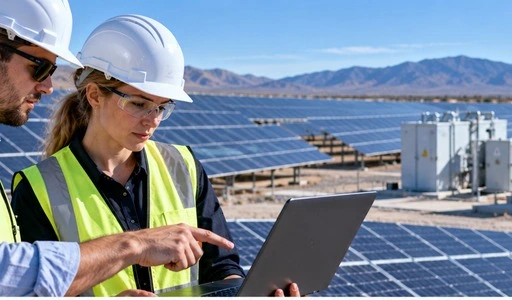
Before even one module is put in, qualified engineers have to do site surveys, assessments of the solar resource, series-parallel string calculations, and cost-benefit analyzes. They also have to plan the electrical system, which includes DC combiner boxes, AC collection lines, and transformer rates, so the station can join to the grid without any problems. A well-structured PV engineering program builds these skills from the very first day.
Why Foundational Knowledge Matters for Procurement Teams
Purchasing managers who understand the basics of the system make better choices about which vendors to work with. They can check to see if a supplier's module specs really fit the site's irradiance profile, look at the total cost of ownership of different inverter topologies, and write technically accurate bid papers that get qualified contractors instead of the lowest-bidders.
Evolution of Solar Engineering: From PERC to Perovskite
The pace of change in solar cell technology is exceptional. PERC cells accounted for most of module production only in 2020; TOPCon cells accounted for most of additional manufacturing capacity by 2023; HJT and tandem perovskite designs are currently nearing commercial certification. Each change means improved efficiency, but also new fabrication procedures, new quality control needs, and new O&M concerns for field engineers.
The Technology Transition Timeline
PERC to TOPCon to HJT represents roughly a 3–5 year cycle per generation, based on CPIA production data. Tandem perovskite-silicon cells have demonstrated laboratory efficiencies above 33% at NREL, signaling the next commercial frontier. Training programs must therefore include live updates to course content, not static textbooks, so graduates remain relevant throughout their careers.
Bifacial Modules and Smart Monitoring
In photovoltaic engineering technology, bifacial modules capture reflected albedo light from the ground surface. Their bifaciality factor—typically 70–85% for mainstream products—directly lowers LCOE in high-albedo environments such as desert gravel or snow-covered terrain. IoT-enabled monitoring platforms that feed real-time string data into cloud analytics allow O&M teams to locate faults at the module level rather than shutting down entire inverter blocks.
How Training Must Keep Pace
A curriculum built around project-driven learning, where students work through real production tasks involving current cell technologies, bridges the gap between classroom theory and factory or field reality. Joint instruction from enterprise engineers who work with live TOPCon and HJT production lines brings this currency directly into the learning environment.
Critical Technical Challenges in Large-Scale Solar Deployment
Technical problems keep happening at stations, even ones that are well thought out. Temperature-related efficiency loss, soiling buildup, partial shading from terrain or vegetation, grid integration limitations, and battery storage sizing are all problems that need expert engineering solutions instead of simple rules of thumb answers. If any of these problems are not fixed, the station will lose a lot of money over the next 25 years.
Fault Diagnosis and O&M Competency
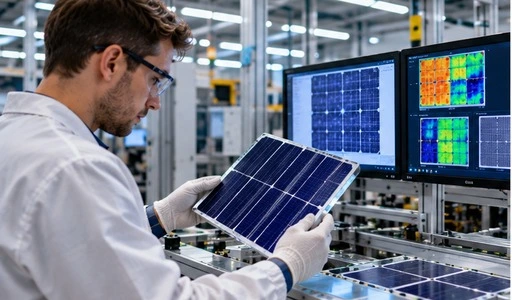
Electroluminescence (EL) testing can find tiny cracks that you can't see with the naked eye. Thermal photography from a drone can find hot spots that are caused by a failed bypass diode or localized soiling. Monitoring at the string level finds strings that aren't working right faster than centralized SCADA alone. Unplanned downtime is less likely to happen when engineers know how to do these diagnostics. They also protect the long-term value of the asset.
Grid Integration and Intelligent Microgrid Operation
As distributed generation grows, stations must actively manage reactive power, frequency response, and anti-islanding protection. Intelligent microgrid management, which includes dispatching energy storage, coordinating protection relays, and monitoring in real time, is now a standard skill for O&M workers. Engineers can work in the control room as well as the field if they get training in microgrid modeling and capacity setup.
Safety as a Non-Negotiable Requirement
Electrical arc, high-voltage DC exposure, and falling off of a roof are all real risks. Modules that are certified under IEC 61215 must pass tests with a 25 mm ice ball. Systems must also meet the safety requirements of IEC 61730. Any good engineering school should include safety compliance lessons on lockout/tagout, arc flash, and how to work at high elevations as part of the main curriculum, not as an afterthought.
Procurement Considerations: Selecting the Right Training and Technology Partners
Choosing a PV engineering training supplier follows the same due-diligence logic as selecting module or inverter vendors. Decision-makers should assess curriculum depth, lab infrastructure, faculty credentials, and whether the program aligns with recognized industry standards and national vocational certification frameworks.
Evaluating Curriculum Against Full Value Chain Coverage
A program that addresses only system design but skips module fabrication or microgrid O&M leaves skills gaps that show up on the job. The full training scope should span silicon wafer production principles, cell and module manufacturing, power station construction management, and intelligent grid operation—covering the entire industry chain rather than isolated segments.
Lab Infrastructure as a Quality Signal
Here are the core facility indicators that distinguish serious PV training programs from superficial ones:
- PV Module Production Lab — equipped with laser scribing machines, EL testers, laminators, and framing machines for hands-on fabrication practice.
- PV Power System Design Lab in photovoltaic engineering technology — running industry-standard simulation software for array layout, shading analysis, and yield modeling.
- Grid-Connected Training Station — a live installation of at least 60 kW capacity where students commission real equipment under supervision.
- Intelligent Microgrid Lab — featuring inverters, combiner boxes, distribution cabinets, and microgrid operation systems for control and fault-handling exercises.
These facilities translate technical theory into repeatable, assessable practical skill—something no textbook or video course can replicate. Procurement teams should request lab tours or virtual walkthroughs before signing agreements.
Total Cost of Ownership Beyond Tuition
Beyond program fees, buyers should factor in the cost of sending staff to remote training centers, the time engineers spend off-station, and the long-term value of certification that maps to national vocational standards. Programs that offer virtual simulation alongside physical labs reduce travel overhead and allow distributed teams to train at consistent quality regardless of location.
Future Trends in Solar Engineering Education and Workforce Development
AI-assisted performance analytics, digital twin modeling, and carbon accounting tools are entering standard O&M workflows. Carbon emission monitoring and carbon trading volume calculation are already required competencies in several national certification frameworks. The next generation of PV engineers must be fluent in data platforms, not just electrical theory.
AI and Digital Transformation in PV Operations
Machine learning models applied to SCADA data now predict inverter failure 72 hours in advance with reported accuracy rates above 85% in pilot deployments. Training programs that integrate AI tools into project-based exercises produce graduates who can work with these systems from day one rather than requiring costly on-the-job retraining.
Carbon Accounting as a Core Engineering Skill
PV stations increasingly participate in carbon credit markets. Engineers who can calculate a station's verified carbon offset and manage the associated documentation add direct commercial value to asset owners. This competency belongs in the engineering curriculum, not only in the finance department.
Adapting Procurement Strategy to a Fast-Moving Sector
Organizations that build long-term relationships with training suppliers who update content annually—aligned to the latest cell technology, grid code revisions, and safety standards—gain a structural advantage over those who treat workforce development as a one-time purchase.
Conclusion
The quality of the experts who plan, build, and run large-scale solar projects is completely dependent on their skills. Photovoltaic engineering technology is not just one subject. It is a field that includes materials science, electrical engineering, data analytics, project management, and more. When this much variety is taught in training programs that use real lab equipment, teach about the latest cell technology, and have instructors who work in the field, the engineers who graduate can start contributing right away. Since installed capacity is still growing very quickly, how well the workforce is developed will determine whether projects deliver the returns that were expected.
FAQ
1. Can someone with no electrical background enroll in a PV engineering program?
Yes. Well-organized programs start with basic lessons that teach electrical and electronic engineering concepts and how to draw engineering drawings. Then they move on to material that is specific to solar energy. Students who don't know much about technology can benefit from having full access to the lab and teachers with a lot of experience.
2. What roles do graduates typically pursue?
Graduates are ready for jobs like planning and design engineer for a PV power plant, installation and testing engineer, operations and maintenance engineer, design and process engineer for a PV product, intelligent microgrid operations and maintenance engineer, and engineering project management engineer.
3. How does a PV engineering program differ from a general electrical power program?
A general electrical power program covers a lot of different types of grid infrastructure. A school just for PV focuses on solar resource assessment, module fabrication, array design, station building management, and microgrid operation. These are all skills that are directly useful in the job market for renewable energy.
Partner with E.C.R Academy for Industry-Aligned PV Engineering Training
Since 2010, E.C.R. Academy has helped over 300,000 students earn recognized skills certifications and has served over 500,000 people in 28 countries. Our Photovoltaic engineering technology program serves as a reliable source of industry-aligned, organized training in areas like system design, station building, operation and maintenance, and smart microgrid management. We are ready to help you reach your workforce goals with the help of more than 3,300 industry experts and more than 60,000 learning materials. You can email us at ecr2008@enteredu.com or go to enteredu.com to talk about your training needs.
References
1. International Energy Agency (IEA). Renewables 2023: Analysis and Forecast to 2028. IEA, 2023.
2. Wood Mackenzie. Global Solar PV Benchmark: Utility-Scale Cost and Performance Report. Wood Mackenzie, 2023.
3. National Renewable Energy Laboratory (NREL). Best Research-Cell Efficiency Chart. NREL, 2024.
4. China Photovoltaic Industry Association (CPIA). China Photovoltaic Industry Development Roadmap 2023–2024. CPIA, 2023.
5. International Electrotechnical Commission. IEC 61215: Terrestrial Photovoltaic Modules — Design Qualification and Type Approval. IEC, 2021.
6. BloombergNEF. New Energy Outlook 2023: Long-Term Scenario Analysis on the Future of the Energy Economy. BloombergNEF, 2023.


_1781601799781.webp)