Wind Turbine Operation and Maintenance Training for Future Engineers
Wind Turbine Operation and Maintenance Training for Future Engineers represents a transformative approach to renewable energy workforce development, integrating comprehensive Wind Power Engineering Technology competencies across the full operational lifecycle. This specialized training bridges theoretical foundations with hands-on application, preparing technicians and engineers to address the growing demands of utility-scale wind farms. Through structured modules covering turbine diagnostics, system control optimization, and preventive maintenance strategies, programs equip participants to maximize asset performance, minimize downtime, and ensure safety compliance in both onshore and offshore environments. As the wind energy sector expands globally, targeted training initiatives have become essential for organizations seeking operational excellence and sustained competitive advantage in renewable energy deployment.
Understanding Wind Turbine Operation and Maintenance
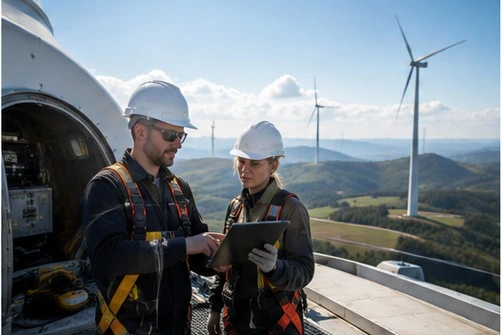
Understanding how windmills turn motion energy into electrical power thru carefully designed mechanical and electrical systems is the key to running wind farms efficiently. At ECR Academy, we know that mastering this field takes more than just a passing experience with it. It requires a deep understanding of aerodynamics, structural physics, and how control systems work together.
Core Components and Energy Conversion Principles
The complicated workings of wind mills depend on many parts working together in sync. The rotor blades collect energy from the wind and send it to the gearbox thru the main shaft. This increases the generator's rotational speed. This process of turning energy into something else depends a lot on how well the blades work with air flow. The pitch angles of the blades are constantly changing to get the best performance in different wind conditions. Modern turbines have advanced sensors and control systems that keep an eye on things like wind speed, direction, temperature, and vibration patterns. This lets them make real-time adjustments that get the most energy out of the wind while keeping the machine's integrity. Knowing these basics gives you the background information you need to troubleshoot and plan for maintenance.
Operational Objectives and Performance Optimization
Three goals are central to running a turbine successfully: producing as much energy as possible, making equipment last as long as possible, and reducing unplanned downtime as much as possible. To reach these goals, performance measures like capacity factor, availability rate, and power curve consistency need to be carefully watched over. Operators need to be able to read data from SCADA systems to spot early performance problems and fix them before small problems become expensive failures. Schedules for preventive maintenance that are in line with what the maker says are best for keeping things running at their best, and condition-based monitoring methods let you make changes ahead of time that cut down on emergency repairs. With this approach, maintenance stops being reactive and starts being strategic about managing assets.
Safety Standards and Regulatory Framework
The operations of wind farms are governed by strict safety rules and regulations that are meant to keep people and equipment safe. International standards like the IEC 61400 series set technical requirements for how turbines should be built, how they should be operated, and how they should be installed. At the same time, national laws require safety procedures for high-voltage electrical work, entering confined spaces, and working at heights. Lockout-tagout procedures, personal protective equipment routines, rescue methods for nacelle situations, and environmental compliance standards must all be covered in full training. Risk reduction becomes second nature in a culture that has regular safety audits and incident analyzes. This makes sure that productivity gains never put worker safety or environmental responsibility at risk.
Key Skills and Knowledge Areas in Wind Turbine O&M Training
To become good at maintaining wind turbines, you need to organized skill-building in a number of technical areas. Training programs that work well build skills in a wide range of areas, including mechanical systems, electrical infrastructure, diagnosing methods, and safety rules.
Mechanical and Electrical System Mastery
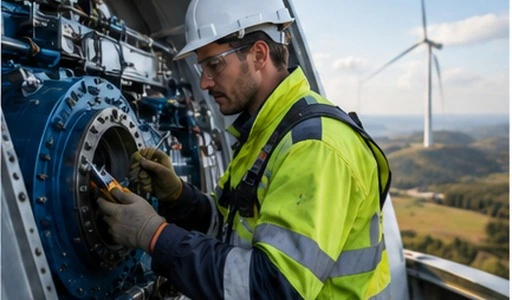
Turbine mechanical assemblies such gearbox systems, hydraulic circuits, yaw mechanisms, and pitch control actuators must be worked on by technicians. Training covers component inspection, lubrication, bearing assessment, and vibration analysis. Electricity system training comprises generator operation, converter operation, transformer maintenance, and power distribution network setup. Automation issues that halt output are simpler to fix when you understand the control system architecture. PLC programming logic, sensor integration, and HMIs are examples. The project-based curriculum at ECR Academy gives students field-like experiences. This boosts confidence before operational issues arise.
Diagnostic and Troubleshooting Competencies
Advanced diagnostic skills are what set good technicians apart from great ones in Wind Power Engineering Technology. As part of training, people need to learn how to use condition monitoring tools like thermographic imaging, ultrasonic testing for structural integrity, oil analysis for lubrication system health, and vibration signature analysis for rotating equipment. Knowing how fault tree analysis works helps techs find the root causes of problems when more than one sign shows up at the same time. Predictive maintenance methods use data analytics to guess when parts will break before they do. This changes maintenance plans from time-based schedules to condition-based interventions that make the best use of resources and avoid invasive procedures that can cause new failure modes.
Safety Protocols and Environmental Adaptability
Wind experts work in a wide range of settings, from mild onshore sites to hard offshore platforms that are subject to harsh weather and sea conditions. Thru scenario-based exercises and environment-specific lessons, training programs must get people ready for these different situations. At offshore training, people learn how to stay alive at sea, how to fly a helicopter safely, how to move boats from one place to another, and how to deal with corrosion that happens in saltwater. Onshore programs focus on operating in extreme temperatures, lightning protection systems, wildlife interaction protocols, and making it easy to get to remote sites. Comprehensive safety training includes how to handle emergencies, getting certified in first aid, and getting mentally ready to work alone in high-stress situations where decisions have big effects.
Challenges and Solutions in Wind Turbine Operation and Maintenance
There are unique difficulties that make operating and keeping wind properties different from other types of power generation. To get around these problems, you need to come up with new ways to use technology and strategic tactical planning together.
Operational Challenges in Harsh Environments
Wind farms are put in places that are chosen for their best wind resources rather than their ease of access. This means that equipment is often placed in rural areas with harsh weather. Saltwater corrosion, wave-induced structural stress, and limited entry during bad weather can make repairs take anywhere from hours to weeks longer for offshore installations. In cold climates, ice builds up on the blades, which lowers their efficiency and poses a safety risk. In the desert, installations have to deal with sharp dust and sudden changes in temperature. These environmental stressors speed up the breakdown of parts and make it harder to plan upkeep, which can lead to higher running costs if they are not handled properly. The usual ways of maintaining buildings that are easy for everyone to get to and have controlled temperatures don't work well in these tough situations.
Technological Innovations Transforming Maintenance
New technologies are completely changing how we maintain turbines, which makes the process much safer and more efficient. Drone-equipped inspection systems can now check the surface of blades without having techs work at dangerously high levels. These systems take high-resolution pictures that show micro-cracks that can't be seen with the naked eye. Digital twin technology makes virtual copies of physical assets. This lets you simulate different operational scenarios and predict how long parts will last under different stress conditions. AI programs look at huge amounts of data from sensor networks and find small changes in performance that happen weeks or months before they break. This lets parts be replaced before they break during planned maintenance times instead of having to be shut down in an emergency. These new ideas lower the cost of inspections, make diagnostics more accurate, and change the way upkeep is done so that it is more predicted.
Proven Strategies from Industry Leaders
Strategic optimization of maintenance has helped leading wind operators show measurable improvements. An offshore wind farm in the North Sea cut its yearly downtime by 32% by using condition-based tracking systems and strategically placing spare parts on repair ships instead of faraway shore bases. A wind portfolio in the Midwest of the United States increased the number of hours that technicians are used by using centralized dispatch systems that give jobs based on real-time weather windows, skill matching, and the availability of tools. These examples from real life show that operational excellence doesn't come from a bunch of separate actions. Instead, it comes from strategies that combine adopting new technologies, improving processes, training employes, and making decisions based on data that are constantly changing as more operational experience is gained.
Training Program Structure and Career Development for Future Engineers
To create useful training, you need to find a balance between theoretical knowledge and real-world application, while also making it clear how to move up in your career in the green energy industry.
Curriculum Design and Hands-On Learning Integration
Strong training programs set up steps for learning that build basic skills before moving on to more advanced uses. The ECR Academy starts with basic electrical concepts, mechanical concepts, and safety concepts. Next, they move on to turbine-specific systems, and finally, they teach advanced diagnostic techniques. The project-driven methodology puts students in real-life work situations where they learn by doing. For example, students fix simulated turbine faults, plan maintenance tasks while taking weather and resource availability into account, and do virtual commissioning procedures using simulation platforms that look and feel like real control system interfaces. This hands-on method not only improves technical skills but also the ability to make decisions and understand what's going on around you, which are both very important for working well in the field.
Certification Pathways and Industry Recognition
Professional certifications in the Wind Power Engineering Technology sector show that you are qualified and make it easier to move up in your career. Some certificates that are recognized are Basic Safety Training for Offshore Wind Workers from the Global Wind Organization, specialized electrical qualifications for high-voltage work permits, and manufacturer-specific certifications for major turbine platforms. The ECR Academy makes sure that the lessons are in line with international standards for technical skills. This way, the students get the training they need to get certified and meet the needs of the industry. Structured career paths help people move up from basic jobs as turbine technicians to more specialized ones, like condition monitoring analysts and site supervisors, and finally to engineering jobs that focus on fleet optimization, reliability improvement projects, or technology integration projects that shape the organization's abilities.
Workforce Development Impact on Operational Excellence
Technical workers who are well-trained have a direct effect on how well an organization does and how reliable its assets are in the long run. When compared to operations that rely on contractors with minimal training, facilities that have fully trained staff have higher availability rates, lower upkeep costs per megawatt-hour created, and better safety records. Investing in training pays off in a concrete way: fewer mistakes during maintenance procedures, shorter times spent fixing problems, and higher rates of fixing problems the first time, which means fewer trips back to the site. In addition to the direct operating benefits, the skills of the workforce affect supplier partnerships. For example, equipment makers give more support to operators who show they are technically skilled, and investors look at the quality of the workforce when assessing the risk of a project during financing talks.
Procuring Wind Power Engineering Equipment and Services: A Guide for B2B Clients
Long-term operating success and the total cost of ownership for wind energy assets are greatly affected by strategic procurement choices. When choosing equipment providers and service partners, institutional buyers have to look at a number of things.
Supplier Evaluation and Qualification Criteria
Teams in charge of buying things should set up strict ways to evaluate suppliers. These ways should look at things like technical skills, financial stability, quality management systems, and infrastructure for after-sales support. Certifications like ISO 9001 for quality management and ISO 45001 for health and safety at work show that an organization is committed to greatness and has a method for controlling processes. Checking with current users for references can give you information about how quickly you respond to warranty claims, how easy it is to get replacement parts, and how good the technical help is. When you visit a manufacturing facility, you can learn about its production capabilities, quality control methods, and engineering resources that can be used for customization or troubleshooting. Comprehensive due research lowers the risks that come with choosing a seller, protecting the long-term performance of assets and avoiding expensive vendor changes.
Contract Structuring and Performance Metrics
Well-written service level agreements make it clear what is expected, who is responsible for what, and the standards of performance. Key metrics include promises for response times for different types of failures, guaranties for availability with financial penalties for not meeting them, and the need for spare parts to be kept in strategic locations. Contracts should include language about intellectual property rights for customized training materials, scalability terms to allow for organizational growth, and technology update rules to make sure that training content keeps up with changes in the industry. Performance dashboards that keep track of contractual metrics make it possible to manage suppliers on an ongoing basis. This leads to more constructive conversations about continuous improvement and fewer confrontations when problems arise.
Long-Term Partnership Development
There is more to strategic relationships than just buying things. They can turn into partnerships where everyone benefits. Leading providers put time and money into learning about their customers' businesses so they can suggest process changes and technology upgrades that make things run more smoothly. Some examples of joint development projects are making customized training modules to deal with problems unique to each site, testing new diagnostic technologies at customer facilities, or joining industry working groups to improve technical standards. These partnerships make both parties more competitive. Customers get faster access to new ideas and technical know-how, and suppliers get deep domain knowledge and reference accounts that prove their solutions work in tough operational settings.
Conclusion
Training people in Wind Power Engineering Technology how to operate and maintain wind turbines is a smart investment that pays off in the form of better operational performance, higher safety standards, and skills that set top companies apart from rivals. As the use of renewable energy grows around the world, the demand for skilled technicians and engineers continues to exceed the supply. This presents opportunities for businesses and institutions that put workforce development first. Effective training programs combine academic knowledge with hands-on experience, use modeling and data analysis tools, and are in line with international standards so that credentials can be used in different countries. Companies that use thorough training plans set themselves up for long-term success in a field that is essential to reducing carbon emissions around the world.
FAQ
1. What prerequisites do participants need before enrolling?
Programs for people who have never worked with wind energy before start with basic electrical and mechanical concepts and work their way up to more advanced knowledge of turbine systems. Participants should be able to do simple math, be good with machines, and be physically fit enough to climb and work at heights. People who already know a lot about electrical trades, mechanical maintenance, or other related technical fields usually move thru the foundational modules more quickly.
2. How long does comprehensive training typically require?
The length of the program depends on how in-depth and specialized it is. Getting started as a worker usually takes six to twelve weeks of intense training that covers basic safety, getting to know the parts, and doing regular maintenance. Six to twelve months may be needed for advanced programs that teach diagnostic skills, specific system knowledge, and supervisory skills. These programs combine classroom teaching with controlled field practicums that give students real-world experience while being watched.
3. Can training be customized for specific turbine platforms?
Reliable training providers can tailor their lessons to fit the needs of each individual turbine model, the site conditions, and the operational procedures of the organization. Customization could include adding real screenshots of the SCADA interface, addressing site-specific access procedures, or highlighting maintenance problems that are common at certain installations. This customization makes training more useful and speeds up the development of skills that can be used right away in the workplace.
Partner with ECR Academy for Wind Power Engineering Technology Excellence
ECR Academy is ready to help your company grow its wind energy staff thru our full range of training programs designed for both institutional and business clients. Our Wind Power Engineering Technology program uses project-based learning, advanced simulation tools, big data analytics, and cloud computer infrastructure to make sure that students learn skills that are in line with international standards and best practices in the industry. Enterprise engineers and academic experts work together to make sure that the lessons we teach are both rigorous in theory and useful in the real world.
ECR Academy has sixteen years of experience working with nearly 500,000 participants in twenty-eight countries. They can help your organization whether it needs customized training programs for current employes, batch licensing arrangements for institutional deployment, or advice on how to set up its own training capabilities. Our complete ecosystem of resources, which includes standards documentation, courseware, case studies, and assessment tools, helps with managing the whole training lifecycle, from planning the curriculum to certifying competencies. Email our team at ecr2008@enteredu.com to talk about how our Wind Power Engineering Technology training can help you reach your green energy goals and improve your working skills.
References
1. International Electrotechnical Commission. Wind Energy Generation Systems - Part 25: Communications for Monitoring and Control of Wind Power Plants. IEC Standard 61400-25. Geneva: IEC, 2015.
2. Crabtree, Christopher J., et al. "Wind Energy: UK Experiences and Offshore Operational Challenges." Proceedings of the Institution of Mechanical Engineers, Part A: Journal of Power and Energy 229, no. 7 (2015): 727-746.
3. Global Wind Energy Council. Global Wind Workforce Outlook 2020-2024. Brussels: GWEC, 2020.
4. Tavner, Peter. Offshore Wind Turbines: Reliability, Availability and Maintenance. London: Institution of Engineering and Technology, 2012.
5. Márquez, Fausto Pedro García, et al. "Condition Monitoring of Wind Turbines: Techniques and Methods." Renewable Energy 46 (2012): 169-178.
6. American Wind Energy Association. Wind Energy Operations and Maintenance Best Practices Report. Washington DC: AWEA, 2018.


_1781601799781.webp)