Renewable Energy Equipment Technology: Training for Future Engineers
The most effective way to teach future engineers renewable energy equipment technology is via project-based training that connects theory with practical equipment duties. A good curriculum teaches assembly, commissioning, testing, control and maintenance of wind and solar equipment, then adds power conversion and distribution abilities. Learners also require safety practices, knowledge of standards and digital resources such as simulation and data platforms. There is demand for this: IRENA and the International Labour Organization estimate that there were 16.2 million employment in renewable energy throughout the globe in 2023. In this post, I discuss the equipment, abilities and choices that ready students and project teams for this area.
Understanding the Fundamentals and Major Types of Renewable Energy Equipment Technology
Core Principles Behind the Equipment
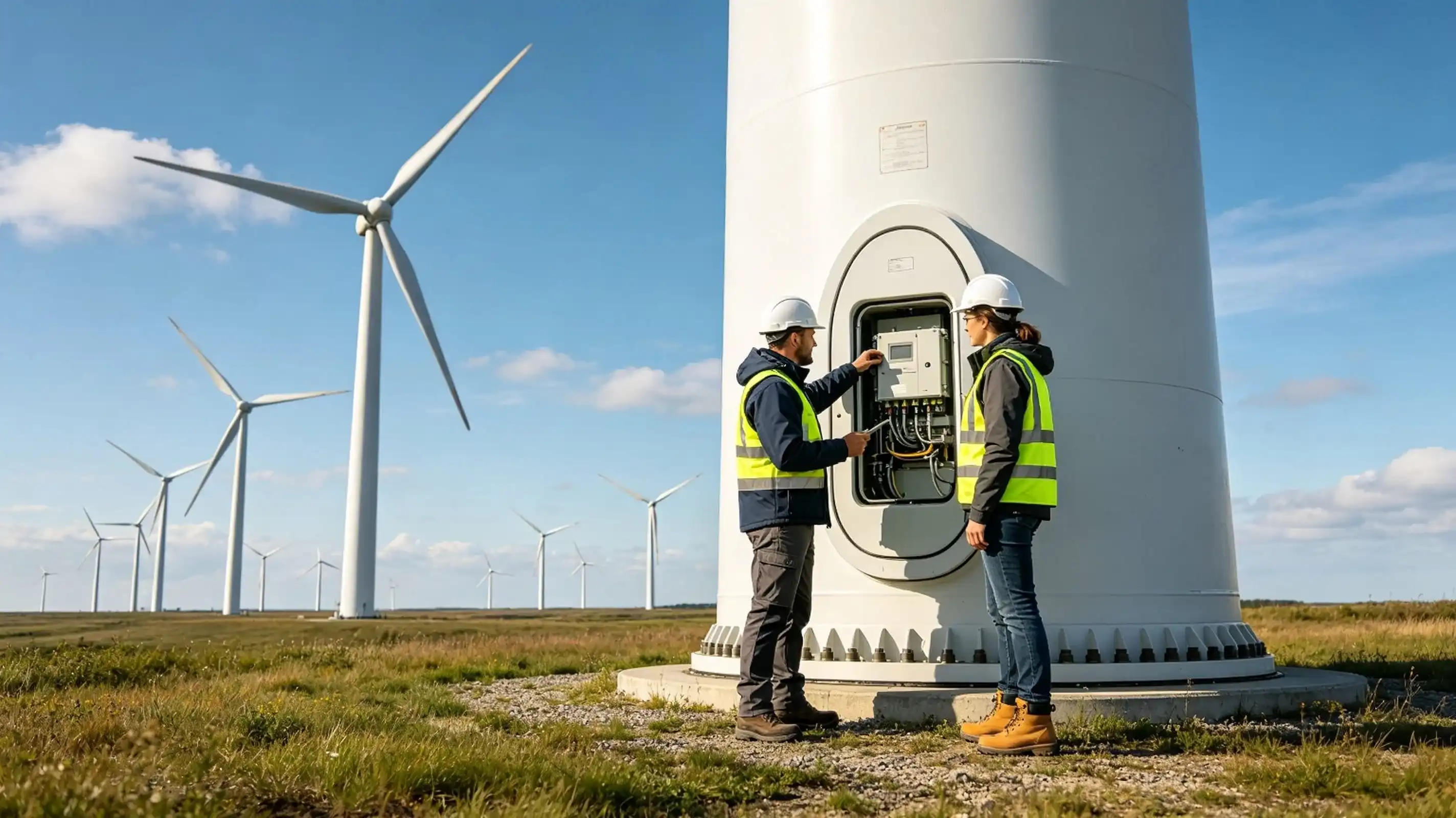
The technology of equipment for renewable energy turns sunshine, wind, flowing water, heat from beneath the earth and biomass into electricity or usable heat . This is only one portion of the generating system. Inverters convert direct current to alternating current . Transformers modify the voltage . Controllers , sensors and switchgear safeguard and regulate the flow of electricity . Then the monitoring program monitors performance. For instance, a conventional facility cannot operate with a solar module without an inverter, protective devices and a grid connection. Beginners typically think that rated capacity, purchase price or module efficiency alone may foretell the outcomes. Real performance relies also on site circumstances, system losses, quality of installation and daily operation.
Equipment Categories Engineers Should Learn
Engineers should be aware of the major families of equipment and the questions they pose. Solar photovoltaic and thermal systems, wind turbines, hydropower units, geothermal plants, biomass systems, batteries and power-management platforms answer varied demands. Some useful areas for comparison include efficiency, temperature performance, capacity factor, deterioration, maintenance access, fuel quality and grid compatibility. Capacity factor is a measure of actual production vs maximum attainable output over time. deterioration concerns since production falls with age. NREL researchers evaluated field data and found a median photovoltaic deterioration rate of roughly 0.5% each year. Buyers may match each technology to a site by comparing categories side-by-side.
Lifecycle Thinking From Design to Recycling
Good engineers track equipment during its life. The process begins with resource evaluation and system design, followed by commissioning, maintenance, replacement and finally recycling. Each step impacts cost and uptime. For example, a facility with inadequate access for maintenance might transform a tiny failure into a protracted outage. Spare-parts planning and clean commissioning records cut off the downtime. Also important is end-of-life planning, particularly for batteries and huge constructions that include hazardous or recyclable elements. A useful activity is to track a component, like an inverter, from purchase to disposal and identify every decision that comes into Contact with it. Teams that prepare these actions in advance avoid expensive shocks.
A Practical Training Path for Future Renewable Energy Engineers
From Site Assessment to Long-Term Operation
Structured training is better if it follows the sequence of a genuine project. I propose five stages: resource evaluation and load analysis, system design and equipment selection, performance modelling, installation and commissioning, and long-term operation. Learners start by measuring site conditions, establishing key loads, and sizing generation and storage. The model then presents losses to the system and projected output, allowing teams to establish exact acceptance criteria. Once commissioned, operator training, preventative maintenance, alarm management and spare part planning maintain the system productive. That technique works for universities creating programs and firms testing the technical preparedness of partners.
What the E.C.R Academy Course Covers?
Our Renewable Energy Equipment Technology course uses project-driven learning built on real production projects and typical work tasks. Core skill areas include:
- Assembly and installation: Learners study the structure of wind and PV generation equipment, complete workshop mechanical and electrical assembly following set processes, specifications, standards, and tool usage methods, and organize on-site installation. They also fabricate PV modules through single soldering, string soldering, layup, TPT/EVA cutting, and laminator operation.
- Commissioning and testing: Learners practice workshop commissioning of wind equipment and on-site commissioning of wind or PV systems. They study sensors for common signal detection, read electrical control drawings, and perform complete machine integrated commissioning. They also inspect PV module quality, run electrical performance tests, and test PV cells with testing equipment.
- Maintenance and power systems: Learners perform routine maintenance of wind and PV equipment, analyze common faults, and fill in maintenance logs and fault overhaul records. They practice scheduling maintenance personnel. They also build rectifier, DC-DC, and inverter circuits, study relay protection, run short-circuit calculations, and maintain substation electrical equipment.
These areas mirror daily work for assembly, commissioning, and maintenance teams.
Learning Environment, Faculty, and Standards
The quality of training relies on who is teaching and where the learners are practicing. Enterprise engineers and academic specialists teach together and the program is designed to meet worldwide technical skill standards and industry employment needs. Oscilloscopes and multimeters are used in foundational labs covering electrical foundations, electronics, PLC control and power electronics. In professional labs they address wind turbine principles and control, full machine assembly and commissioning, PV cell performance testing and PV module manufacture. Virtual simulation laboratories with software for assembly, commissioning, maintenance and overhaul practice enable wind turbine training and PV system design. The environment is in line with actual vocational settings and employs big data, cloud computing and artificial intelligence.
Matching Applications and Measuring Efficiency, Dependability, and Return
Choosing Technology by Application
The quality of training relies on who is teaching and where the learners are practicing. Enterprise engineers and academic specialists teach together and the program is designed to meet worldwide technical skill standards and industry employment needs. Oscilloscopes and multimeters are used in foundational labs covering electrical foundations, electronics, PLC control and power electronics. In professional labs they address wind turbine principles and control, full machine assembly and commissioning, PV cell performance testing and PV module manufacture. Virtual simulation laboratories with software for assembly, commissioning, maintenance and overhaul practice enable wind turbine training and PV system design. The environment is in line with actual vocational settings and employs big data, cloud computing and artificial intelligence.
Measuring Efficiency and Dependability
The nameplate efficiency and price are just half the story. They also assess conversion efficiency , capacity factor , yearly energy production , availability , storage efficiency , deterioration , power quality , and failure rates . They evaluate manufacturer claims by checking certificates and independent test results. For example, IEC 61215 is the qualification standard for the design of terrestrial PV modules, the IEC 61400 series addresses requirements for wind turbines, and UL 1973 addresses stationary batteries. Further confirmation may be found in reference projects, warranty conditions, and genuine operational data. Even a high-performing module might fail you if heat, dust or bad installation reduces its performance. The objective is to balance efficiency, reliability, serviceability and lead time, not to have one outstanding figure.
Lifecycle Cost and Return Metrics
Lifecycle metrics translate technical data into business choices. Total cost of ownership covers purchase price, installation, maintenance, replacement and recycling expenses. The levelized cost of energy distributes the lifetime cost throughout the lifetime energy production, allowing teams to assess generating choices on one basis. Payback time and internal rate of return demonstrate the speed and quality of the investment’s cost recovery. A cheaper unit with a high failure rate or delayed service might cost you more in the long run than a more expensive equipment with good support. I tell customers to ask for these computations, with their assumptions written down. Results are more easily checked with clear assumptions such as deterioration rate and maintenance cost.
Procurement, Safety, and Compliance for Renewable Energy Equipment
Writing Clear Requirements and Evaluating Suppliers
Good procurement begins with a clear specification. Buyers specify power rates, voltage, frequency, ambient conditions, communication protocols, certifications, warranty expectations, delivery timelines and special requirements. They then rate manufacturers, distributors, OEMs and system integrators on manufacturing capabilities, quality systems, application experience, technical assistance, spare-parts availability, financial stability and regional service coverage. Risk may be reduced via a supplier assessment matrix, several bids, a factory audit, a pilot order or a reference site visit. Teams should also detail who will be responsible for engineering and how after-sales support will be provided before signing a deal. Engineers familiar with renewable energy equipment technology may look over data sheets and identify holes in a quotation.
Safety Practices Every Engineer Should Learn
Safety should be included into every aspect of a project, from design to decommissioning. Key practices include: lockout/tagout, grounding and bonding, arc-flash protection, high-voltage procedures, battery thermal-risk management, lifting controls, working-at-height guidelines and emergency shutdown planning. In the United States, OSHA’s regulation 29 CFR 1910.147 includes management of hazardous energy and NFPA 70E covers electrical safety in the workplace. Checklists, permits, toolbox discussions, incident reporting, and regular operator training all contribute to a culture of safety first. “Heights and live circuits are common at wind and solar sites, so these habits keep people safe and schedules on track. In our course we also do electrical safety calculations in power supply systems.
Standards, Grid Rules, and End-of-Life Duties
Buyers should verify standards for the target market before purchase. Common references include IEC 61215 for PV modules, IEC 61400 for wind turbines, UL 1973 for stationary batteries, IEEE 1547 for grid interconnection, and NFPA 855 for stationary energy storage installation. IEEE 1547 sets technical requirements for connecting distributed energy resources to the electric grid, so inverter choices must align with it. Requirements vary by state, utility, and local authority, so confirm each one in writing. End-of-life duties also deserve attention. Battery disposal, recycling, hazardous materials, land use, and supply-chain transparency affect long-term cost and reputation. Asking suppliers for documentation on these points early can prevent delays at inspection or interconnection.
Latest Trends and Decision-Making in Renewable Energy Equipment Technology
Current Equipment and Digital Trends
Equipment keeps improving in efficiency, monitoring, and grid support. Current trends include higher-efficiency PV modules, larger wind turbines, advanced power electronics, modular designs, and storage options such as sodium-ion, flow, and solid-state batteries. Digital tools are spreading too: connected sensors, cloud dashboards, AI fault detection, digital twins, predictive maintenance, microgrids, and grid-forming inverters. The scale is large. The IEA's Renewables 2024 report expects almost 5,500 GW of new renewable capacity between 2024 and 2030, led by solar PV. Engineers will need electrical, mechanical, software, data, and cybersecurity skills, plus the ability to interpret regulations. Practical experience with real-time operating data will carry growing value.
A Repeatable Decision Process
A repeatable process keeps choices fair and easy to defend. Start with the project scenario, energy goal, site conditions, budget, schedule, and expansion plans. Then set weighted criteria such as energy yield, dependability, safety, total cost of ownership, maintenance, supplier support, room for expansion, and delivery risk. A warehouse owner, for instance, might weigh safety and lifetime cost most heavily, while a remote site might weigh service access. Finally, validate the top choice through modeling, site surveys, supplier references, certification reviews, risk assessments, and written acceptance criteria. This approach works for solar, wind, storage, biomass, geothermal, hydropower, and hybrid systems.
How Training Connects Engineering Knowledge With Procurement
Training becomes more valuable when engineers can link specifications to business results. Efficiency, maintainability, and compatibility shape operating costs, production uptime, maintenance budgets, and emissions targets. Engineering, procurement, finance, operations, and service teams make better decisions together. Case studies on commercial rooftop solar, industrial solar-plus-storage, remote microgrids, and wind projects help learners practice this link. The U.S. Bureau of Labor Statistics lists wind turbine service technicians and solar photovoltaic installers among the fastest-growing occupations in its 2023–33 projections. Since 2010, E.C.R Academy has delivered training and assessment to nearly 500,000 participants across China and 28 countries, working with 500+ enterprises and 3,300+ experts.
Conclusion
Renewable energy equipment technology reaches beyond generators to include inverters, controls, storage, monitoring, and grid connection, so engineers must understand how these parts work as one system over their full life. Practical training that follows a project path, from site assessment to long-term operation, prepares learners for assembly, commissioning, testing, and maintenance work. Good equipment choices match technology to the application, verify efficiency and dependability through certifications and operating data, and compare lifecycle costs instead of price alone. Safety practices, recognized standards, and clear supplier requirements reduce risk. Digital tools and growing project volumes raise the value of data and software skills. Engineers who link technical detail to business outcomes make stronger, more defensible decisions.
FAQ
1. Can I join the course without a technical background?
Yes. The course starts with foundational theory and builds step by step. Training labs and professional instructors support each stage, so beginners can move from basic electrical skills to wind and PV equipment tasks.
2. What careers can this training support?
Learners can prepare for roles such as equipment process design engineer, wind power or PV equipment assembly engineer, power plant O&M engineer, commissioning and testing engineer, and maintenance technician.
3. How does it differ from a traditional electromechanical program?
It focuses on wind and PV power generation equipment rather than general electromechanical topics. It also adds virtual simulation, big data, cloud computing, and artificial intelligence, so learners adapt to digital and intelligent industry changes.
4. Which standards should I check before buying equipment?
Review IEC 61215 for PV modules, IEC 61400 for wind turbines, UL 1973 for stationary batteries, and IEEE 1547 for grid interconnection. Requirements differ by state and utility. Then confirm local rules and supplier documents.
Prepare the Next Generation of Renewable Energy Engineers With E.C.R Academy
E.C.R Academy offers renewable energy equipment technology courses for enterprises, educational institutions, industry associations, and other organizations. Our courses combine project-driven learning, joint teaching by enterprise engineers and college experts, and simulation-supported labs. If you are comparing a renewable energy equipment technology supplier for training, email ecr2008@enteredu.com with your location, learner group, and schedule.
References
1. International Energy Agency, Renewables 2024, 2024
2. International Renewable Energy Agency and International Labour Organization, Renewable Energy and Jobs: Annual Review 2024, 2024
3. U.S. Bureau of Labor Statistics, Occupational Outlook Handbook: Wind Turbine Technicians and Solar Photovoltaic Installers, 2024
4. Jordan, D. C. and Kurtz, S. R., Photovoltaic Degradation Rates: An Analytical Review, Progress in Photovoltaics, 2013
5. National Fire Protection Association, NFPA 70E: Standard for Electrical Safety in the Workplace, 2024
6. Institute of Electrical and Electronics Engineers, IEEE 1547-2018: Standard for Interconnection and Interoperability of Distributed Energy Resources, 2018