Photovoltaic Engineering Technology Skills for New Energy Professionals
New energy professionals entering the solar sector need more than textbook knowledge to succeed. Photovoltaic engineering technology covers the full spectrum of skills required to plan, build, and operate solar power systems — from cell fabrication and system design to grid integration and intelligent microgrid management. As global solar capacity surpasses 1.6 terawatts (IRENA, 2024), demand for qualified PV engineers has never been higher. This blog walks through the core competencies, technology trends, and training pathways that prepare today's professionals for real-world solar careers.
Understanding Core Photovoltaic Engineering Principles
It's helpful to know what solar power engineering is all about on a technical level before choosing a training program or a path to buying something.
How PV Cells Convert Sunlight Into Electricity
Photovoltaic cells get their power from photons in the sun. These photons excite electrons in a semiconductor material, usually silicon, which makes a direct current (DC). An inverter changes that current into alternating current (AC) so it can be used by the grid. How well this conversion works relies on the quality of the cell material, the temperature coefficient, and the reaction spectrum. Commercial N-type TOPCon units now have conversion rates of more than 24%, which is a big improvement over older PERC technology.
Key System Components and Architecture
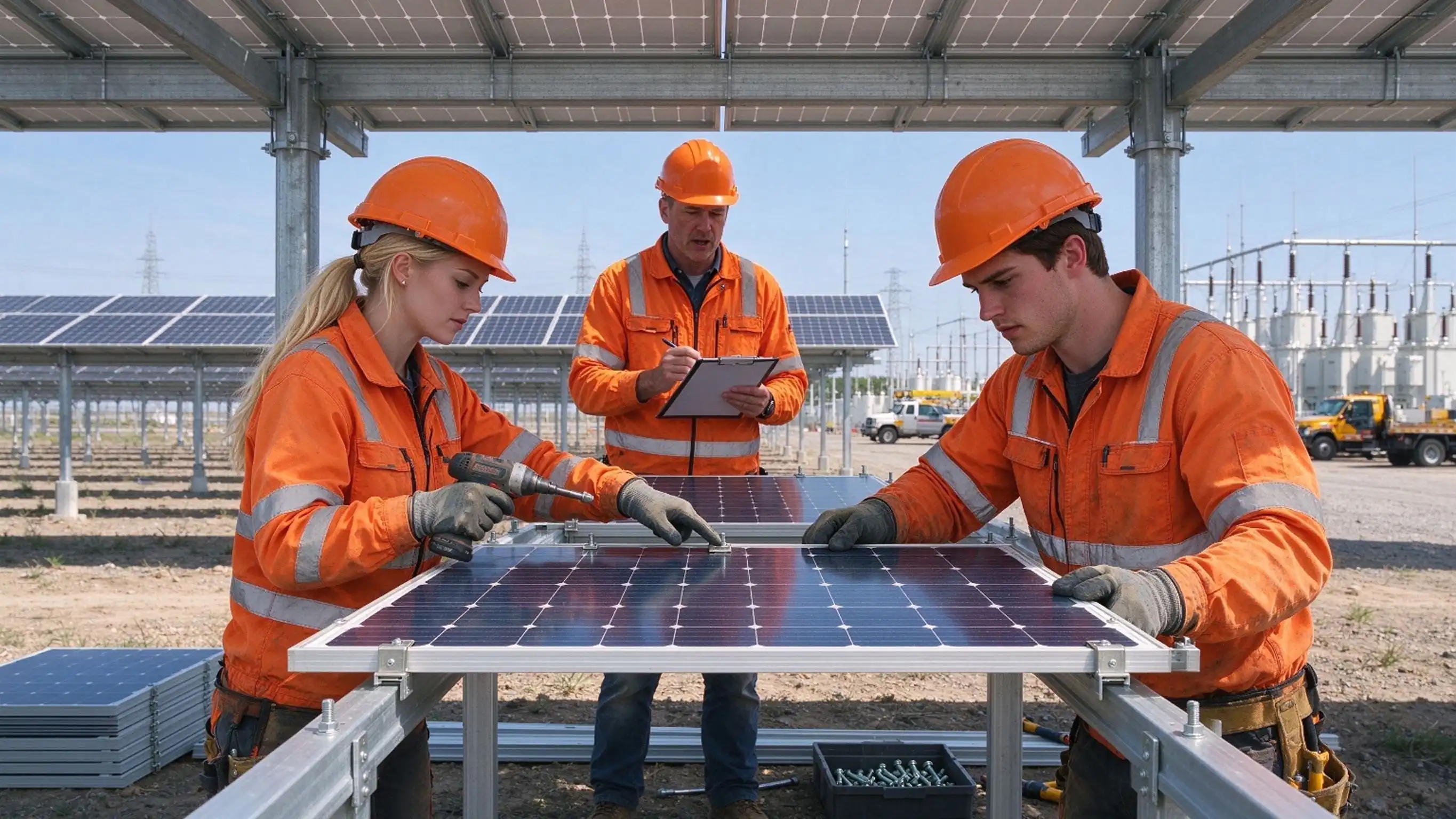
PV modules, mounting structures, string inverters or central inverters, combiner boxes, power distribution cabinets, and a monitoring system are all parts of a full solar power system. Systems that are connected to the grid also need protection relays and metering gear. Anyone who is choosing tools, setting up a system, or running it for a long time needs to know how these parts work together. Before buying, sourcing teams must check that each part meets international quality standards, such as IEC 61215 for module function and IEC 61730 for safety.
Residential vs. Commercial System Differences
Residential rooftop systems usually have less than 30 kW of power and focus on being small and shutting down quickly. Commercial and industrial systems can be as small as a few kilowatts or as big as several megawatts. They need to be carefully analyzed for load, set up in strings, and sometimes have energy storage built in. Ground-based utility stations with more than tens of megawatts of power add more engineering layers, such as horizontal single-axis tracking, SCADA monitoring, and large-scale fault diagnostics.
Mastering Solar Power Technology Applications and Trends
The solar industry moves fast. Technology routes that were standard three years ago are already being replaced by newer architectures.
Emerging Cell Technologies: TOPCon, HJT, and Perovskite
The industry has shifted from PERC to N-type TOPCon as the volume production standard, with heterojunction (HJT) cells gaining ground for their low temperature coefficients (-0.26%/°C) and bifaciality factors above 85%. Perovskite tandem cells are in advanced pilot production, with laboratory efficiencies exceeding 33%. For training programs and procurement teams alike, staying aligned with these technology shifts is non-negotiable.
Smart Grid Integration and Energy Storage
Modern photovoltaic engineering technology installations do not operate in isolation. They connect to intelligent microgrids that balance generation, load, and storage in real time. Energy storage systems — typically lithium iron phosphate (LFP) battery banks — are now standard in commercial and industrial projects. Professionals need practical knowledge of microgrid protection logic, energy management systems (EMS), and demand-side response protocols to manage these integrated setups effectively.
Big Data and Cloud-Based Monitoring Platforms
Remote monitoring through cloud-based SCADA and big data analytics platforms is now the industry norm for utility-scale stations. String-level monitoring allows engineers to pinpoint individual faults — a shaded string, a failing bypass diode — without on-site visits. Training that includes virtual simulation tools, real-time data interpretation, and cloud platform operation gives professionals a measurable edge in both O&M roles and procurement decisions.
Comparing Solar Training Programs for Procurement Decisions
Training plans are not all made the same. Several things set high-quality programs apart from generic ones that businesses or institutions use to compare their options.
Curriculum Depth Across the Full Value Chain
A good program covers the whole process of making and deploying: processing silicon wafers, making cells and modules, designing systems, managing building, and running the station. Professionals who are only taught the basics of installation aren't taught how to find faults or keep an eye on carbon emissions, which are skills that grid operators and asset managers need more and more.
Certification Alignment and Industry Standards
Credentials from reputable programs are in line with international skill standards. The Ministry of Human Resources and Social Security's 1+X certificates for PV module manufacturing and station O&M jobs are part of this in China. Certifications like NABCEP (North American Board of Certified Energy Practitioners) show that someone is qualified all over the world. When procurement teams look for training programs, they should make sure that the course content is directly related to these certification frameworks.
Faculty and Simulation Facility Quality
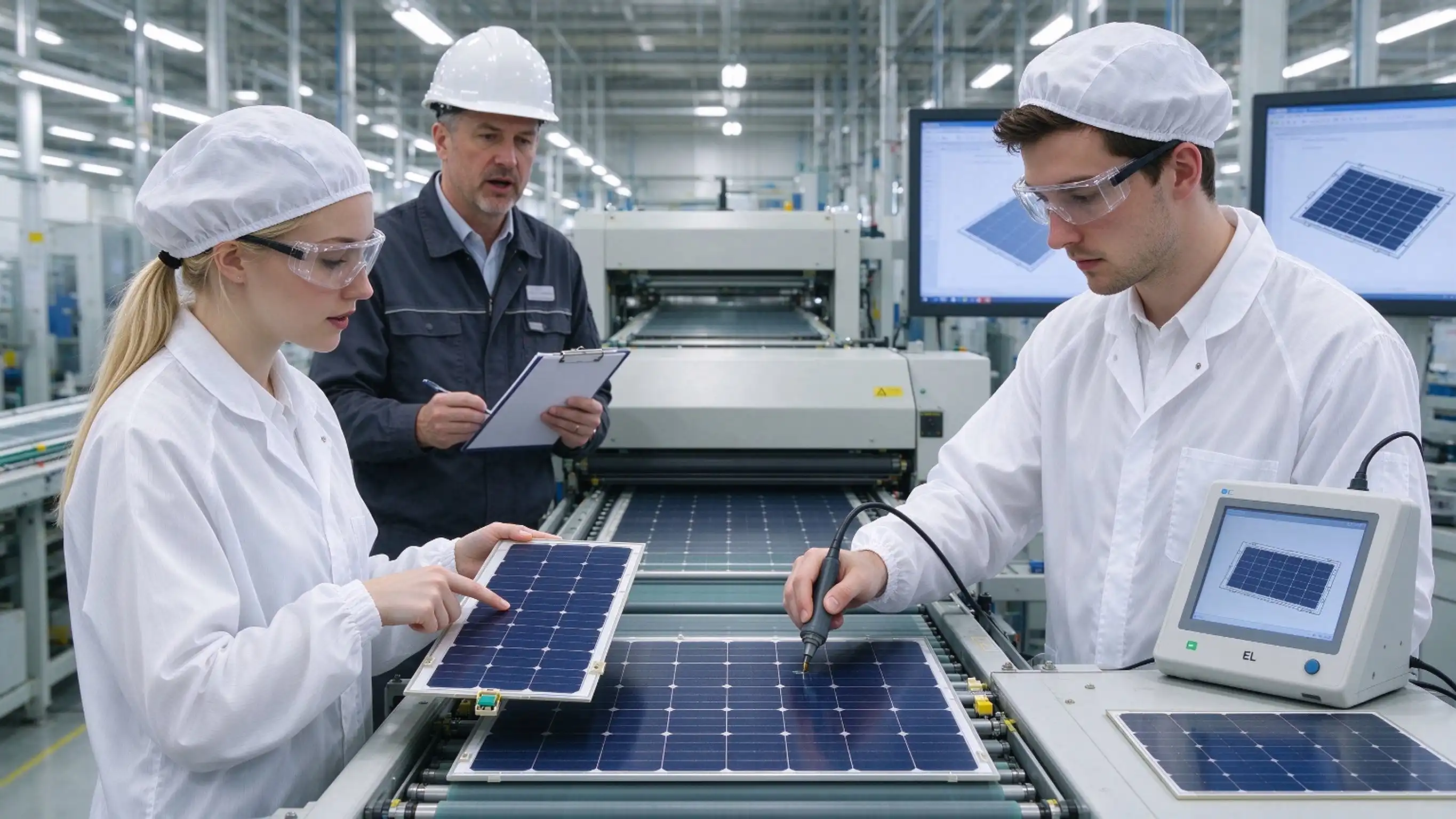
Graduates of programs in photovoltaic engineering technology where business engineers teach alongside academic teachers are always better prepared for life in the workplace. The fitness centers are just as important. A good program should have EL testing tools, laminators, at least 60 kW grid-connected PV stations, PLC control platforms, and smart microgrid modeling labs. These facilities connect what you learn in school to what you do on the production line.
Practical Guidelines for Developing PV Engineering Skills
It doesn't matter if you are the head of a department creating a new energy curriculum or the director of operations and maintenance (O&M) training your field team. Any training plan should start with these competency areas.
These are the main skills that every serious school in PV tech must teach:
- System Planning and Design: Site survey methods, equipment capacity calculations, series-parallel string design, grid-connection documentation, and carbon trading volume estimation for PV stations.
- Power Station Construction: Construction organization planning, safety and quality management, installation and commissioning of modules and electrical equipment, and acceptance testing of primary and secondary systems.
- Operation and Maintenance: Fault analysis for ground-mounted and distributed stations, inverter and monitoring system maintenance, and primary system operation protocols.
- Intelligent Microgrid Management: Energy storage configuration, microgrid control and protection logic, EMS operation, and system simulation for planning and design purposes.
These areas of skill are in line with what the job market really needs. The China Photovoltaic Industry Association (CPIA) says that by 2030, the Chinese solar industry will need more than 300,000 skilled workers. When people get training in these specific areas, they are ready for immediate employment and long-term career advancement across the PV value chain.
Conclusion
This is a clear sign that the solar business is growing, and so is the need for workers with proven, hands-on skills in photovoltaic engineering technology. It's necessary to be good at a lot of different things, from understanding cell physics to running smart microgrids. The best return on investment for students and schools is in programs that include project-based learning, real equipment labs, business teachers, and alignment with industry certification standards. Picking the right program isn't just a matter of what to teach; it's also a strategic choice that will affect the quality of the workforce for years to come.
FAQ
1. Can I take a PV engineering course with no prior background?
Yes. Before moving on to system design and operation and maintenance, well-structured programs start with the basics of electrical and electronic engineering, engineering drawing, and basic power conversion. With the right lab equipment and experienced teachers, students who don't have any technical experience can become very good at what they're doing over the course of the program.
2. What career roles does this training prepare you for?
Graduates can usually get jobs as a planning and design engineer for a PV power station, an installation and commissioning engineer, an operations and maintenance engineer (O&M engineer), a PV product process engineer, an intelligent microgrid O&M engineer, or a PV project management engineer. Companies that make things, do EPC work, and handle assets all have these jobs.
3. How is a PV engineering program different from a general electrical engineering program?
The main topics of general electrical programs are grid infrastructure, motors, and regular power systems. PV-specific programs teach more about evaluating solar resources, making modules, choosing inverters, documenting grid connections, and finding faults at the station level—skills that aren't taught in enough depth in general electrical courses.
Ready to Build Your PV Engineering Talent Pipeline? Connect with E.C.R Academy
Since 2010, the E.C.R. Academy has taught professional skills to almost 500,000 people in 28 countries. Our photovoltaic engineering technology program includes both real-life simulation labs and project-based learning. It is taught by both business engineers and academic experts. If you are an institution, business, or industry group looking for a photovoltaic engineering technology supplier to help your employees learn, we are ready to work with you to find the best solution. To find out more, email us at ecr2008@enteredu.com or go to enteredu.com.
References
1. International Renewable Energy Agency (IRENA). Renewable Power Generation Costs in 2023. IRENA, 2024.
2. China Photovoltaic Industry Association (CPIA). China PV Industry Development Roadmap 2024. CPIA, 2024.
3. International Electrotechnical Commission. IEC 61215: Terrestrial Photovoltaic Modules — Design Qualification and Type Approval. IEC, 2021.
4. Fraunhofer Institute for Solar Energy Systems ISE. Photovoltaics Report. Fraunhofer ISE, 2024.
5. National Renewable Energy Laboratory (NREL). Best Research-Cell Efficiency Chart. NREL, 2024.
6. North American Board of Certified Energy Practitioners (NABCEP). NABCEP PV Installation Professional Study Guide, 4th ed. NABCEP, 2023.


_1781601799781.webp)