Is Renewable Energy Equipment Technology Training Worth Taking?
The straightforward answer is yes. Training in renewable energy equipment technology delivers measurable returns for institutions, enterprises, and workforce development organizations navigating the rapid expansion of solar, wind, and energy storage sectors. With global renewable capacity projected to triple by 2030 according to the International Renewable Energy Agency (IRENA, 2023), skilled technicians capable of assembling, commissioning, and maintaining advanced systems are in critical demand. Structured training programs bridge the gap between theoretical knowledge and hands-on competency, directly addressing industry pain points such as equipment downtime, safety compliance, and the integration of digital monitoring platforms.
Understanding Renewable Energy Equipment Technology Training
Renewable energy equipment technology training is a complete set of lessons meant to improve technical skills in areas like solar photovoltaic systems, wind turbine operations, battery energy storage solutions, and hybrid power configurations. These programs are designed to fit a wide range of learning paths, from intensive bootcamps for equipment manufacturers to semester-long courses for vocational colleges. They are also very close to international skill standards, such as IEC 61215 for solar modules and IEC 61400 for wind systems.
Who Benefits Most from This Training?
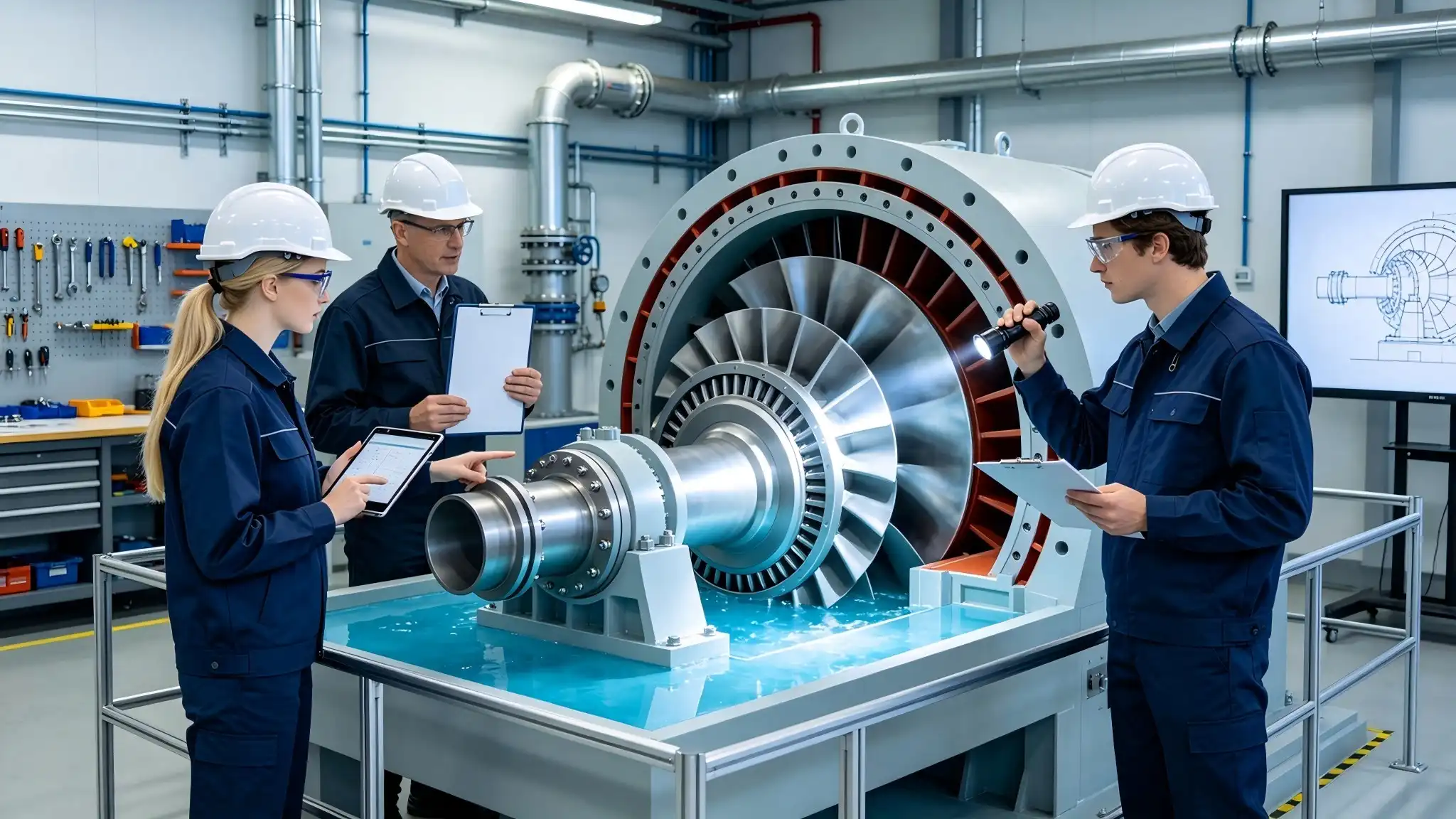
Getting better at working with renewable energy equipment is good for many different groups of people. Equipment makers' engineering teams learn more about how to put together parts and check for quality, which cuts down on mistakes and guarantee claims. Operations and repair staff at utility-scale wind farms and solar farms learn how to fix problems so that expensive downtime is kept to a minimum. Procurement managers learn the technical skills they need to compare inverter efficiency rates, look at seller specifications, and figure out how reliable equipment will be in the long term. These are all important things to think about when choosing renewable energy equipment technology suppliers for multimillion-dollar projects.
Training Formats and Delivery Methods
Blended learning models are used in modern training environments to combine classroom teaching, virtual simulation labs, and practice using tools on-site. ECR Academy's method is a good example of this integration: students first use high-fidelity simulation software to get to know the parts of wind turbine drivetrains, and then they move on to physical assembly tasks in labs with PV module laminators and programmable logic controllers. This project-based approach is like working in a real factory, so people can learn quality standards and safety rules naturally instead of just listening to boring talks.
Cloud-based platforms make access even more open, letting teams working in company training centers or industry association facilities that are spread out physically access uniform courseware while working around shift schedules and other operational constraints. When a company wants to increase its production capacity across various sites, hybrid delivery models work really well because consistent skill levels among assembly workers have a direct effect on output quality and throughput rates.
Core Benefits of Renewable Energy Equipment Technology Training
When you spend money on specialized training, you get real practical changes and strategic benefits that go far beyond just learning new skills. Companies say they've seen improvements in the performance of their equipment, the flexibility of their workers, and their ability to compete in renewable markets that are becoming more complex.
Enhanced Technical Competency and Equipment Performance
Technicians who have been trained are much better at doing important jobs like reading electrical control schematics for inverter systems, using electroluminescence imaging to find tiny cracks in photovoltaic cells, and performing fault ride-through testing on grid-tied wind installations. A study published in 2022 in Renewable Energy found that repair teams that went through organized training programs had 18–23% less equipment downtime than their unskilled peers. This meant that power plant workers could make more money and increase their capacity factor.
For preventative maintenance methods to work, you need to be able to use diagnostic tools like thermal imaging cameras to find hotspots, harmonic analyzers to check the quality of the power, and SCADA systems for remote tracking. Participants learn to tell the difference between normal changes in performance and early signs of failure. This lets them take preventative actions that protect capital investments and extend the lifecycles of assets.
Strategic Advantages for Procurement and Engineering Teams
Technical knowledge changes the way things are bought from deals based on price to relationships that focus on value. When teams are trained in renewable energy equipment technology, they learn how to compare the total cost of ownership models, which includes not only the initial price of the equipment but also things like warranty terms, after-sales support, and degradation rates (which are usually 0.5% to 0.7% per year for Tier 1 solar modules). This information is very helpful when negotiating with manufacturers of renewable energy equipment technology during large-scale installations, since long-term performance guaranties have a direct effect on project financing and investor confidence.
When engineering departments know their teams have the commissioning skills to get the most out of new technologies, they are more likely to specify high-tech parts like bifacial solar modules with albedo optimization or turbine controllers with machine learning algorithms for yaw adjustment. This kind of technology guarantee speeds up the use of next-generation systems, which are more efficient but need more complex setup and tuning steps.
Evaluating the ROI of Training for B2B Procurement Clients
When figuring out the return on investment for training programs, you need to look at both measurable financial measures and long-term strategy benefits for the company. Successful ROI frameworks take into account things like lowering direct costs, lowering risk, and setting yourself apart from the competition.
Direct Financial Returns and Operational Efficiency
Investing in training, which usually costs between $2,000 and $8,000 per person for full classes, pays off in a number of ways. Less damage to the equipment during installation means less money spent on replacement. For example, one connection on a wind turbine nacelle that isn't torqued properly can cause bearing failures that cost $50,000 or more in repairs and lost power. Faster commissioning times help project workers make more money faster, and better maintenance practices extend warranty coverage by making sure that service intervals set by the maker are followed.
In the manufacturing industry, trained assembly workers who understand quality checks and process sequencing are said to boost efficiency by 15 to 20 percent. These improvements in efficiency directly raise profit margins in competitive bidding situations where winning contracts depends on showing that you can do the job better and stick to tight deadlines.
Risk Mitigation and Regulatory Compliance
There are strict rules about safety and performance in the renewable energy sector, and companies that don't follow them can be held responsible for big problems. Training programs that include OSHA electrical safety standards, NFPA 70E arc flash protocols, and EPA environmental management requirements lower the number of accidents and the money that is spent on them. Insurance companies are taking approved training completion into account more and more when they figure out premium rates for business general liability and professional indemnity plans that cover green installations.
In power purchase agreements with utility off-takers, project delays caused by mistakes during launching or failed checks are punished with heavy fines. Teams that know about grid interconnection standards, relay protection methods, and utility coordination routines can get regulatory approvals more quickly and easily. This helps keep projects on schedule and avoids liquidated fees that can reach $10,000 per day for utility-scale contracts.
Key Training Content Areas Relevant to Procurement and Engineering Teams
Comprehensive training programs cover the whole span of an item, from choosing the parts at the beginning to using it for decades. The best programs teach basic electrical and mechanical concepts while also giving students the chance to use new technologies that are changing the way renewable energy systems work.
Core Technical Competencies Across Energy Technologies
Solar photovoltaic training modules cover cell technologies like monocrystalline PERC, N-type TOPCon, and heterojunction architectures. These modules teach students how to compare module offerings by looking at efficiency specs and temperature coefficients. Controlling the EVA hardening temps and vacuum pressure to keep the layers from coming apart is something that participants learn. They also learn how to do electrical testing that measures the fill factor, short-circuit current, and maximum power point tracking performance.
Courses on wind energy cover different parts of turbines, such as pitch control systems that make the best use of blade angle when wind speed changes, gearbox repair methods that deal with common bearing failures, and generator technologies that compare permanent magnet and doubly-fed induction designs. The training for battery energy storage focuses on the differences in cell chemistry between nickel manganese cobalt and lithium iron phosphate formulations, as well as thermal management strategies to stop thermal runaway and the configuration of the battery management system for peak shaving and frequency regulation uses.
Power electronics and grid integration modules teach students how to set up inverters, figure out the size of transformers, and coordinate safety relays. These are all very important skills for a wide range of installations, from business rooftop systems to large solar farms. People learn how to read single-line diagrams, size conductors according to the National Electrical Code, and do short-circuit studies to make sure that equipment ratings are correct.
Advanced Topics for Competitive Differentiation
New tools that are changing how green operations are done are added to progressive training programs in renewable energy equipment technology. Digital twin modeling settings let students simulate how equipment will work in different environments before it is actually put into use. This cuts down on mistakes made during field commissioning. Predictive maintenance modules teach techniques for analyzing vibrations in wind turbine drivetrains and infrared thermography for finding hotspots in PV arrays before they become major problems.
Cybersecurity basics talk about weak spots in SCADA networks and monitoring systems that are linked to the internet of things (IoT). This gets teams ready to use defense strategies to keep key infrastructure from being interrupted. As more and more renewable energy installations offer grid stabilization services, training that covers battery dispatch optimization and synthetic inertia provision helps people get the skills they need to meet changing utility procurement needs and take advantage of money-making opportunities in secondary service markets.
How to Choose the Right Renewable Energy Equipment Technology Training Program
To find the best training partner, you need to do a lot of research on their curriculum depth, teaching quality, building skills, and support systems for after the program. Companies that want to improve their employees should be as careful when choosing a provider as they are when buying big pieces of equipment.
Accreditation and Industry Recognition
Give priority to programs that offer certifications that are recognized by regulatory bodies and stakeholders in the industry. Credentials that are in line with the standards set by the North American Board of Certified Energy Practitioners (NABCEP) or their international equivalents show that the course is rigorous and the tests are valid. Training companies that work with equipment makers often include the newest product specs and repair guides in their courses. This keeps the material up-to-date as technologies change.
This method is used by ECR Academy, which works with more than 500 businesses and has 3,300 industry experts help create its courses. These kinds of agreements make sure that training cases are based on real production problems, not old examples from textbooks. Verifying the qualifications of the teacher, such as field experience at manufacturing sites or operating installations, gives students even more faith in the quality of the lessons and their usefulness in the real world.
Learning Environment and Equipment Access
For thorough training, you need to be able to use specific tools that looks like the real world. Check to see if the programs give students the chance to work with string inverters from well-known brands, torque wrenches that are tuned to meet the needs of turbine construction, and diagnostic tools such as power analyzers and insulation resistance testers. Virtual simulation labs are helpful because they let you practice on expensive systems without worrying about breaking them. This is especially helpful for parts of utility-scale wind turbines that are hard to get to by hand.
Facility tours can help you figure out how good the training infrastructure is. Well-equipped programs have places set aside for practicing different skills, such as electrical control circuit assembly benches with programmable logic controllers, PV module production lines with laminating equipment, and wind turbine nacelle mock-ups for practicing mechanical assembly. Putting together big data platforms and cloud-based monitoring systems is typical of how businesses work today, where remote diagnostics and performance analytics help make decisions about operations.
Post-Training Support and Continuous Learning
As new cell chemistries, inverter architectures, and grid codes come out, the world of renewable energy changes very quickly. Effective training relationships last long after the first course is over. They offer ongoing technical support, updated curriculums to keep up with changes in technology, and access to reference libraries with new standards and case studies. Providers with alumni networks make it easier for peers to share their knowledge and for professionals to grow, which keeps skills up to date throughout a job.
After training, organizations should ask their vendors about any relationships that could make the buying process easier. Some training companies have connections with companies that sell equipment, which lets their graduates use well-known evaluation systems to find parts. This combining of skill development and supply chain management is very helpful, especially for procurement teams looking for renewable energy equipment technology manufacturers who can provide both high-quality goods and expert support.

Conclusion
Training in renewable energy equipment technology is a smart investment that will pay off in the long run by improving business performance, lowering risk, and setting you apart from competitors in fast-changing markets. Companies with skilled workers can easily handle changes in technology, make the best choices about what equipment to buy, and take advantage of new possibilities in grid modernization and energy storage. To go from having theoretical knowledge to being able to do things with your hands, you need structured programs that balance thorough lessons with real-world application settings. This is a model that ECR Academy has improved over 16 years of providing skill development to nearly 500,000 participants around the world. As more green energy plants are built and systems become more complicated, the case for specialized training gets stronger. This means that developing the workforce is not only helpful, it's necessary for long-term success.
FAQ
1.How long does renewable energy equipment training typically require?
The length of a program depends on how deep it is and how it is delivered. Bootcamps that focus on specific skills, like PV commissioning, can last anywhere from three to five days, while certificate programs that cover a wide range of technologies can last anywhere from eight to sixteen weeks. ECR Academy creates flexible pathways for working professionals by using modular structures that let them build their skills in a way that fits with their project deployment schedules.
2.Can training improve supplier negotiation outcomes?
Of course. Technical literacy helps buying teams think critically about specs, compare performance guarantees in a useful way, and find value beyond the initial price. Trained professionals ask detailed questions about degradation rates, average time between failures, and service response promises. This changes negotiations with renewable energy equipment technology manufacturers from one-sided deals to long-term partnerships.
3.What certifications validate renewable energy training completion?
Some qualifications that are accepted are the NABCEP PV Installation Professional title, the Certified Wind Turbine Technician title, and manufacturer-specific certificates from big equipment makers. Programs that are in line with international standards like IEC 61215 and UL 1973 make sure that skills meet global quality standards. This makes it easier for workers to move between jurisdictions and take part in projects.
4.Does training address digital transformation in renewable operations?
Modern programs teach the basics of data analytics, SCADA system operation, and connecting IoT sensors, which shows how industries are becoming more digital. People who take part learn how to read performance dashboards, set up remote tracking alerts, and use predictive maintenance algorithms. These are skills that are becoming more and more important as green assets use Industry 4.0 technologies to improve efficiency and cut costs.
Empower Your Team with ECR Academy's Proven Training Solutions
The ECR Academy can improve the skills of your employees by giving them project-based training in renewable energy equipment technology that combines theory and practice in a natural way. Our curriculum, which was created with the help of enterprise engineers and academic experts, includes everything from making PV modules to starting up wind turbines. It is supported by state-of-the-art simulation platforms that use big data and cloud computing. Whether you're an educational institution creating specialized programs, an equipment manufacturer increasing production, or an industry association helping to build up the local workforce, our custom solutions will work with your budget and time frame. Get in touch with a reliable renewable energy equipment technology provider of all-around training services at ecr2008@enteredu.com to talk about how our tried-and-true methods can help you improve your skills and speed up your renewable energy projects.
References
1. International Renewable Energy Agency (IRENA). (2023). World Energy Transitions Outlook 2023: 1.5°C Pathway.
2. National Renewable Energy Laboratory (NREL). (2022). Best Practices for Operation and Maintenance of Photovoltaic and Energy Storage Systems.
3. Solar Energy Industries Association (SEIA). (2023). U.S. Solar Market Insight Report Q2 2023.
4. American Wind Energy Association (AWEA). (2022). Wind Energy Workforce Development: Skills Gap Analysis.
5. U.S. Department of Energy. (2023). Solar Futures Study: Workforce Development Pathways.
6. IEEE Standards Association. (2022). IEEE 1547-2018: Standard for Interconnection and Interoperability of Distributed Energy Resources.


_1781601799781.webp)