Is Intelligent Connected Vehicle Technology a Good Course to Take?
Yes, pursuing training in Intelligent Connected Vehicle Technology is a strategic investment for automotive professionals, procurement specialists, and technical teams. This emerging discipline bridges autonomous driving systems, vehicle-to-everything (V2X) communication, and AI-powered decision-making—skills increasingly demanded across OEMs, Tier 1 suppliers, and testing facilities. According to McKinsey & Company (2023), the connected vehicle market is projected to reach $166 billion by 2025, creating urgent demand for workforce competency in sensor fusion, drive-by-wire systems, and cybersecurity protocols. For organizations evaluating skill development pathways, formal ICV training delivers measurable ROI through improved supplier evaluation, reduced integration risks, and alignment with evolving safety standards like ISO 26262.
Understanding Intelligent Connected Vehicle Technology
Traditional car systems are very different from the core design of linked and self-driving cars. Modern ICV platforms combine perception layers (LiDAR, radar, cameras), decision-making algorithms, and execution systems into a single ecosystem. Traditional vehicles use mechanical linkages and separate electronic control units. There are six levels of autonomy that the Society of Automotive Engineers (2022) uses to describe this combination. The levels go from driver help (Level 1) to full automation (Level 5). When purchasing ICV parts, teams need to know how all of these layers work together. They need to know how edge computing platforms handle terabytes of sensor data and C-V2X communication modules allow for sub-20-millisecond coordination between vehicles and infrastructure.
Key Technical Components Driving ICV Systems
Intelligent linked systems are built on three main pieces of technology. Multiple types of sensors are combined in perception systems to do things like classify objects, measure speed with millimeter-wave radar, and find things nearby using ultrasonic sensors. This stream of data is processed in real time by the computer backbone, which usually uses GPUs or AI chips that can handle 1000+ TOPS (tera operations per second). 5G networks and dedicated short-range communications (DSRC) are used by communication layers to let vehicles talk to each other and vehicles talk to infrastructure (V2I). Knowing about these subsystems helps people who buy things evaluate what vendors say and find problems with integration during test runs.
Safety and Regulatory Frameworks Shaping Procurement Decisions
Global standards have a big effect on the choice of technology. Functional safety standards for computer systems are set by ISO 26262, which sorts parts by Automotive Safety Integrity Level (ASIL). This means that procurement managers have to check that suppliers' paperwork is correct and know how ASIL-D approval (the highest risk category) affects the prices and wait times of parts. Similarly, the UN Economic Commission for Europe (2021) put in place WP.29 rules that require cybersecurity management systems and software update validation. These are things that are thought about beyond the price of the initial purchase and include lifecycle maintenance protocols and over-the-air (OTA) update infrastructure.
Why Consider Taking a Course in Intelligent Connected Vehicle Technology?
There are not enough skilled workers in the car industry. According to a report released by the International Organization of Motor Vehicle Manufacturers in 2023, 68% of engineering managers have trouble finding candidates who are skilled in validating autonomous systems and implementing the V2X protocol. This gap has a direct effect on procurement operations: teams that aren't technically savvy might miss important requirements during the RFQ (request for quotation) process, accept testing protocols that aren't up to par from suppliers, or underestimate how hard integration will be when planning their budgets. Formal training helps close this gap by giving workers the language, evaluation tools, and hands-on experience they need to talk to vendors effectively.
Bridging the Skills Gap in Autonomous and Connected Systems
In traditional automobile engineering programs, students learn a lot about mechanical powertrains and integrated control systems. ICV technology needs extra skills like validating machine learning models, using Kalman filters for sensor fusion, and building edge computing systems. If procurement professionals understand these ideas, they can better judge the skills of suppliers. This is especially true when figuring out if a vendor's "autonomous emergency braking" option really meets Euro NCAP testing standards or just uses simpler sensor settings. Real-life case studies are often used in training programs to close this skills gap. For example, looking at how Tesla's Full Self-Driving (FSD) design is different from Waymo's sensor-redundant method can teach you valuable lessons that you can use right away when you're looking for new technologies and doing your research.
Career Advancement and Strategic Organizational Positioning
Professionals who know how to use ICV systems in Intelligent Connected Vehicle Technology work at the intersection of strategy planning, engineering, and buying. Companies that want to use connected vehicle fleets need experts who can make contracts for sensor supplies, look at cybersecurity insurance needs, and help IT departments (which manage cloud infrastructure) and operations teams (which oversee the real deployment of vehicles) work together. The U.S. Bureau of Labor Statistics predicts that automotive engineering jobs will grow by 22% between 2024 and 2032, with a focus on connectivity and automation. This is similar to what is happening in procurement departments, where ICV expertise earns higher salaries and speeds up advancement into strategic sourcing leadership roles.
What to Expect from a Quality Intelligent Connected Vehicle Technology Course
Comprehensive ICV training programs teach both academic basics and how to solve problems in the real world. Effective lessons cover four areas of knowledge: sensor technology (comparing LiDAR point cloud processing and radar Doppler shift analysis), computing platforms (comparing NVIDIA Drive and Qualcomm Snapdragon Ride architectures), communication protocols (looking at the differences between DSRC and C-V2X latency characteristics), and systems integration (fixing CAN bus conflicts when installing an aftermarket ADAS). Automotive News did a benchmarking study in 2023 and found that graduates from schools that spend 60% or more of their Contact hours on lab exercises become proficient in supplier checks and component validation jobs 40% faster.
Modular Curriculum Design Aligned with Industry Standards
The best training companies build their courses around the skills needed for each job and the ways to get certified. This method is used in ECR Academy's program, which is organized around real-life job tasks like setting up and calibrating intelligent sensors, deploying computing platforms, integrating drive-by-wire chassis, commissioning intelligent cockpit systems, setting up vehicle-road collaboration systems, and testing the whole vehicle. Each module is linked to a certain professional certification, so students can show that they have the skills that are valued during supplier quality audits or when they have to explain their purchasing decisions to the top leaders. The modular structure also allows for different entry points, so mechanical engineers can focus on the hardware of the sensors while IT professionals focus on security and over-the-air (OTA) updates.
Hands-On Training Infrastructure and Simulation Environments
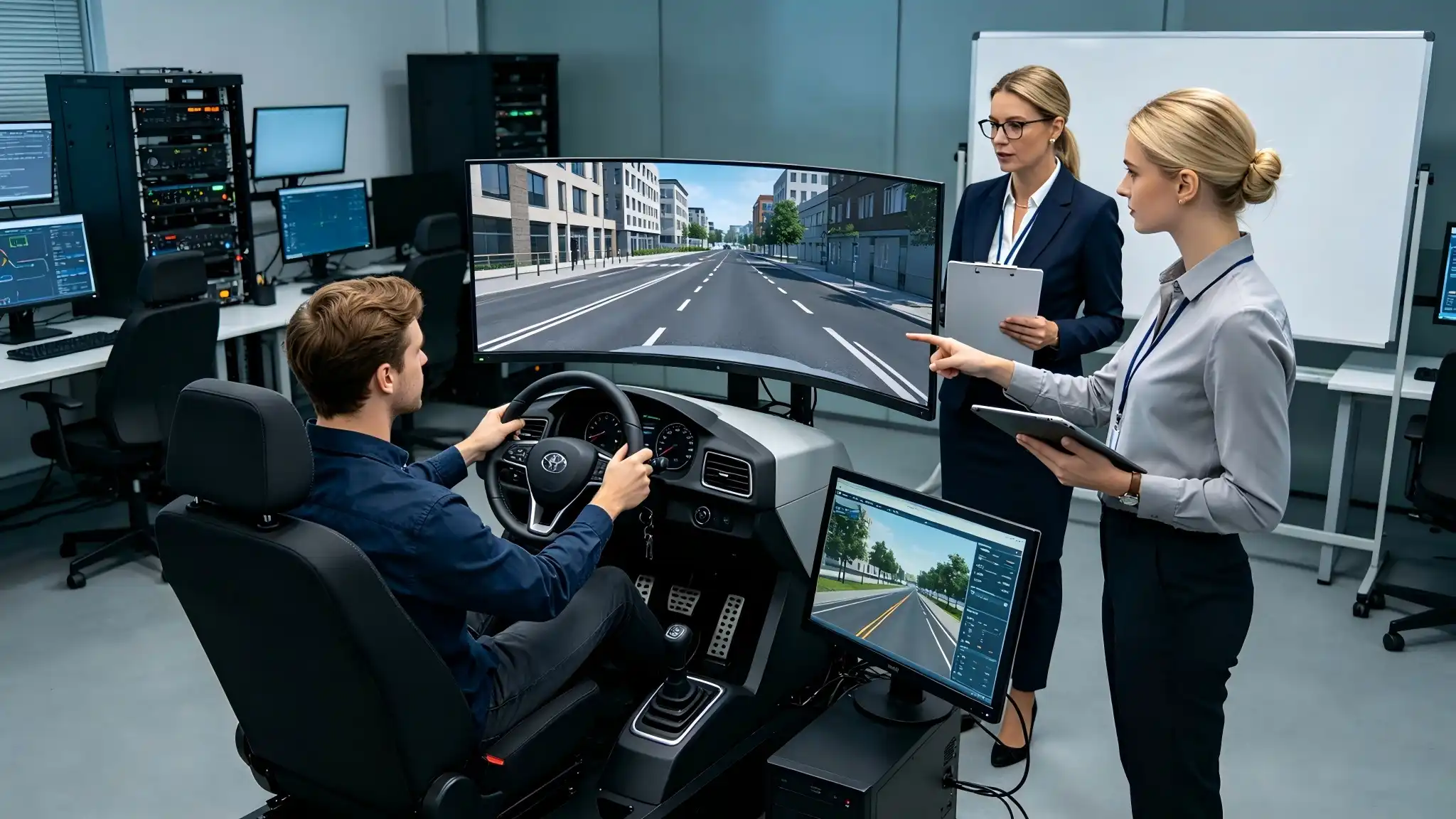
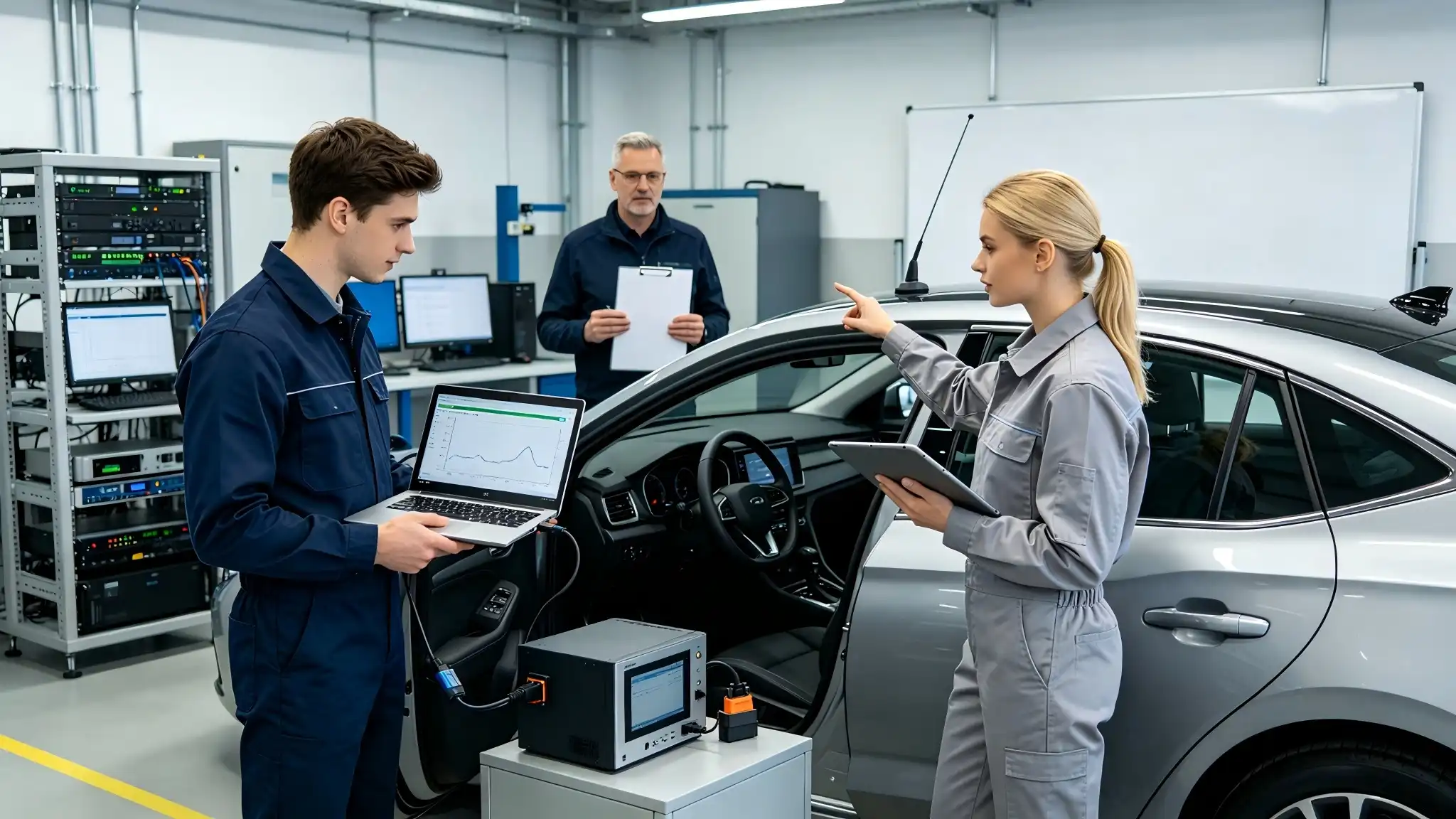
To improve practical skills, you need to have access to equipment used in the industry. There are eight different types of labs for quality programs. They are for electrical and electronics basics, new energy vehicle platforms, intelligent sensor calibration stations, computing platform test benches, drive-by-wire chassis simulators, intelligent cockpit prototyping areas, vehicle-road collaboration testbeds, and full-on vehicle testing facilities. C-V2X traffic training zones, which look like urban crossings with roadside units (RSU) and on-board units (OBU), help students fix communication latency problems and make sure V2I handoff scenarios are correct. The National Institute for Automotive Service Excellence (2022) says that technicians who are trained on these kinds of platforms make 50% fewer mistakes in their first field assignments than technicians who are only taught theoretically.

Faculty Expertise Blending Academic Rigor with Industry Experience
For ICV training to be effective, teachers need to connect academic research with real-world use. Full-time teachers, enterprise technical specialists, and industry consultants work together in programs to give students a balanced view. Academic instructors teach basic concepts, Tier 1 supplier engineers talk about production problems and quality control methods, and testing facility consultants talk about regulatory compliance and certification processes. It is important for students to get both standard information (like IEEE 802.11p protocol specifications) and unwritten knowledge (like common mistakes made during LiDAR-camera external calibration). This team-teaching model makes sure that students get both. For procurement workers, hearing different practitioner points of view helps them understand the bigger picture needed to weigh competing vendors' claims during the bidding process.
Comparing Intelligent Connected Vehicle Technology Education Options
People who want to learn have a number of different training options, each of which has its own benefits. Master's studies in automotive engineering with an ICV concentration at the university level offer a broad theoretical background and study possibilities, but they take 18 to 24 months to complete and cost between $30,000 and $80,000. Online certification classes, like Coursera's Self-Driving Car Nanodegree, give you more freedom and lower prices ($1,500 to $5,000), but you might not be able to use the labs. Industry-specific training programs, like those offered by ECR Academy, offer a good mix of depth and usefulness through project-based, modular curricula and intense lab work. These programs usually last between 3 and 6 months and cost between $8,000 and $25,000. When hiring people, procurement professionals need to make sure that the selection criteria are in line with the organization's goals. This is true whether the goal is to build up a team's general skills or quickly fill in specific knowledge gaps.
Evaluating Course Providers and Accreditation Credentials
Assessing credibility means looking at a lot of different factors. Look into relationships in the industry. For example, do car OEMs or Tier 1 suppliers help make the curriculum or do they accept program awards during vendor audits? Look over the instructor's credentials and look for practitioners with real ICV project experience instead of just academic credentials. Check out the lab resources; having access to tools like automotive-grade Ethernet testers and hardware-in-the-loop (HiL) simulators sets comprehensive programs apart from those that are only theoretical. ECR Academy has a history that meets these criteria: over 16 years, they have trained over 500,000 people in 28 countries, formed relationships with more than 500 businesses, created more than 60,000 learning tools, and worked with more than 3,300 industry experts. Learners can access both present best practices in the business and new best practices as the ecosystem grows.
Matching Learning Formats to Professional Development Needs
Different formats work best for different types of learners. People who need to be able to change their schedules but are also very self-motivated and may not have many chances to meet new people can benefit from self-paced online courses in Intelligent Connected Vehicle Technology. Intensive bootcamps help people learn new skills quickly through immersive experiences, but they can be too much for people who don't know much about cars. Blended programs that combine online theory with intensives in-person in the lab strike a good mix between accessibility and hands-on skill building. This is especially helpful for buying teams where members have different levels of background knowledge. When looking at formats, think about the support that is available after training. Does the provider offer alumni networks, ongoing access to resources, or consultation services for problems that come up during real-world implementation? Programs that connect participants with professional groups are useful even after the initial training is over.
How Acquiring ICV Knowledge Supports Procurement and Integration Success
Learning how to use technology changes the way buying works. Instead of taking vague promises of "automotive-grade" quality, professionals who know a lot about sensor standards can write more specific RFQs that spell out the fields of view, detection ranges, and environmental working parameters that are needed. When buyers understand how computing platforms are put together, they can negotiate more effectively because they will know when vendors are offering overly-specific (and overpriced) solutions that don't meet the needs of the application. Teams that know about cybersecurity standards (ISO/SAE 21434) can make security testing mandatory. This lowers the risk of vulnerabilities that could lead to product recalls or liability claims for the company. Deloitte research from 2023 found that procurement teams with specialized ICV training cut costs by 18% by making specifications more accurate and speeding up the seller approval process by 31 %.
Enhancing Supplier Evaluation and Risk Mitigation Strategies
A deep knowledge of technology makes it easier to evaluate vendors. When looking at LiDAR providers, smart buyers look beyond the marketing materials and look at point cloud density specs, ask how the device handles retroreflective surfaces, and ask for test data that shows how performance changes in fog or heavy rain. During factory audits, trained professionals check the procedures for calibration, make sure that testing equipment can be tracked, and see if the production staff understands the rules for functional safety. This level of scrutiny finds quality risks before a contract is signed. In the same way, ICV knowledge helps with backup plans by pointing out single-source dependencies for important parts (like specialized radar chipsets), guessing when communication protocols will become obsolete, and setting up contracts with technology refresh clauses that keep bought systems from becoming useless because of how quickly new technologies come out.
Driving Innovation Through Informed Technology Adoption
Companies whose buying teams know how to use ICV are better able to find and test new options. Taking calculated risks is easier when you know the range of development levels of driverless technologies, from adaptive cruise control that has been used for years to Level 4 urban navigation that is still being tested. Buyers can tell the difference between sellers who offer field-tested solutions that can be put into use right away and those who propose cutting-edge methods that need more time to be tried. This careful consideration speeds up the adoption of new technologies by focusing on situations where they can provide clear benefits (for example, using V2I communication in buildings with suitable infrastructure) while avoiding committing too soon to systems that haven't been tested. Strategic sourcing based on technical depth also makes partnerships stronger, since suppliers see knowledgeable buyers as partners who can give useful feedback during co-development projects.
Conclusion
Formal training for connected and self-driving vehicle systems in Intelligent Connected Vehicle Technology pays off in big ways for procurement professionals, engineering teams, and the competitiveness of the organization as a whole. As ICV technologies move from being experimental to being commonplace in public transportation, business fleets, and factory logistics, it's important to be able to evaluate complicated multi-sensor systems, negotiate technology partnerships, and oversee integration projects. Quality programs include project-based, modular courses, hands-on lab work, industry-recognized licenses, and expert guidance that covers both theoretical and practical application. Specialized training turns technical complexity into a strategic advantage for procurement departments that have to deal with vendor ecosystems, cybersecurity requirements, and fast-changing technology. This helps them make better decisions about where to buy things, lowers the risks of integration, and puts them in a position to take advantage of the changes in the automotive industry.
FAQ
1.Can professionals without engineering backgrounds benefit from ICV courses?
Of course. Well-designed programs allow students from a range of starting points by including basic modules that cover the basics of cars before moving on to more advanced topics. Procurement experts, project managers, and operations directors learn enough about technology to be able to work well with engineering teams and suppliers without needing to know a lot about math or code. Look for courses that are clearly aimed at people who aren't engineers and include business case studies along with technical material.
2.What specific competencies should procurement-focused ICV training emphasize?
Some important topics to talk about are specifications for sensor technologies (like resolution, range, and environmental limits), architectures for computing platforms (looking at processing power vs. cost tradeoffs), communication protocol standards (comparing C-V2X and DSRC), cybersecurity frameworks (ISO/SAE 21434 requirements), and functional safety principles (ISO 26262 ASIL classifications). The most useful results come from programs that include supplier review case studies, contract negotiation simulations, and technology roadmapping activities.
3.How does ICV training translate to measurable procurement improvements?
Graduates say they are better able to write clear technical specs, which means that RFQ wording is less vague, which means that proposals are better matched. Technical knowledge makes source checks more effective by revealing quality risks that non-experts miss. Understanding the lifecycles of technologies helps you write better contracts that include refresh terms and defenses against becoming obsolete. Together, these skills shorten the time it takes to qualify suppliers, cut down on change orders after the contract is signed, and lower the total cost of ownership by making better initial choices.
Partner with ECR Academy for Industry-Leading ICV Training Solutions
ECR Academy is your one-stop shop for training in Intelligent Connected Vehicle Technology. They offer modular, certification-based programs that are trusted by automakers, vocational schools, and industry groups around the world. Our school-enterprise co-development model makes sure that the curriculum is in line with real-world production settings. Our eight specialized laboratories, which include the C-V2X traffic simulation infrastructure, give procurement and engineering teams the hands-on experience they need to confidently evaluate suppliers and integrate complex autonomous systems. We have been helping 500,000 learners around the world for 16 years and have partnerships with more than 500 businesses, giving us unmatched depth in developing the workforce for connected vehicles. Our expert-led training and industry-recognized certifications put your company at the forefront of the automotive transformation. We can improve the skills of procurement specialists to make better sourcing decisions, train technicians for installation and commissioning roles, or create custom programs for automotive manufacturing environments. Visit enteredu.com or email ecr2008@enteredu.com to find out how our customized training programs can help you reach your ICV goals and capabilities more quickly.
References
1. McKinsey & Company. (2023). The future of mobility: Connected vehicle technologies and market forecasts.
2. Society of Automotive Engineers International. (2022). J3016: Taxonomy and definitions for terms related to driving automation systems for on-road motor vehicles.
3. United Nations Economic Commission for Europe. (2021). UN Regulation No. 155 – Cyber security and cyber security management system.
4. International Organization of Motor Vehicle Manufacturers. (2023). Workforce development challenges in automotive manufacturing.
5. U.S. Bureau of Labor Statistics. (2024). Occupational outlook handbook: Automotive engineers.
6. Deloitte. (2023). Global automotive procurement study: Leveraging technical expertise for cost optimization.


_1781601799781.webp)