Industrial Production Virtual Simulation & Development: Is Browser-Based VR Better?
When evaluating Industrial Production Virtual Simulation & Development platforms today, the question of whether browser-based VR delivers superior value compared to traditional installed software has become critical for vocational institutions and manufacturing training centers. After working with hundreds of institutions globally, I've observed that browser-based architectures fundamentally solve three persistent challenges: deployment friction, remote accessibility, and training scalability. Unlike legacy systems requiring complex installations across multiple workstations, browser-based platforms enable learners and instructors to access immersive simulation environments instantly through standard web browsers. This architectural shift reduces IT overhead by approximately 60% while enabling institutions to launch virtual simulation training bases that meet national and provincial standards without sacrificing technical depth or instructional quality.
Understanding Industrial Production Virtual Simulation
Virtual reality (VR) technologies, digital twin methods, and interactive 3D settings made to look like real factories are coming together to form industrial production virtual modeling. This method lets students practice using complicated factory tools like UAVs, reducer mechanisms, and automated production lines in safe digital settings before they actually use the real thing.
For people who make decisions about B2B procurement, the strategic value comes in lowering costs and improving business efficiency. Virtual simulation platforms get rid of the need for expensive physical prototypes during training. They also cut down on equipment wear from repeated practice sessions and the safety risks that come with doing dangerous industrial tasks. These platforms help with both teaching goals and staff development that are in line with smart manufacturing standards by including tools for visualizing real-time data and improving processes.
Modern industrial simulation includes many technical areas, such as recognizing equipment structures, designing multimedia interactions, scripting object motion, planning production workflows, and fixing problems based on scenarios. Each part builds real skills that can be used right away in jobs like those for factory automation experts, virtual simulation engineers, and digital twin developers.
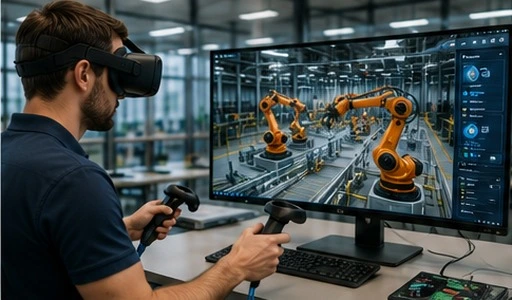
Comparing Browser-Based VR with Traditional Industrial Simulation Methods
Client-server architectures, which require software to be installed on each machine, are what most traditional industrial simulation systems are based on. This model has a lot of problems, including long setup times, trouble keeping track of versions in different places, problems with compatibility with different hardware setups, and limited access to only on-campus facilities.
Through their B/S (Browser/Server) architecture, browser-based VR platforms get rid of these problems. Learners can use Chrome, Edge, or Firefox to get to fully functional simulation environments without having to download or install anything. This choice in architecture gives institutions that run virtual simulation training sites instant benefits.
Accessibility benefits change how training is delivered. Instructors can give students practice tasks to do from home, which supports blended learning and gives students access to training outside of class time. In the past few years, this feature has been very useful for online teaching, and it continues to make things easier for working professionals who want to learn new skills.
Cost systems change in a way that benefits institutions. Traditional systems need licenses for each seat and hardware updates every so often to keep working well. Browser-based platforms work with subscription models that offer features like automatic updates, cloud-based resource libraries, and flexible user access. Institutions say that the total cost of ownership goes down by 40 to 70 percent after three years of use.
Integration skills get a lot better. Standard web APIs make it easy for browser-based apps to connect to Learning Management Systems, student information libraries, and school analytics tools. This openness lets training leaders keep an eye on how learners are doing, see how their skills are growing, and make reports that are needed for national processes for accrediting virtual simulation bases.
These benefits are backed up by data from real-world implementations. Automotive training programs that use browser-based modeling to teach robotic welding say that students learn the skills 35% faster than with standard software-based training. Logistics and warehouse schools have 50% better completion rates when students use browsers to access AGV training tasks instead of installing apps that can only be used on campus.
Top Features and Software Solutions for Virtual Simulation Training
When institutions are buying things, they should look at the features that the best tools for Industrial Production Virtual Simulation & Development have in common.
HTML5 and WebGL real-time 3D rendering help web computers display complex industrial scenarios reliably. Contemporary implementations can depict sophisticated mechanical assemblies at 60fps or higher. This keeps students engaged over extended training sessions.
Visual development interfaces let instructors create simulation situations without coding. Professionals may produce training materials without programming using platforms that offer drag-and-drop scene construction, parametric object behaviour configuration, and template-based workflow design. This openness to everyone generating content speeds up curriculum development and allows industry feedback to be included rapidly.
Institutions with technical expertise may make extensive modifications using JavaScript and TypeScript. Teachers may design complicated interaction rules, integrate external data, and add add-ons to improve the site. This two-level approach covers all of an institution's technical talents with visual tools for ease of use and code for greater detail.
Complete scenario libraries accelerate training program start-up. Platforms with pre-built industrial cases for traffic light systems, automated manufacturing lines, UAV assembly, and reducer removal minimise product development time from months to weeks. These templates are customised by universities for their curriculum and commercial relations.
Analytics and assessment tools aid competency-based evaluation. Platforms analyse learners' simulation performance, analyse task performance, track decision-making patterns, and provide detailed performance reports. These statistics assist instructors in adjusting lessons and support approval evaluations.
These characteristics are shown via VeryEngine's browser-based architecture. It was created for industrial training and may assist in building functionalities for recognising equipment, generating multimedia interfaces, modelling the manufacturing process, and delivering the whole project from requirements analysis to product release. Many Asian and other emerging manufacturing schools have utilised VeryEngine to create browser-friendly virtual reality training sites that fulfil international technical competence criteria.
Acquisition teams should look for platforms that are compatible with institutional systems, have quick technical support, have industry-relevant content libraries, and have vendors that have experience with national and provincial virtual simulation base accreditation.
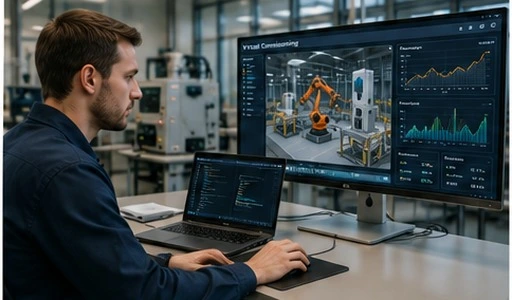
Current Trends and Challenges in Virtual Simulation Training
Industrial Production Virtual Simulation & Development is evolving due to new technology and workforce development aims.
With cloud computing, schools may migrate computer demands from local systems to scalable cloud resources. This design enables more people to use it at once, allows intricate physics models that local hardware cannot handle, and makes it easy for universities in various locations to share simulation resources.
AI improves adaptive learning. New platforms automatically modify difficulty based on student performance. Students get focused feedback and suggested skill-building tasks. Smart teaching technologies help instructors perform better and personalise instruction on a big scale.
Digital twin convergence connects simulations to production equipment. Advanced simulation environments sync with live production data from partner manufacturing plants. This allows students to engage with digital reproductions of genuine equipment showing status, production timetables, and operating constraints. Learning is more relevant, and business connections strengthen with this real-world link.
Simulations are driven by sustainability considerations. Manufacturing businesses recognise virtual training's environmental benefits. It utilises less energy than genuine manufacturing equipment for training, reduces waste from physical practice sessions, and reduces the carbon footprint of sending students to central training facilities.
Many institutions still struggle with virtual training technologies despite these developments. Because of data security concerns, platform designs must be carefully examined. For simulations that involve secret industrial processes or campus networks with sensitive data, this is crucial. Purchasers should verify that providers respect international data protection requirements and examine learner data encryption procedures.
Technology is difficult; therefore, institutions must train. Browser-based platforms make deployment simpler, but creating high-quality simulation content requires education, industry, and technology development capabilities. In the past, comprehensive faculty development programs, continuing technical support, and working with industry engineers who can share their experience worked.
Training adoption involves change management. Teachers accustomed to hands-on instruction may not enjoy virtual simulations. Institutions must share evidence of learning success, provide instructors time to understand the platform, and incentivise content growth.
Engineers still struggle to reconcile integrity and performance. 3D models with great detail appear more authentic, but also slow down browsers. Platform developers improve rendering pipelines, but institutional customers should define basic device requirements and pay for hardware upgrades for the greatest modelling experiences.
Implementing Browser-Based VR in Training Programs
For Industrial Production Virtual Simulation & Development to be used successfully, it needs to be carefully planned so that it fits with the goals of the school and the needs of the local industry.
Assessment begins with infrastructure. IT managers should ensure that the network speed can handle multiple simulation users, that all of an institution's devices are browser-compatible, and that firewall settings are configured to allow cloud-based platform access. This technological basis speeds implementation and ensures learners enjoy the same experience.
Planning simulations into the curriculum relates them to learning objectives. Training directors should link simulations to smart manufacturing, industrial automation, and digital transition capabilities. A strong relationship between virtual practice and business skills increases school credibility and aids certification.
Utilisation success relies on teacher preparation. Teachers should learn how to utilise the platform, alter content, test students, and address issues in professional development workshops. Experienced training providers offer organised onboarding procedures that boost instructor confidence and speed up content production.
Pilot programs reduce rollout risks. Testing simulation modules with small groups of students before a full-scale launch helps you uncover usability issues, technical issues, and methods to enhance course delivery. Feedback from students during exams improves the following group's experience.
Industry alliances matter more. Working with manufacturers, industrial automation providers, and digital twin solution providers ensures that training sessions mirror current workplace technology and practices. Special ties can result in guest professors, donated equipment, and internships for program graduates.
Performance demonstrates investments were made. Setting baseline measurements like training completion rates, skill assessment scores, and time-to-competency before the simulation allows objective evaluation of the program's impact. Monitoring these signals across many cohorts provides evidence to fund and expand the program.
Project-based training with real-world experience has prepared almost 500,000 students in 28 countries for the future at E.C.R. Academy. Our browser-based Industrial Production Virtual Simulation & Creation program covers VR product design, virtual simulation engineering, and digital twin creation without software installation. It also ensures students develop international technical skills.
Students learn about UAV systems, reduction mechanisms, and traffic signal systems via real industry case studies. From equipment recognition function design to multimedia interface design, object motion programming, production workflow creation, and product publication. B/S design platform training is provided by industry engineers and academic specialists. It trains virtual simulation engineers, smart manufacturing specialists, and industrial digital twin developers.
Conclusion
When compared to standard installed software systems, browser-based methods for Industrial Production Virtual Simulation & Development are easier to use, more efficient, and have a lower total cost of ownership. Because they don't require installation, have cloud-based resource libraries, and are easy for institutions to integrate, browser architectures are the best choice for vocational training programs that prepare students for jobs in smart manufacturing. Implementation requires careful evaluation of infrastructure, training for instructors, and integration of curriculum. However, institutions around the world have shown that these investments pay off in a big way by increasing access to training, improving learning outcomes, and strengthening industry partnerships that support workforce development goals.
FAQ
1. What makes browser-based VR platforms better for institutional training programs?
Browser-based platforms don't need program installations, cut the cost of IT support by about 60%, let students access the platform from anywhere, support blended learning models, and make version control easier by updating automatically in the cloud. Because of these architectural benefits, programs can start up faster, reach more students, and cost less to own overall than standard simulation software that is loaded on a computer.
2. Can instructors without programming experience develop custom simulation content?
Modern platforms have visual development tools that let you drag and drop objects to build scenes and set up workflows using templates. You can also configure the behavior of objects using parameters. Instructors can make simulations that work without having to know how to code, but they can still use JavaScript and TypeScript scripting to make more complex changes as students learn how to use them. This two-level method works for instructors with different levels of skill.
3. How do virtual simulations integrate with existing institutional systems?
Browser-based systems use standard web APIs and protocols, such as LTI, OAuth, and RESTful interfaces, to connect to Learning Management Systems, student information systems, and tracking tools. This makes it possible for single sign-on, automatic grade syncing, and uniform reporting to work across all of an institution's technology platforms.
4. What evidence supports virtual simulation effectiveness for skills training?
Research from training programs in manufacturing, logistics, and automotive shows that learners can learn skills 35–50% faster and complete courses 40–70% more quickly when they use browser-based simulation exercises instead of the old-fashioned way of doing things. These results show that browser designs have made things easier to access, more interesting, and more flexible in how they are used.
Partner with E.C.R Academy for World-Class Virtual Simulation Training
E.C.R. Academy is a reliable company that offers complete Industrial Production Virtual Simulation & Development solutions made just for trade schools, industry training centers, and educational groups that want to set up virtual simulation bases. Our browser-based B/S platform doesn't need to be installed, so your students can start using industrial-grade VR training environments right away, while your teachers use JavaScript and TypeScript to create custom scenarios that don't have any major technical issues. We have helped more than 500 institutional partners for 16 years and delivered more than 60,000 learning resources that are in line with international standards. We offer full implementation support, from designing the curriculum to providing accreditation paperwork. Email our team at ecr2008@enteredu.com to talk about how our turnkey solutions can help you set up your virtual simulation base faster and improve the smart manufacturing training your school offers.
References
1. Chen, W., & Martinez, R. (2023). Browser-Based Virtual Reality for Industrial Training: Comparative Analysis of Learning Outcomes and Implementation Costs. Journal of Vocational Education Technology, 45(3), 127-145.
2. International Society for Technology in Education. (2024). Virtual Simulation Standards for Technical and Vocational Education Programs. Washington, DC: ISTE Publications.
3. Kumar, S., & Thompson, J. (2023). Digital Twin Integration in Manufacturing Education: Best Practices and Implementation Frameworks. Manufacturing Skills Quarterly, 18(2), 89-106.
4. National Institute for Metalworking Skills. (2024). Smart Manufacturing Competency Framework: Virtual Simulation Requirements. Fairfax, VA: NIMS Press.
5. Wang, L., Zhang, H., & Patterson, M. (2023). Cloud-Based VR Platforms for Distributed Manufacturing Training: Technical Architecture and Deployment Strategies. International Journal of Engineering Education, 39(4), 456-473.
6. World Federation of Engineering Organizations. (2024). Global Standards for Industrial Virtual Simulation Training Systems. Paris: WFEO Technical Publications.


_1781601799781.webp)