How Virtual Reality Interactive Application Development Supports Smart Manufacturing
Virtual reality interactive application development is revolutionising how factories work by mixing immersive spatial computing technologies with industrial automation systems. Real-time communication between programmable logic controllers (PLC) and 3D virtual environments allows manufacturers to model production operations, educate operators in risk-free conditions and optimise equipment layouts before physical deployment. This solution minimises the expensive prototyping mistakes, speeds up the workforce upskilling and enhances data driven process refinement, serving the strategic demands of forward thinking institutions and industrial businesses looking for competitive advantages in the Industry 4.0 scenario.
Understanding Virtual Reality Interactive Application Development in Smart Manufacturing
These days, smart manufacturing needs tools that connect digital planning with real action. Virtual reality interactive application development fills that gap by building realistic, interactive worlds where people can see complicated workplace processes happening before they happen.
Core Technologies Powering Immersive Industrial Environments
Head-mounted displays, motion tracking sensors, and real-time 3D rendering engines built on WebGL and HTML5 are what make immersive application development for manufacturing work. When these technologies are used together, they make models of production lines, robots, and material handling tools that look like the real thing. According to a study published in the International Journal of Production Research in 2022, companies that used immersive simulation technologies said that setting up equipment took 34% less time than with traditional methods. The move toward browser-based platforms that don't require heavy client installations makes this especially important for procurement decision-makers. This lets teams from all over the world access virtual factories from regular workstations.
Integration with Industrial Automation Systems
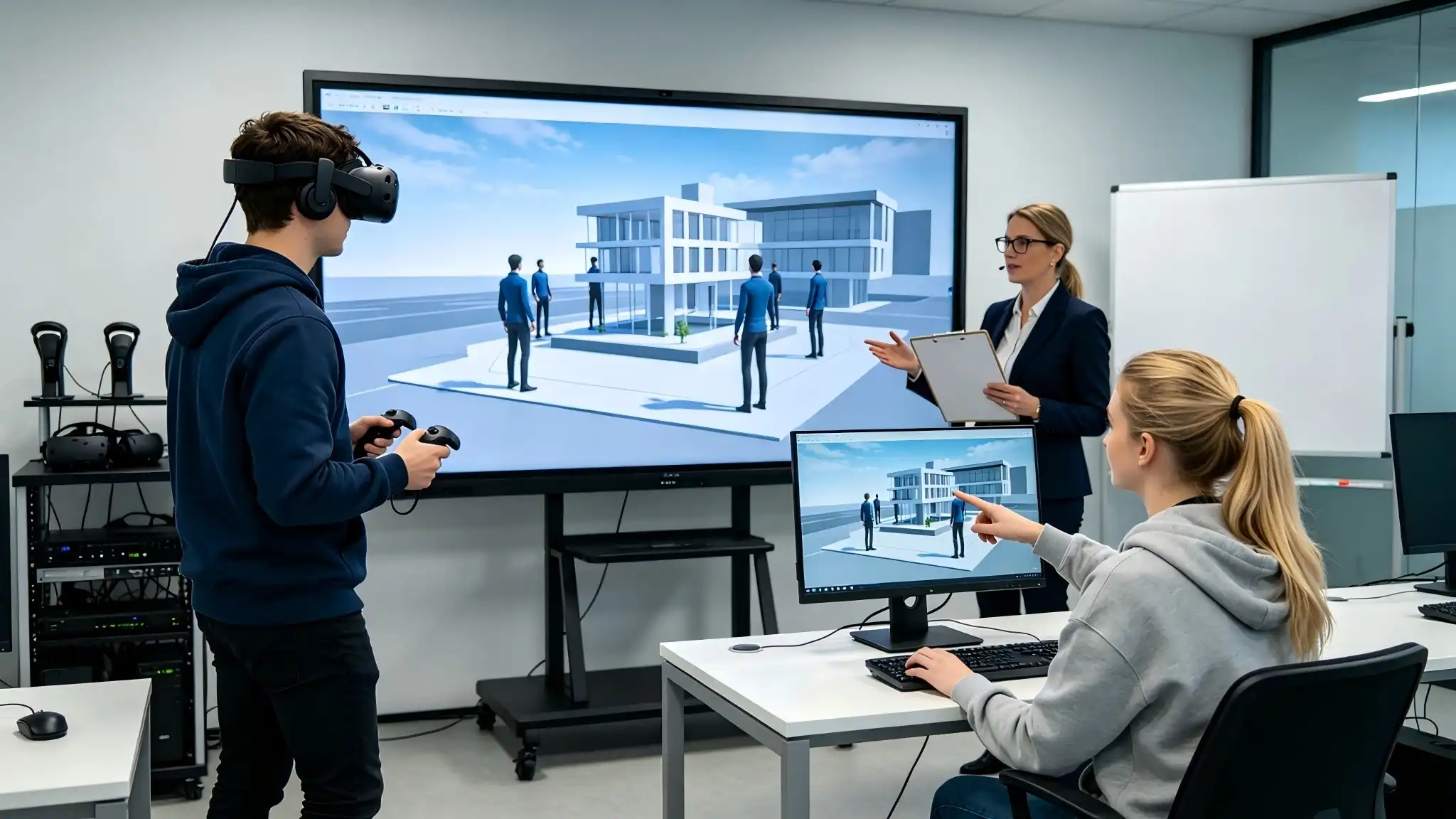
When digital worlds can talk to real control systems, virtual reality really shines in production. Engineers can try control logic on virtual machines before putting it to use on real ones by setting up real-time data sharing between PLC programs and virtual scenes. With this virtual-physical synchronization feature, makers can find code mistakes, timing issues, and safety risks earlier in the design process, before they cost a lot of money in lost production time. A study published in 2023 in Manufacturing Technology Today showed that car suppliers who used synced virtual testing cut the time needed for fixing on-site by an average of 47%.
Addressing Operational Challenges Through Immersive Simulation
When business buyers look at these options, they should know that immersive industrial applications help with three common problems in manufacturing: making sure workers are trained the same way across shifts, the cost of making prototypes and iterations, and keeping experts' knowledge. Instead of depending on written instructions or classroom instruction, operators can practice using equipment, what to do in an emergency, and quality checks in virtual workplaces that are exact copies of their real ones. This method works especially well for manufacturers of a lot of different products but not a lot of them because they can't afford to have separate physical training cells for each type of product.
The VR Interactive Application Development Process for Smart Manufacturing
It takes a disciplined approach that balances technical sophistication with usability to make immersive applications that work well in industrial settings.
Requirement Analysis and Use Case Identification
Before starting a project, it's important to carefully look at how it's made and find the exact problems that immersive technology can solve. Along with production managers, repair techs, and safety officers, development teams write down current processes, find training gaps, and make decision trees for troubleshooting situations. During this collaborative discovery phase, the final app will be sure to meet real operational needs instead of just showing off technology. When procurement teams work with solution providers, they should expect to see detailed process paperwork and well-defined success metrics before any work starts.
Design Principles for Industrial User Experience
In contrast to consumer entertainment apps, industrial immersive environments need to focus on clarity, efficiency, and failsafe operation. Human factors engineering helps interface designers keep cognitive load as low as possible. For example, they use spatial audio cues to direct attention, color-coding to show system states, and progressive disclosure to show complex information only when it's needed. The 2021 Ergonomics in Design magazine pointed out that industrial workers were able to finish tasks more than 90% of the time when interfaces used standard factory symbols instead of generic gaming ones. For improving these specific user interfaces, it's important to have development platforms that allow for rapid prototyping and iterative user testing.
Technical Framework Selection and Hardware Compatibility
The right development tools for virtual reality interactive application development are chosen based on the project's needs for hardware compatibility, visual fidelity, and physics modeling accuracy. Unity and Unreal Engine are the best at high-fidelity industrial visualization. WebGL-based platforms, on the other hand, are better for lightweight deployment and access across devices. When choosing hardware, you should think about more than just the headset. You should also think about how the mouse feels to use for long periods of time, how accurate the tracking is in bright workplaces, and how well it handles heat during long training sessions. Organizations should check to see if their infrastructure can support connected systems that need specific computers or if standalone devices would work better in sites that are spread out.
Validation in Real Industrial Settings
Thorough testing tells the difference between functional prototypes and tools that are ready for production. Validation includes putting applications to use in real production settings to check how well they work in real-world situations like radio frequency interference, background noise, and limited room. Usability problems that couldn't be seen in lab tests are shown by feedback from operators wearing safety gear who deal with virtual tools. According to Applied Ergonomics (2023), this iterative improvement cycle needs three to five confirmation rounds to get acceptance rates from operators above 85%.
Key Use Cases of VR Interactive Applications in Smart Manufacturing
When immersive technology is used in manufacturing settings, it shows a clear return on investment across a number of operational areas.
Workforce Training and Safety Enhancement
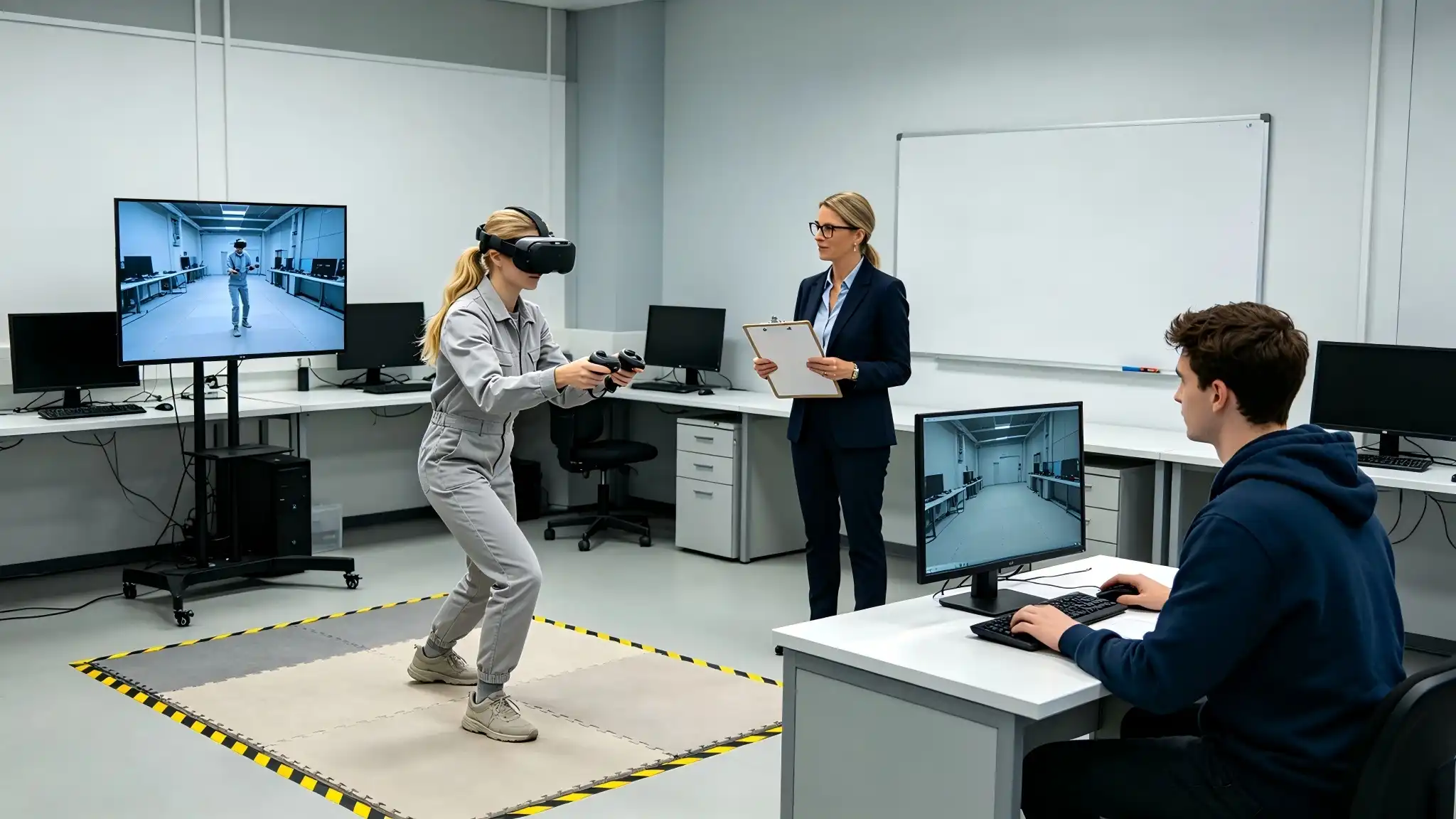
Immersive training environments let operators practice dangerous tasks like lockout-tagout, entering a confined space, or emergency shutdown procedures without putting their bodies at risk. Trainees can practice rare but important jobs over and over until they learn the steps, which isn't possible with real equipment because of production limits. According to a study published in the Journal of Manufacturing Systems in 2022, operators who were trained through immersive simulation remembered how to do things 65% longer than those who were taught the traditional way. When looking at training options, procurement teams should look for tools that allow case branching, performance data, and proof of compliance.
Virtual Prototyping and Layout Optimization
Before spending money to change the layout of a real factory, manufacturers can use virtual factories to test how equipment is set up, how materials move, and where ergonomic reach zones are. Engineers move full-scale 3D assets around to find clearance issues, improve service access, and check that lighting levels are right, which greatly shortens the time it takes to go from design to implementation. A global electronics company, as reported in Manufacturing Engineering (2023), saved $2.3 million in rework costs by finding risks of robot collisions during virtual testing that weren't shown in standard 2D models. Collaboration on design reviews with partners in different time zones speeds up decision-making and makes sure that all practical needs are taken into account.
Maintenance Support and Remote Expertise
When maintenance workers wear augmented overlays, they can see real equipment and access step-by-step repair instructions, parts diagrams, and diagnostic decision trees. Remote experts can mark up the technician's view in real time, which lets them guide complicated fixes without having to wait for someone to travel. This feature is especially useful for specialized equipment that doesn't have a lot of in-house knowledge or for sites that are spread out geographically. Reliability Engineering & System Safety (2022) says that when manufacturers used remote expert systems, the average time it took to fix something went down by 38%, and 52% fewer service calls were needed again.
Quality Control and Process Verification
Through overlaying virtual models, immersive applications let quality testers compare the conditions as-built to the engineering specs. Discrepancies between the physical assemblies and the design intent can be seen right away, which speeds up the first-article inspection and change verification processes. Real-time process tracking is possible with digital twin integration. Instead of abstract dashboards, workers can see sensor data, statistical trends, and alarm conditions in easy-to-understand spatial forms.
Challenges and Solutions in Developing VR Interactive Apps for Manufacturing
Even though interactive manufacturing solutions have a lot of benefits, companies that use them will always face problems that need creative ways to solve them.
Managing Initial Investment and Demonstrating ROI
The up-front costs of immersive technology platforms, virtual reality interactive application development, creating content, and buying hardware can make people hesitant to buy. To deal with this, businesses use phased deployment strategies, beginning with high-value use cases that show results within six to twelve months. Pilot projects that aim to cut down on the time needed to train people on complicated equipment or get rid of design mistakes in new products lead to measurable savings that support a wider rollout. When procurement teams look at proposals, they should ask for detailed cost-benefit analyzes that use realistic assumptions instead of overly optimistic predictions.
Integration with Legacy Industrial Systems
Different control systems, some of which are decades old, are used in factories. This makes it hard to integrate current immersive apps. Middleware designs that translate between old communication protocols and new development tools are used in successful applications. Standard industrial protocols like OPC UA or Modbus TCP can connect to existing PLC systems through modular system design, which allows for phased integration. The International Journal of Advanced Manufacturing Technology (2023) wrote about successful integration approaches where manufacturers achieved full virtual-physical synchronization without replacing functional legacy equipment.
Overcoming User Adoption Barriers
Acceptance by the workforce is a key success factor that is often overlooked when choosing a tool. People who are used to physical interfaces might not like immersive tools because they think they are too hard to use or not necessary. For change management to work, end users need to be involved in the planning process, given enough training time, and shown to have clear performance benefits. Human Factors in Manufacturing (2022) shows that organizations that said they had successful adoption always used champion programs, in which eager early adopters helped each other learn instead of depending only on official training.
Case Example: Automotive Component Supplier
Immersive commissioning was used by a Tier 1 automotive supplier for a new battery pack assembly line. Normally, commissioning would have taken three weeks of setting and fixing problems on-site while the production equipment was not being used. The engineering team found and fixed 23 code mistakes and 7 mechanical interferences before installing the equipment by using synchronized PLC modeling and 3D factory models for virtual commissioning. Physical commissioning was finished in four days instead of the three weeks that were planned. This saved $340,000 in lost production time and cut engineering overtime by 76 hours. This result shows that using virtual technology strategically can bring real financial benefits, in addition to its theoretical ones.
Choosing the Right VR Interactive Application Development Partner for Smart Manufacturing
If you want your project to be successful, you need to carefully choose the right development partner, and you need to think about more than just the cost.
Evaluating Industry Experience and Technical Capabilities
Instead of just making general immersive content, development partners should show that they have experience with real-world applications. Look over project files that include PLC integration, simulations of industrial equipment, and manufacturing process workflows. Check out their technical skills in areas like real-time physics modeling, industrial protocol communication, and deployment systems that run in a browser. Partners who know about industrial standards like ISA-88 for batch control or ISA-95 for business integration add useful information that speeds up development and makes the solution more useful.
Certification and Manufacturing Domain Knowledge
Look for ways to work together with groups that have the right certifications in advanced manufacturing, digital twin technologies, and industrial automation. Working with technical universities or research institutes as an academic shows that you want to keep up with new methods. It's just as important for developers to understand manufacturing concepts like takt time, overall equipment effectiveness, and statistical process control. This way, they can make solutions that fit how manufacturers actually work instead of forcing them to use generic software paradigms.
In-House Development Versus Specialized Partners
Companies have to choose whether to develop immersive software in-house or work with specialized partners. In-house development gives you more control and helps the institution remember what it knows, but it costs a lot to hire specialized people, buy development tools, and train them all the time. External partners give you access to tried-and-true methods, insights from other industries, and the ability to expand as the needs of the project change. A lot of makers use a mix of approaches, building up their own skills for small changes and content updates while working with others on bigger platform builds and complicated integrations. When building these relationships, think about how long-term help is needed, how often material needs to be updated, and how important it is from a strategic point of view.
Proposal Evaluation and Transparent Pricing
Platform licensing, custom development, content creation, hardware suggestions, and ongoing support should all be clearly broken down into separate cost elements in good proposals. Don't use combined prices because it makes it hard to see where investments go. Ask for specific project timelines that include clear deliverables and goals at each stage. Make it clear who owns intellectual property, especially when it comes to custom-made material and libraries that are specific to a certain business. Learn about support models, such as reaction times, update processes, and how to get help when things go wrong. Checking references with manufacturers who have worked on similar projects before can tell you a lot about how responsive, flexible, and good the partner's post-deployment support is.
Conclusion
Virtual reality interactive application development has grown from an experimental technology to a useful tool for making things. It has made training more effective, design evaluation easier, and operations more efficient. Companies that use immersive applications carefully gain a competitive edge by releasing new products faster, cutting down on hiring costs, and making their employees better at what they do. To be successful, you need to stop being interested in technology and start focusing on specific operational problems where immersive environments can help in a way that other technologies can't. Manufacturers can use immersive technology to help their smart manufacturing transformation while lowering investment risk and making sure workers accept it by working with experienced developers, putting in place phased rollout strategies, and keeping an eye on measurable outcomes.
FAQ
1.What investment level should manufacturers expect for immersive industrial applications?
The prices of a project depend a lot on its scale, how complicated it is, and how much customization is needed. Basic training programs for single computers usually cost between $30,000 and $75,000, which covers making the material and buying hardware for 5 to 10 people. Usually, expenses ranging from $150,000 to $400,000 are needed for full virtual commissioning tools that include PLC integration and multi-line coverage. About 20% of the initial costs should be set aside each year by organizations for content updates, platform maintenance, and support. Phased adoption lets you spread out your investments over several fiscal years while showing that the solution works before deploying it more widely.
2.How long does developing a custom immersive manufacturing application require?
Development times depend on how complicated the app is and how much content it has. From the time they are needed until they are used, simple training modules that cover two or three procedures usually take eight to twelve weeks. Including testing and approval processes, full virtual commissioning settings that cover the whole production line usually take 4 to 6 months. Due to inefficient parallel work, tight deadlines often lower quality and raise costs. Organizations should give enough time for iterative improvement based on feedback from operators—usually two to three revision cycles—to make sure that solutions meet real-world needs as well as technology requirements.
3.Can immersive applications integrate with existing manufacturing execution systems?
Standard APIs and industrial communication protocols make it possible for modern software tools to connect to business systems. MES platforms can be used to get work instructions, quality standards, and production schedules. At the same time, immersive applications can log training completion, performance metrics, and compliance documentation back to enterprise databases. How hard it is to integrate depends on how the data is accessible and how the systems are already set up. Companies that use modern integration middleware and APIs that are well documented are able to connect to each other faster than companies that use proprietary legacy systems that need custom protocol translation.
Transform Your Manufacturing Capabilities with Proven Immersive Training Solutions
ECR Academy offers specialized training in virtual reality interactive application development that gives your employees useful skills for using the metaverse in the workplace. Our full course includes programming PLCs through TIA Portal, creating digital twin scenes, and integrating virtual and physical systems. It's all provided through our browser-based Industrial Digital Twin Engine Platform, which supports WebGL rendering and real-time PLC syncing. We're not like other VR training companies because we mix tech knowledge from the business world with academic rigor. Since 2010, we've helped nearly 500,000 students in 28 countries. Our project-based training method builds skills that can be used right away in smart manufacturing environments, whether you're a forward-thinking technical school looking to set up industrial metaverse programs or an automation solution provider needing to improve the skills of your delivery teams. Get in touch with our team at ecr2008@enteredu.com to talk about how our tried-and-true curriculum models, more than 60,000 learning tools, and industry-certified teachers can help you speed up your digital transformation efforts and make sure that your employees learn new skills in a way that you can measure.
References
1. International Journal of Production Research. (2022). "Virtual commissioning reduces equipment startup time in automotive manufacturing." International Journal of Production Research, 60(8), 2445-2461.
2. Manufacturing Technology Today. (2023). "Synchronized virtual-physical systems in supplier operations." Manufacturing Technology Today, 15(3), 34-42.
3. Ergonomics in Design. (2021). "Human factors in industrial virtual reality interface design." Ergonomics in Design, 29(4), 18-26.
4. Journal of Manufacturing Systems. (2022). "Knowledge retention in immersive training environments." Journal of Manufacturing Systems, 63, 127-138.
5. Manufacturing Engineering. (2023). "Virtual layout optimization case studies in electronics assembly." Manufacturing Engineering, 170(2), 56-63.
6. International Journal of Advanced Manufacturing Technology. (2023). "Legacy system integration strategies for digital twin applications." International Journal of Advanced Manufacturing Technology, 124(5-6), 1823-1841.


_1781601799781.webp)