How Photovoltaic Engineering Technology Improves PV System Reliability
Photovoltaic engineering technology makes PV system reliability better by turning good intentions into tried-and-true, documented design choices. When it comes to modules, inverters, mounting, and safety gear, it puts together a system that fits the site and works well with the size of the system. Once the installations are up and running, they are checked again. As soon as the service is up and running, it is checked for small issues and fixed before they become big ones that cause long outages. Reliability is the result of the whole system, not just one part. The article talks about the skills that teams need to complete safe solar projects in the US and other places. Design, standards, monitoring, supplier checks, and the use of parts and applications are some of these skills.
How Engineering Design Prevents Common Reliability Problems?
Start With Site Data and Correct Sizing
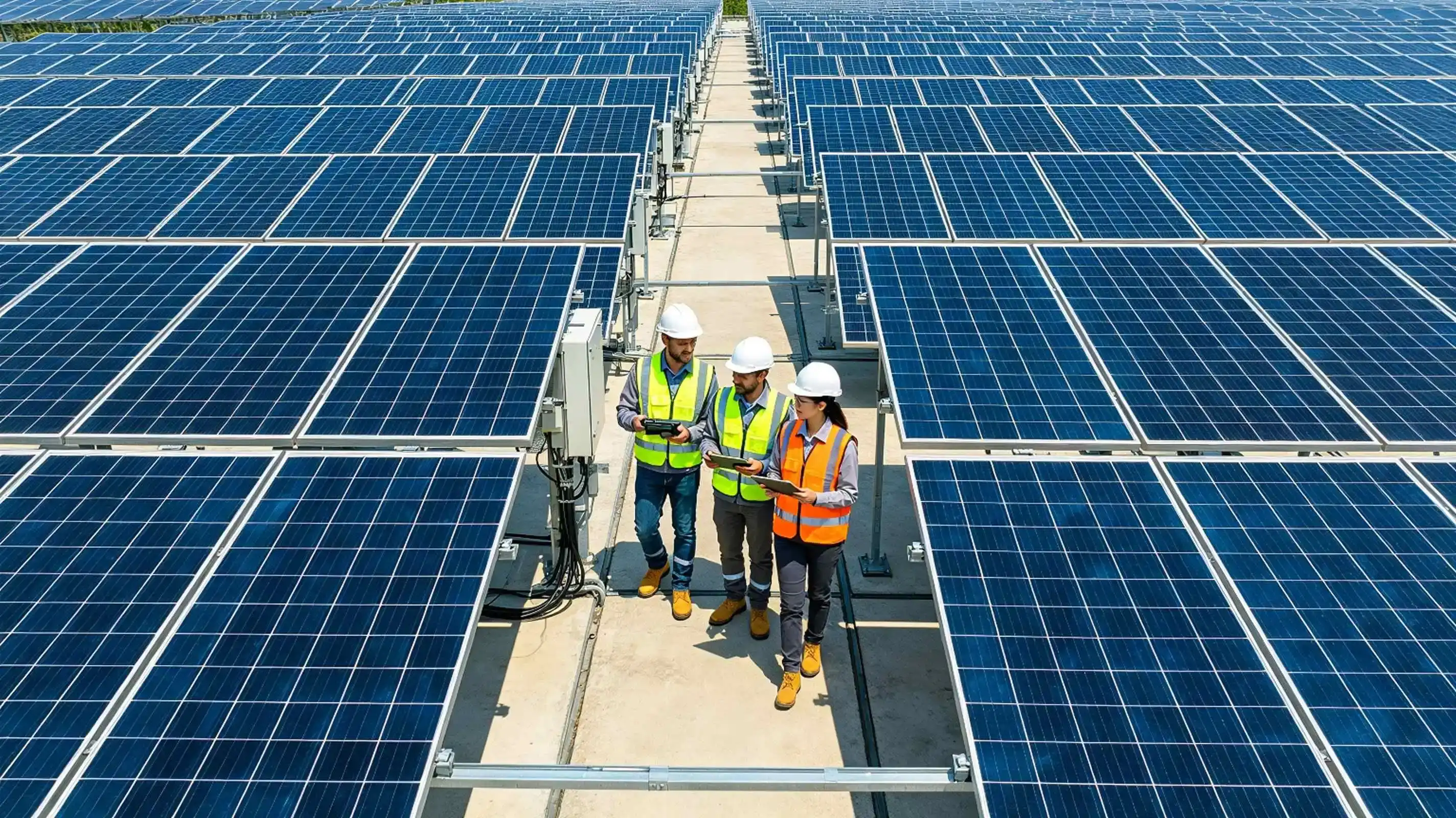
A lot of bad things happen before the hardware gets there. If you don't properly evaluate the site, measure the shading, or choose the right size, you will lose money that you can't get back. The first steps in good photovoltaic engineering technology are to look at the site and see what solar resources are available. It tells you about the roof or soil's condition, where the shade comes from, the range of temperatures, wind, snow, and how to connect to the power grid. Then, engineers pick out the right tools, decide how much power they need, and figure out how to connect the strings in series and parallel so the voltage stays within the inverter's limits. The voltage goes up in the morning when it's cold, so that check is important. Then there is an analysis of costs and benefits. Every number should have a source, so that someone looking over it can see each assumption and do the math all over again.
Design for Climate, Margins, and Fewer Single Points of Failure
Things last as long as the weather lets them. Plants near the coast need to be kept safe from corrosion. Structures need to be stronger in the snow, and they need to be able to cool down and handle the weight of cables well in the desert. And just in case, I leave extra space around the cable size, protection settings, and structural loads. This is because the site doesn't always match the drawing. If you split a plant into several inverter and combiner circuits, a fault will only affect a small part of the output instead of the whole array. It is also important to have clear paths for maintenance. It is not possible for technicians to safely check combiner boxes that are close to them. Leaving room for growth in the future keeps later additions from being rushed. It's safer to do any of these things before the first module goes up.
Construction Control and Commissioning Tests
If the build is bad, it doesn't matter how good the design is. I take pictures of everything, check the equipment that comes in, and make sure the bolts are tight. I also look at the connectors, label the cables, and make sure they are waterproof. Finally, commissioning makes sure that the work is done. IEC 62446-1 tells us how to test and keep records for PV systems that are hooked up to the power grid. During checks, people usually look at the inverter's polarity, insulation resistance, grounding, and how it works. In the US, UL 1741 and IEEE 1547 talk about how to support the grid and act in a way that stops islands. Just in case, I also keep track of the first performance ratio. In the end, I compare field readings to that known starting point instead of a guess.
Core PV System Components and Their Reliability Functions
Modules: Temperature, Load, and Degradation Behavior
In the long run, the plant is built on modules. This is important to know in hot places because it tells us how much power cells lose when they get hot. Load ratings are important when it snows or winds a lot. 2400 Pa and 5400 Pa loads are often used for module tests. IEC 61215 talks about design qualification and has a test with hail made of 25 mm ice balls moving at 23 m/s. IEC 61730 is about making sure things are safe. Encapsulation and PID resistance keep the output safe over time. In their well-known NREL review, Jordan and Kurtz found that most things lost about 0.5% of their value every year. If bought goods have problems, they can be tracked back to a certain production lot.
Inverters and Mounting Structures
Not only do inverters change DC power to AC power, but they also manage data and grid functions. When one fails, string inverters lessen the damage and make swaps easier. These work best in large plants with lots of units to service. Batteries can be used with hybrid inverters, and microinverters cut down on module-level sun loss. I compare each design to the site because they cool, monitor, and are easy to service in different ways. Water, snow, wind, and rust are all things that mounting systems have to deal with. The rating for the building, the type of coating or material used, the drainage, and how waterproof the roof is are all things I look at. Things that move along tracks need a plan for maintenance because they have moving parts. To protect uptime, parts that are easy for the crew to fix are chosen.
Protection Equipment, Grounding, and Storage
Small problems don't get worse with protection tools. It is important that the fault current and voltage in the system are matched by the breakers, fuses, surge protectors, transformers, and switchgear for both DC and AC power. Grounding lowers the chance of getting a shock or lightning strike. Protection equipment might not show faults if the ground is not connected correctly. NEC 690.12 in the US says that the PV systems in many buildings must be turned off quickly. This helps first responders. They are more valuable when they are kept, but they also cause safety and temperature problems that need to be fixed. Controlling the temperature, taking care of the batteries, and going over fire safety rules are some of the things that need to be done. When parts are well-documented and work with each other, technicians can quickly fix problems. They know what each device should do, so it works this way. Not getting along with each other makes things worse and sets off alarms that no one can explain.
Selecting the Right PV Engineering Technology for Each Application
Rooftop, Ground-Mounted, Fixed-Tilt, and Tracking Systems
Not every architecture works well everyplace. Some floor plans can't be used because of roof rules about fire, access, or strength. Rooftop systems, on the other hand, save land and serve loads close by. When plants are mounted in the field, they can study the soil, drain water, and pull weeds. This makes the rows cleaner and service easier. A building with a fixed tilt doesn't have many parts that can move. More often than not, single-axis trackers use more power per watt installed because they need more motors, controllers, and upkeep. Those who want to buy those parts should find out who will fix them and how quickly. Central inverters work with big power blocks, while string inverters work with smaller sites and different parts of the roof. The best choice is based on what's best for the business, not on what's popular.
Grid-Connected, Off-Grid, Hybrid, and Microgrid Designs
Systems that are connected to the grid must follow rules for connecting and must safely turn off when the power goes out. Protection against islands takes care of this. The most important things to look at in off-grid systems are their independence, battery size, and generator backup. Mixed systems are harder to manage since they use PV, storage, and the grid all at the same time. These smart PV microgrids help keep systems safe and in control of how much energy they use. They can also work without the main grid. For each type, there are different design checks that need to be done, and each type fails in its own way. For a factory, uptime and good power may be the most important things. The health of the batteries and how well it works might be the most important things to a site that is far away. Setting these goals early on helps the design stay true to itself.
Harsh Climates and Special Sites
There are sites that need more checks. People who work in plants near the coast have to deal with salt mist. IEC 61701 checks modules for corrosion in salt mist. Some parts of the desert are very hot, dusty, and sandy. There is a lot of snow and ice where it is cold. It is more likely for PID and moisture to happen in places that are humid. The materials used for floating PV need to be able to handle high humidity all the time. On farms, buildings have to be strong enough to hold farm equipment, and solar carports have to meet both building and fire safety standards. I don't just ask suppliers for general references; I also ask them if they've dealt with things like this before. Things that work well in mild weather might not last long in bad weather.
Monitoring, Maintenance, and Measuring Reliability
Monitoring Data That Reveals Problems Early
Things that happen every day become proof when they are watched. Sensors that measure irradiance, power quality, inverter and string data, and weather stations can all show when output changes from what was expected. IEC 61724-1 talks about how to track and measure performance using tools like the performance ratio. Some of the things I keep an eye on are the performance ratio, the availability, the inverter downtime, the current difference between strings, the number of alarms, and the mean time to repair. If two strings are in the same amount of sunlight and one falls below the other, it's probably because of dirt, shade, or a connection that isn't tight. I add the battery type and health when I store something. Bad things can also be seen in trends that last for months, but not in a single reading.
Preventive and Predictive Maintenance
A guide from NREL on how to run and maintain PV and storage systems talks about how to keep good records and plan checks. We need to visually check, use thermography to find hot spots caused by shading or a broken bypass diode, and test the IV curve. It also involves cleaning based on dirt, getting rid of plants, keeping the cooling system in good shape, checking for corrosion, and making sure the batteries are safe. Data trends are used in predictive work to plan repairs before they go wrong. As part of service agreements, there should be a response time, a format for reports, a stock of spare parts, and support in the area. When I compare quotes, I also look at response times. This is because a cheap deal with slow response times can cost more in energy use.
Measuring Business Value Beyond Efficiency
The efficiency number that is given comes from a lab. The real result is how much energy is made every year. The performance ratio looks at how much the plant actually produced compared to how much it should have produced based on how much sunlight it got. This shows how much it lost because of things like shade, heat, time spent not being used, wiring, and normal wear and tear. Then I figure out how much it will cost to buy, set up, finance, connect, maintain and repair (O&M), insure, fix, have it shut down, and do any final tasks. The type of project should determine the reliability goals. Set goals that can be measured in both the design and the contract. For example, make sure that the response time and availability are clear. That makes everyone responsible and gives owners a simple way to see how things went.
Evaluating Suppliers and Building Skills for Dependable PV Projects
How to Evaluate PV Suppliers and EPC Contractors
The first thing you need to do is decide what the scope will be. Is it providing equipment, engineering, installation, turnkey EPC, storage integration, monitoring, operation and maintenance? Then look at technical proof, like references from past projects, design skills, certifications, experience with different climates, testing for compatibility, and making plans for spare parts. Before you sign anything, make sure you understand the business terms. These include the total cost, the delivery schedule, warranties, performance guaranties, insurance, logistics duties, Incoterms, and the rules for change orders. To help people make an honest choice, there is a matrix that rates things like technical compliance, proof of reliability, service capacity, delivery risk, financial strength, and total cost of ownership. Ask for files with things like test results, training records, drawings, certificates, guides, and lists of spare parts. The value should be greater than the lowest quote in the first quote.
A Four-Phase Path From Plan to Operation
There are four steps I take. First, make a list of the site conditions, energy goals, storage needs, environmental risks, budget, schedule, and people who need to follow the rules. Second, choose the building. It could be fixed or moving, on the ground or a roof, with a central inverter or a string inverter, and it could be hooked up to the grid or not. The third step is to make sure that the preliminary design, energy model, equipment list, structural concept, certificates, references, and O&M plan are all correct. Fourth, start building with inspection plans, hold points, acceptance tests, and ways to keep an eye out for problems. Next, take care of warranties, maintenance, and monitoring. At the end of each phase, there is a check. Small holes don't turn into big repairs because of this habit.
How E.C.R Academy Builds Skills for Dependable PV Work
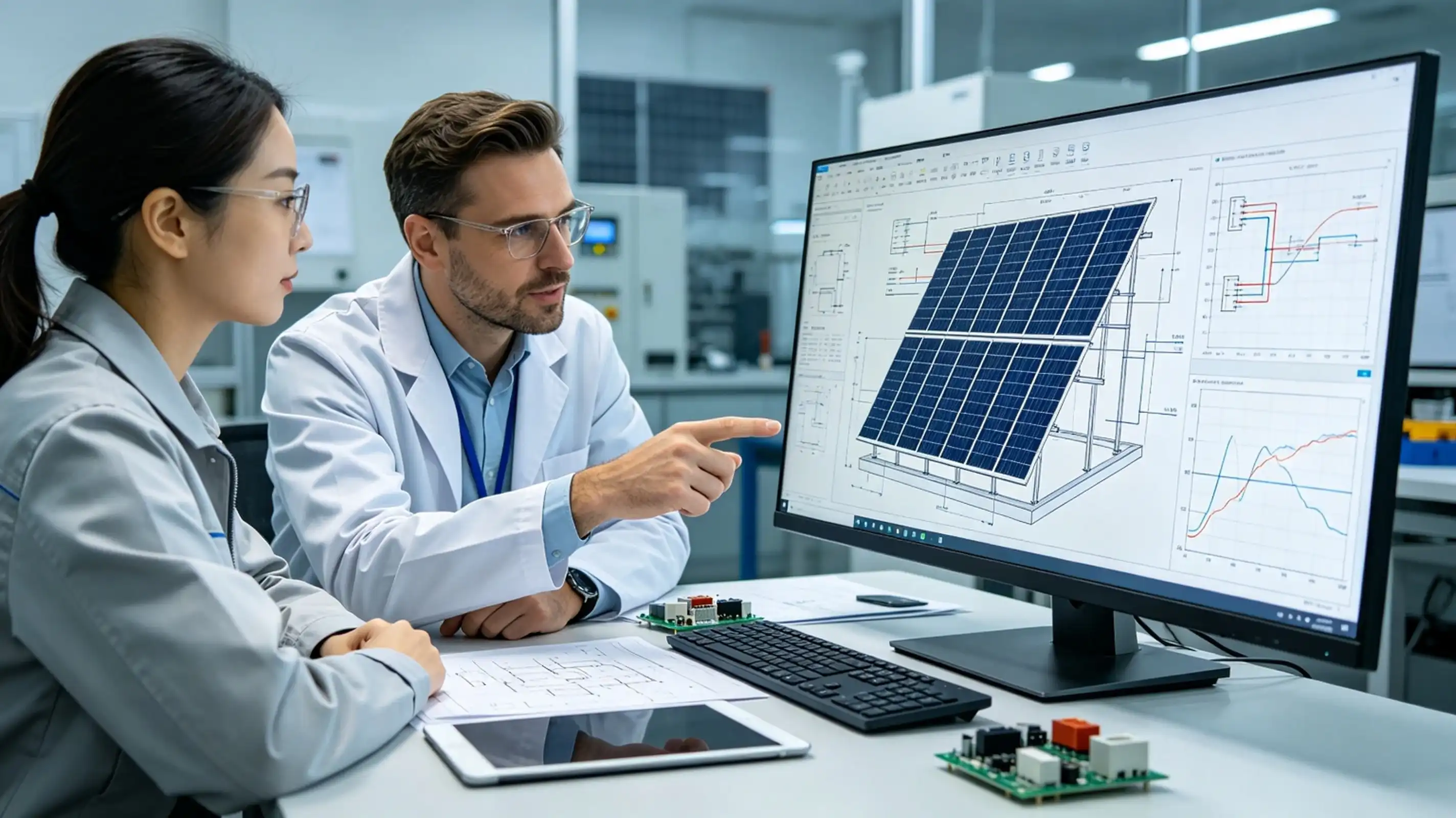
Good plans still need skilled people to carry them out. The main topics of the E.C.R. are planning and designing PV power plants, installing and commissioning them, running and maintaining them, and managing projects. Photovoltaic Engineering Technology Course at the Academy. You learn through projects that are based on real productions. They are taught by both business engineers and academics. Students do things like surveying the site, planning the capacity, installing, commissioning, acceptance testing, fault analysis, and upkeep on inverters. The training labs include an O&M training base, a grid-connected station lab with at least 60 kW, an O&M training lab, and an intelligent microgrid lab. There are EL testers and laminators in the lab for making PV modules. Simulations, big data, and the cloud are some of the tools that can help with practice. The course is good for businesses, schools, and industry groups.
Conclusion
With photovoltaic engineering technology, risk can be managed at every stage of a project. This makes PV systems more reliable. Early losses can be avoided with correct site data and sizing. When problems do happen, they cause less damage thanks to climate-aware design, safety margins, and fewer single points of failure. Modules, inverters, mounting systems, protection devices, grounding, and storage must all be matched and written down to make sure they work together. This is done to cut down on downtime. Your choice of architecture should be based on the site, the load, and the weather. Buyers can use standards like IEC 61215, IEC 61730, UL 1741, and IEEE 1547 to help them choose. Performance ratio, lifecycle cost, and planned maintenance are some of the ways to tell if a plant does its job. Good results come from the whole project lifecycle, not just one part. That's why skilled people and careful supplier review are so important.
FAQ
1. What is photovoltaic engineering technology?
To plan, build, test, and run solar power systems, people need to know how to do things like electrical work, building structures, civil work, control, and maintenance. Tasks that are often done include site surveys, planning for capacity, installation, commissioning, and fault analysis. Small power grids, cells, and modules are all a part of it.
2. Does a better module alone make a PV system dependable?
No, even a strong module won't work well if it's not the right size, isn't properly grounded, has inverters that don't match, or hasn't had its regular maintenance. What makes something reliable are the tests done during commissioning, the quality of the installation, the monitoring, and the service. Buyers should ask for more than just datasheets. They should also ask for test records and service terms.
3. Can beginners join the E.C.R Academy course?
Yes. The first part of the class covers the basics of electricity, electronics, and engineering drawing. After that, it starts to teach PV skills little by little. Training labs and teachers with a lot of experience help students who don't know much about the subject. Graduates can get ready for jobs like installation and commissioning engineer or operation and maintenance engineer for a PV power plant.
Request Photovoltaic Engineering Technology Training from E.C.R Academy
Through projects, lessons taught by enterprise engineers, and simulation platforms, E.C.R. Academy teaches photovoltaic engineering technology. If you need a photovoltaic engineering technology supplier for your college, utility training center, or EPC team, email ecr2008@enteredu.com with your goals, class size, and schedule. Go to enteredu.com to learn more about the course. We'll get back to you with a clear plan for training.
References
1. Photovoltaic Degradation Rates—An Analytical Review, Progress in Photovoltaics, 2013
2. Best Practices for Operation and Maintenance of Photovoltaic and Energy Storage Systems, National Renewable Energy Laboratory, 2018
3. IEC 61215 Terrestrial Photovoltaic Modules – Design Qualification and Type Approval, International Electrotechnical Commission, 2021
4. IEC 61724-1 Photovoltaic System Performance – Monitoring, International Electrotechnical Commission, 2021
5. IEC 62446-1 Photovoltaic Systems – Requirements for Testing, Documentation and Maintenance, International Electrotechnical Commission, 2016
6. IEEE 1547 Standard for Interconnection and Interoperability of Distributed Energy Resources, Institute of Electrical and Electronics Engineers, 2018