How New Energy Vehicle Detection & Maintenance Technology Supports Workforce Development
New energy vehicle detection & maintenance technology supports workforce development by turning high-voltage safety rules and fault-finding steps into skills that people can practice and repeat. Technicians learn to power down a system safely, test insulation, read data streams, and confirm a repair with evidence. Employers gain staff who follow the same procedure on every vehicle. Schools gain a clear path from theory to workshop tasks. I will show you where the skills gap comes from, which abilities matter most, how training should be built, and how E.C.R Academy turns these ideas into a project-based course.
Why New Energy Vehicle Detection Technology Is Changing Workforce Development?
The Skills Gap in Workshops and Service Teams
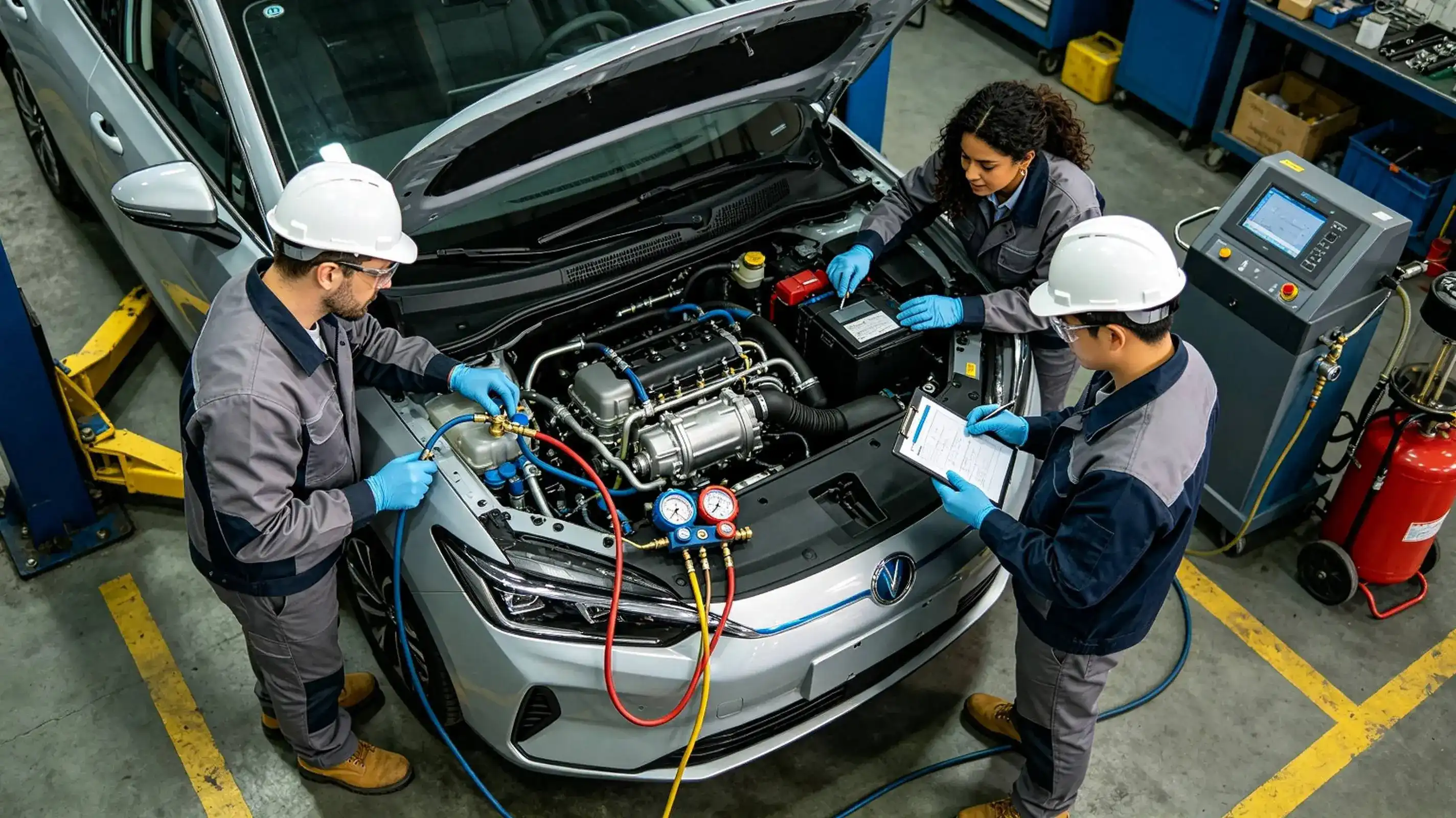
Electric vehicles ask more of a technician than a gasoline car does. The International Energy Agency reported that global electric car sales topped 17 million in 2024, more than 20% of new car sales. Every one of those vehicles will need service. Workshops now handle high-voltage batteries, drive motors, inverters, charging systems, thermal management, and communication networks in the same bay. Many teams have limited safety training and no shared diagnostic procedure, so results depend on who happens to be working that day. This gap appears in workshops, fleets, distributors, and OEM service groups alike. It slows repairs and raises safety risk, which is why structured training is now a staffing issue and not only a technical one.
From Traditional Inspection to EV Diagnostic Technology
A traditional OBD scanner and a set of hand tools cannot judge insulation resistance, cell balance, or motor behavior on their own. EV inspection combines several steps: a visual check, electronic diagnostics, electrical measurement, communication testing, and safety verification. Insulation testers, multimeters, scan tools, and CAN bus tools each cover one part of that process. Guided workflows turn the sequence into repeatable steps. A new technician follows an approved path, while an experienced engineer reviews the evidence and handles harder faults. New energy vehicle detection & maintenance technology therefore works as a training tool as much as a service tool, because each test teaches why a reading matters.
Why Standard Workflows Matter?
Standard workflows reduce dependence on one expert's memory. When every technician powers down, tests, records, and verifies in the same order, quality becomes repeatable and supervisors can audit the work. The World Economic Forum's Future of Jobs Report 2025 lists technological literacy among the fastest-growing skills worldwide, which matches what service bays now demand. Digital records, software updates, and certified training help a team keep that standard as models change. For global service networks, shared procedures also make it easier to train people in different locations to the same level. The goal is simple: fewer safety incidents, fewer diagnostic delays, and less guesswork.
Core EV Inspection and Maintenance Skills for the Future Workforce
High-Voltage Safety Skills
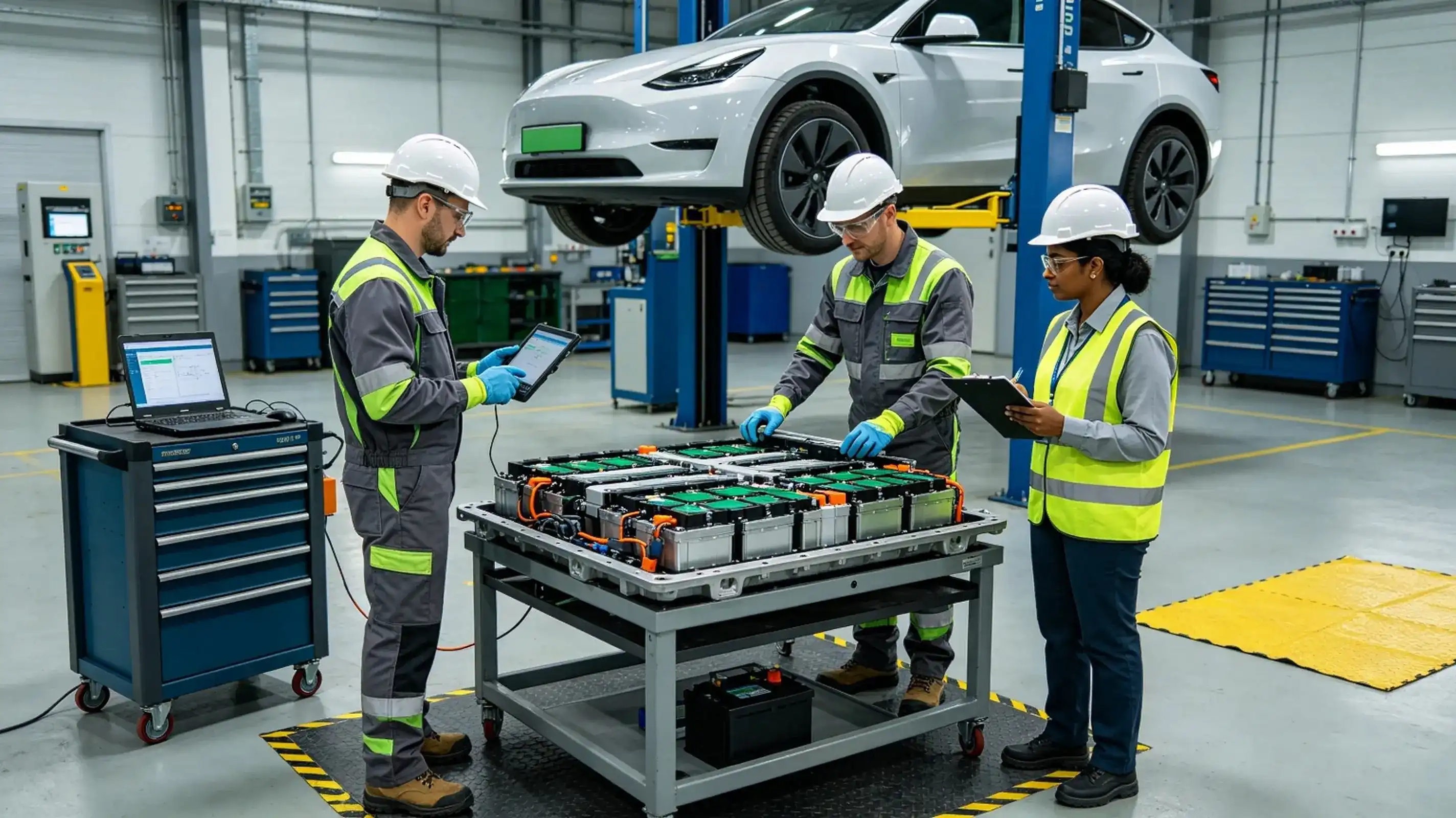
Safety is paramount and we teach it before any diagnosis. Before technicians can touch anything, they must power down the high-voltage system, put on the right protective equipment, lock out and tag the energy source and confirm the voltage is zero. NFPA 70E, the Standard for Electrical Safety in the Workplace, covers electrical hazards in the workplace in the United States. ISO 6469-3 is the standard for electrical safety of electrically propelled road vehicles . It specifies the minimum values for insulation resistance . 500 ohms per volt is a commonly quoted value for DC circuits . Our course includes high voltage power off procedures, correct use of electrical protection equipment and workshop emergency response. These habits safeguard people first and equipment second.
Diagnostic Skills for Motors, Controllers, and Cooling
Our course in new energy vehicle detection & maintenance technology centers on drive motor systems and electronic control. Learners work with an integrated eight-in-one electric powertrain platform that covers the drive motor, motor controller, DCDC, OBC, PDU, BMS, and VCU. They study permanent magnet synchronous, induction, and switched reluctance motors, and they apply vector control and direct torque control. In the workshop they perform zero-position calibration, static testing, and fault diagnosis. Fault tasks include resolver faults, insulation faults, overtemperature faults, communication interruptions, collision signal faults, phase loss faults, and cooling system failures. Each task mirrors work that a maintenance or testing technician meets on the job.
Reading Data and Verifying Repairs
Finding a fault is only half the job. Proving the repair is the other half. Learners read fault codes and analyze data streams with diagnostic tools, then measure with multimeters and insulation testers. For a resolver fault, they check resistance and low-voltage harness connections. For an overtemperature fault, they inspect coolant circulation, temperature sensors, and electrical components. For a phase loss fault, they measure phase resistance and inspect the circuit. After the repair, they test again and check the system before they close the task. This habit builds the evidence trail that supervisors, warranty teams, and customers expect.
A Practical Training Path Using EV Diagnostic Technology
Five Stages from Basics to Certification
Good programs go step by step. The first stage is about EV architecture and safety principles. Stage two develops hands-on skills with tools and measuring equipment. Stage three practices realistic fault scenarios including insulation, overtemperature and communication faults. Stage four is used to record competency so management can see who is ready for what task. Stage five keeps knowledge current as platforms and regulations change. The order is important. Skip the safety stage and you run the risk. Skip the practice stage and the learner is left with knowledge they can’t use. We start our course with NEV basic structures, then we move into drive motor systems and fault diagnosis. Theory and workshop projects run hand in hand.
Matching Training to Roles
It’s not like everyone needs the same depth. Technicians need to be able to use their hands to diagnose and repair equipment. Engineers have to do system-level analysis and calibration. Test procedures and safety checks for inspectors, and content with clear tasks for trainers. This course is for technical roles. After graduation, students can work as NEV drive motor system testing engineer, electric drive system assembly and adjustment engineer, drive motor fault diagnosis engineer, NEV powertrain technician, NEV maintenance technician and after-sales service technician. It will be of most use to students who have some basic knowledge of electrical and electronic engineering, mechanical fundamentals and computer operation.
Measuring Results
Training only matters if performance changes, so I recommend tracking a few numbers. First-time fix rate shows whether diagnosis is accurate. Repair time shows efficiency. Repeat repairs show missed root causes. Safety compliance and certification completion show whether the program is working. Equipment use rate shows whether training tools earn their cost. Schools can add task pass rates and practical assessment scores, and employers can compare these figures before and after training. Pick the measures at the start, record a baseline, and review results on a regular schedule. Without a baseline, improvement is hard to prove.
How Simulation and Diagnostic Equipment Support Safer Training?
Virtual Simulation Before Live Work
In new energy vehicle detection & maintenance technology, high-voltage work leaves little room for trial and error. A virtual simulation platform lets learners rehearse disassembly, assembly, inspection, and adjustment in a simulated workshop before they touch live equipment. Mistakes cost nothing, and instructors can repeat a scenario as often as needed. Our platform runs on smart terminals. Trainees need a computing device with Windows 10, 8GB or more of RAM, and a dedicated graphics card. They can study online and practice simulation anytime and anywhere. This lets learners combine theory study with practical simulation and eases the demand on shared workshop time.
Static Testing and Fault Diagnosis Platforms
The learning environment has three linked parts. The virtual simulation platform supports work on powertrain systems, controllers, and transmission components. The static testing platform supports insulation testing, phase-to-phase resistance testing, and sensor inspection on drive motor systems. The fault diagnosis platform simulates common drive system faults, including resolver, insulation, overtemperature, phase loss, collision signal, and cooling system faults. Learners perform fault code analysis, system inspection, troubleshooting, and repair verification. Because the platform simulates faults, instructors can show normal and abnormal conditions without exposing trainees to unnecessary risk.
Comparing Solutions and Evaluating Suppliers
Buyers will often compare OEM tools, after-market systems, portable scanners and integrated inspection platforms. OEM tools usually have good vehicle-specific coverage and official repair information. More brands are covered by aftermarket tools which suits independent workshops and fleets. Portable scanners favor mobility . Integrated systems generally offer deeper testing and more consistent reports . I would rank each of them on vehicle coverage , high voltage safety features , insulation testing , update frequency , technical support , calibration , training content , and total cost of ownership . The purchase price alone does not give a clear answer, a weighted score does. Training content should be given equal weightage as hardware, because equipment without trained users is idle.
Putting an EV Workforce Program into Practice
Start with a Capability Audit
I would recommend doing a capability audit before buying anything.
- Safety procedures in place.
- Tool sets available.
- Quality of diagnostics
- Technician skill levels.
- Variety of vehicles serviced.
- Monthly volume of service.
Then set quantifiable goals such as fewer reoccurring repairs or higher practical assessment pass rates. Before you sign, get demos from suppliers, check compatibility lists, and read the technical documentation. Our new energy vehicle detection & maintenance technology course content is in line with international technical skills standards and current NEV industry practice, so you can directly compare it with your audit. This step keeps the purchase based on actual needs, not feature lists.
Phase the Rollout
Risk: Low Phased rollout. Start with high voltage safety and power off procedures. Then add in powertrain disassembly and assembly, and static testing and calibration. Complete fault diagnosis projects, integrating multiple systems. Track task completion, repair time, first-time fix rate and safety incidents at each phase. Keep checking the numbers as the vehicle technology is constantly changing and the training content needs to change with it. Our course is delivered by industry engineers and academic experts to give learners both experience in workshops and structured teaching. Plus, it makes it easier to schedule instructors and equipment time in advance.
Business and Industry Value
Training pays off beyond certificates. Structured diagnostics can cut unnecessary parts replacement, repeat testing, vehicle downtime, and warranty disputes, and they raise customer confidence in repair advice. Fleet operators gain consistent battery condition data across sites. Future needs add weight to this, since higher-voltage platforms, connected diagnostics, battery recycling, and software-defined vehicles all call for staff who can learn new systems on a solid base. Since 2010, E.C.R Academy has delivered training and assessment services to nearly 500,000 participants across China and 28 countries, and more than 300,000 learners have obtained recognized skills certifications. We have engaged over 3,300 experts and partnered with 500+ enterprises.
Conclusion
New energy vehicle detection & maintenance technology supports workforce development by giving technicians a repeatable way to work safely and prove results. Growing EV sales create a service-skills gap. High-voltage safety and system diagnosis form the core abilities. Training works best in stages: basics, hands-on practice, fault scenarios, records, and updates. Virtual simulation, static testing, and fault diagnosis platforms let learners rehearse tasks before live work. Role-based training and measures such as first-time fix rate, repeat repairs, and safety compliance show whether a program works. A capability audit and a phased rollout tie purchasing to real needs. The practical result is a workforce that follows shared procedures and handles drive motor and control faults with evidence.
FAQ
1. Can I take this course with zero background knowledge?
Yes. The course combines theory and practice, beginning with basic NEV structures and progressing to drive motor systems and fault diagnostics. Nevertheless, I still recommend a basic knowledge of electrical and electronic engineering, mechanical basics and computer operation so that you can follow the practical tasks comfortably.
2. What positions can I pursue after completing the course?
You can pursue roles such as NEV drive motor system testing engineer, electric drive system assembly and adjustment engineer, drive motor fault diagnosis engineer, NEV powertrain technician, NEV maintenance technician, and after-sales service technician.
3. How is the platform deployed?
The platform uses virtual simulation on smart terminals. Trainees need a computing device with Windows 10, 8GB or more of RAM, and a dedicated graphics card. They can study online and practice simulation anytime and anywhere, combining theory with practical work through the software.
Contact E.C.R Academy About New Energy Vehicle Detection & Maintenance Technology Courses
If your school, company, or association wants a new energy vehicle detection & maintenance technology supplier for training, E.C.R Academy is ready to talk. Our project-based course pairs industry engineers with a virtual simulation platform for drive motor disassembly, commissioning, and fault diagnosis. We have trained nearly 500,000 participants since 2010. Email ecr2008@enteredu.com with your goals and learner numbers, or visit enteredu.com for details.
References
1. International Energy Agency, Global EV Outlook 2025, 2025
2. International Organization for Standardization, ISO 6469-1: Electrically Propelled Road Vehicles – Safety Specifications – Part 1: On-board Rechargeable Energy Storage System (RESS), 2019
3. International Organization for Standardization, ISO 6469-2: Electrically Propelled Road Vehicles – Safety Specifications – Part 2: Vehicle Operational Safety, 2022
4. International Organization for Standardization, ISO 6469-3: Electrically Propelled Road Vehicles – Safety Specifications – Part 3: Electrical Safety, 2021
5. National Fire Protection Association, NFPA 70E: Standard for Electrical Safety in the Workplace, 2024
6. World Economic Forum, Future of Jobs Report 2025, 2025