Future Manufacturing Careers with Mechanical Design, Manufacturing & Automation
If you're asking what mechanical design, manufacturing & automation actually means for your career or institution, here's the short answer: it is the applied discipline that connects part design, process planning, CNC machining, and digital production control into one continuous workflow. Across the United States and globally, demand for professionals who can move fluently between CAD interpretation, G-code programming, simulation verification, and shop-floor operation is growing faster than the current talent pipeline can fill. According to the U.S. Bureau of Labor Statistics, manufacturing employment in precision production occupations remains tight, making structured, full-process training more valuable than ever.
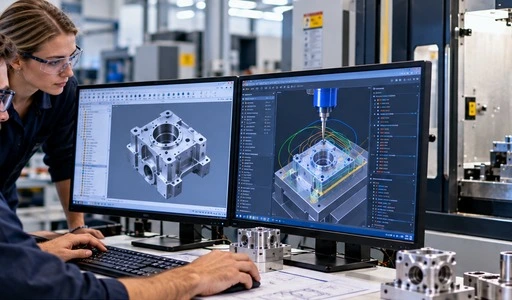
Understanding the Fundamentals of Mechanical Design and Automation
Before picking a training program or buying something, it's helpful to know what the field actually needs in terms of technology.
What Mechanical Design Involves at the Production Level
When it comes to making, mechanical design is more than just drawing. To do this, you need to be able to correctly read GD&T callouts, figure out how easy the material is to machine, and know the limits that affect every choice made further down the line. No matter how well a technician runs the machine, if they can't read a part drawing correctly, they will make bad decisions about the process.
Core Technologies Behind Manufacturing Automation
Closed-loop control is what makes precision machining possible: encoders tell the controller where the workpiece is, the controller makes changes, and the cycle starts all over again thousands of times per second. These rules help CNC systems from processors like FANUC and Siemens keep their precision at the micrometer level over long production runs. Knowing these basic control concepts is what makes a good operator different from a troubleshooter who can figure out why a part is moving out of tolerance.
Why Full-Process Training Matters for Procurement Decisions
People and businesses that buy training programs often want to know if the coursework covers the whole value chain. If a program teaches programming but doesn't include simulation testing, students won't be ready for what happens in a real shop. Technicians who can run a cycle but not set one up are made by programs that cover operation but not process planning. The standard that should be pushed for is full-process coverage, which includes everything from drawing analysis to actual machining.
Emerging Trends Shaping Future Manufacturing Careers
The production floor is changing at a measurable pace, and the skills gap is widening as a result.
Industry 4.0 and Its Effect on CNC Roles
Industry 4.0 connects CNC machines to MES and ERP systems, meaning operators now interact with data dashboards and digital work orders, not just physical controls. According to Deloitte's 2023 Manufacturing Industry Outlook, 72% of manufacturers identified talent shortages in advanced technology roles as their top operational risk. Technicians who combine machining competency with digital literacy are the profile most in demand.
AI and Simulation in Process Planning
AI-assisted CAM tools in mechanical design, manufacturing & automation now suggest toolpaths, flag potential collisions, and estimate cycle times before a single chip is cut. Simulation verification — running a virtual machine tool model to check for overcuts and interference — is no longer optional in aerospace or precision mold work. Training programs that include simulation software as a core module, not an elective, reflect actual industry practice.
New Competencies for Engineers and Procurement Specialists
Procurement managers sourcing mechanical design and automation training need to assess whether a program integrates virtual-physical simulation platforms alongside real equipment. The combination matters because it mirrors what engineers encounter in a modern digital manufacturing environment, where offline programming and shopfloor execution must agree exactly.
Choosing the Right Tools and Technologies for Manufacturing Success
Choosing a training platform is like choosing a machine tool: it's an investment in technology that needs to be thought through carefully.
Evaluating CNC Training Equipment
A training lab with only models can't turn out techs who are ready to work on real machines. On the other hand, students who work in a lab with tools but no modeling software skip over the steps needed for verification. The best setup has real CNC lathes, milling machines, and machining centers along with licensed CAM and simulation software on networked computers. This is exactly what the four professional training rooms at ECR Academy offer.
ROI Considerations for Institutional Procurement
For a trade school creating a "dual-high" program, the return on training investment is shown by how many students pass their licensing exams, how many get jobs, and how many can compete in national skills competitions. Results from programs that use standard project-based delivery can be tracked and checked, which is what government sponsors and approval committees need when they decide if a program is good.
Integration Challenges and How to Address Them
When CAM software, simulation platforms, and machining equipment need to work together in a multi-system environment, there is a risk of integration if the vendor doesn't support open interfaces. When looking at a company that teaches mechanical design, manufacturing & automation, make sure that the platform works with common data formats and that technical support is covered by the contract. This saves the institution's investment over the whole lifecycle of the tools.
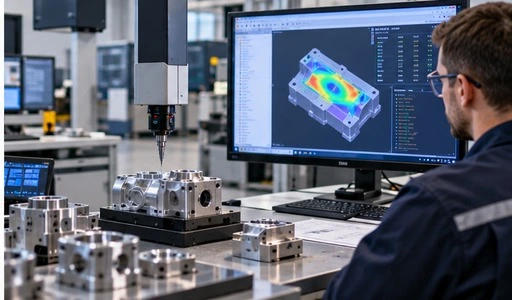
Building a Career in Mechanical Design, Manufacturing & Automation
There are clear job paths in this area, and people are getting paid more and more.
Technical Skills That Employers Prioritize
When hiring people in the automotive, aerospace, precision mold, and 3C electronics manufacturing industries, they always list the same skills: interpreting part drawings, planning process sequences, writing CNC programs, verifying simulations, and inspecting dimensions. These are not two different jobs; they are skills that one skilled technician should have. Training programs that work on all five at the same time make grads who are ready to start working right away.
The Role of Certification in Career Advancement
Recognized skill qualifications in mechanical design, manufacturing & automation, especially those that are in line with national trade standards for CNC turning, CNC milling, and machining center operation, give students a certificate that can be checked and quickly evaluated by job managers. The program at ECR Academy is set up so that suitable graduates can get training certificates in CNC turning and milling. This helps them get jobs right away and keep learning new skills.
Institutional and Enterprise Partnership Models
It is more efficient to build talent pools through partnerships between institutions and businesses than to hire people from the job market. When colleges and technical schools align their courses with what companies need and use college teachers, enterprise engineers, and master's level mentors to teach together, they graduate technicians whose skills can be used right away. ECR Academy has a structured three-tiered team of instructors, engineers, and skilled master trainers who make up the faculty.
Optimizing Manufacturing Processes with Automation and Mechanical Design
It takes more than good tools to get the most out of a CNC industrial setting.
Identifying Bottlenecks in Manual and Semi-Automated Processes
In CNC environments, the most common problems with production efficiency are bad toolpath planning, bad workholding, and operators who can't find dimensional errors. You need to train people better to fix all of these problems. When you teach programs like toolpath design, fixture selection logic, and error analysis methods, you get to the root of the inefficiency, not just its symptoms.
Maintenance, Troubleshooting, and Process Verification
Predictive maintenance knowledge and strict process verification habits are needed for systems to work well in the long term. Lower scrap rates and higher OEE are directly linked to technicians who know how to check tool length compensation, confirm coordinate system offsets, and understand readings for surface roughness. You can learn these skills, and they should be part of any real CNC training program.
Data-Driven Continuous Improvement
When digital manufacturing training rooms are set up with CAM software and networked teaching systems, they make data that both teachers and students can read. When you compare estimated machining times to actual cycle times or simulated toolpaths to measured part outcomes, you develop the analytical skills that today's manufacturing environments need from everyone.
Conclusion
Manufacturing jobs that require strong knowledge of mechanical design, manufacturing & automation, CNC processes, programming, and digital manufacturing are hard to find and very popular. Businesses and schools that spend money on structured, all-around training that includes part drawing analysis, simulation verification, and real-life machining will be able to meet that demand with graduates and employees who are truly ready to help. Technical detail is valued in this field, and training programs that offer it should be carefully sought out.
FAQ
1. What background is recommended before starting a CNC training program?
A basic ability to read mechanical drawings, foundational knowledge of metal materials and common machining processes, and basic computer skills are the standard entry points. Learners with weaker backgrounds can typically access introductory support modules before entering the core curriculum.
2. What industries hire graduates of mechanical design and CNC training programs?
Graduates commonly enter general equipment manufacturing, special-purpose equipment manufacturing, automotive component machining, aerospace precision part production, and technical service roles at CNC equipment or cutting tool companies.
3. How is ROI assessed for institutional CNC training investments?
Key indicators include certification pass rates, graduate employment rates, national skills competition results, and alignment with provincial or national program approval requirements. Standardized, project-based delivery models produce measurable outcomes that support these evaluations.
Start Your CNC Training Partnership with ECR Academy
Since 2010, ECR Academy has taught skills to over 300,000 certified graduates and almost 500,000 participants in 28 countries. Our Mechanical design, manufacturing & automation program has four professional training labs, a three-tier teaching team, and project-based delivery. This makes us a reliable source for mechanical design, manufacturing & automation training for both businesses and schools. To get a program consultation or a personalized training plan, email us at ecr2008@enteredu.com.
References
1. U.S. Bureau of Labor Statistics. Occupational Outlook Handbook: Machinists and Tool and Die Makers. 2023.
2. Deloitte & The Manufacturing Institute. 2023 Manufacturing Industry Outlook. Deloitte Insights, 2023.
3. National Institute of Standards and Technology (NIST). Measurement Science for Manufacturing: Strategic Opportunities. NIST, 2022.
4. Society of Manufacturing Engineers (SME). Workforce and Skills Gap Report: Advanced Manufacturing. SME, 2022.
5. International Journal of Advanced Manufacturing Technology. Integration of CAM Simulation and CNC Verification in Educational Environments. Springer, 2021.
6. Association for Career and Technical Education (ACTE). CTE and the Future of Manufacturing Workforce Development. ACTE, 2023.


_1781601799781.webp)