Electronic Product Testing Technology for Improving Manufacturing Quality
Electronic product testing technology refers to the systematic methods and instruments used to verify the performance, safety, and compliance of electronic components and finished products throughout the manufacturing process. From incoming component inspection to final product certification, this field directly impacts product quality, market access, and customer trust. As industries like consumer electronics, automotive electronics, and 5G communications grow more demanding, manufacturers and educators alike need professionals who can execute full-process testing workflows aligned with international standards such as IEC, IEEE, and MIL-STD.
Understanding Electronic Product Testing Technology
What It Covers and Why It Matters
Electronics quality problems almost never happen by chance. They happen when testing isn't full, isn't consistent, or isn't matched up with how the products will be used in production. This is addressed by electronic product testing technology, which offers structured ways to check the electrical, mechanical, and environmental performance of products before they get to customers. The IPC report from 2023 says that fixing manufacturing flaws found during testing can be up to 10 times cheaper than fixing them in the field.
Key Testing Methods in Modern Manufacturing
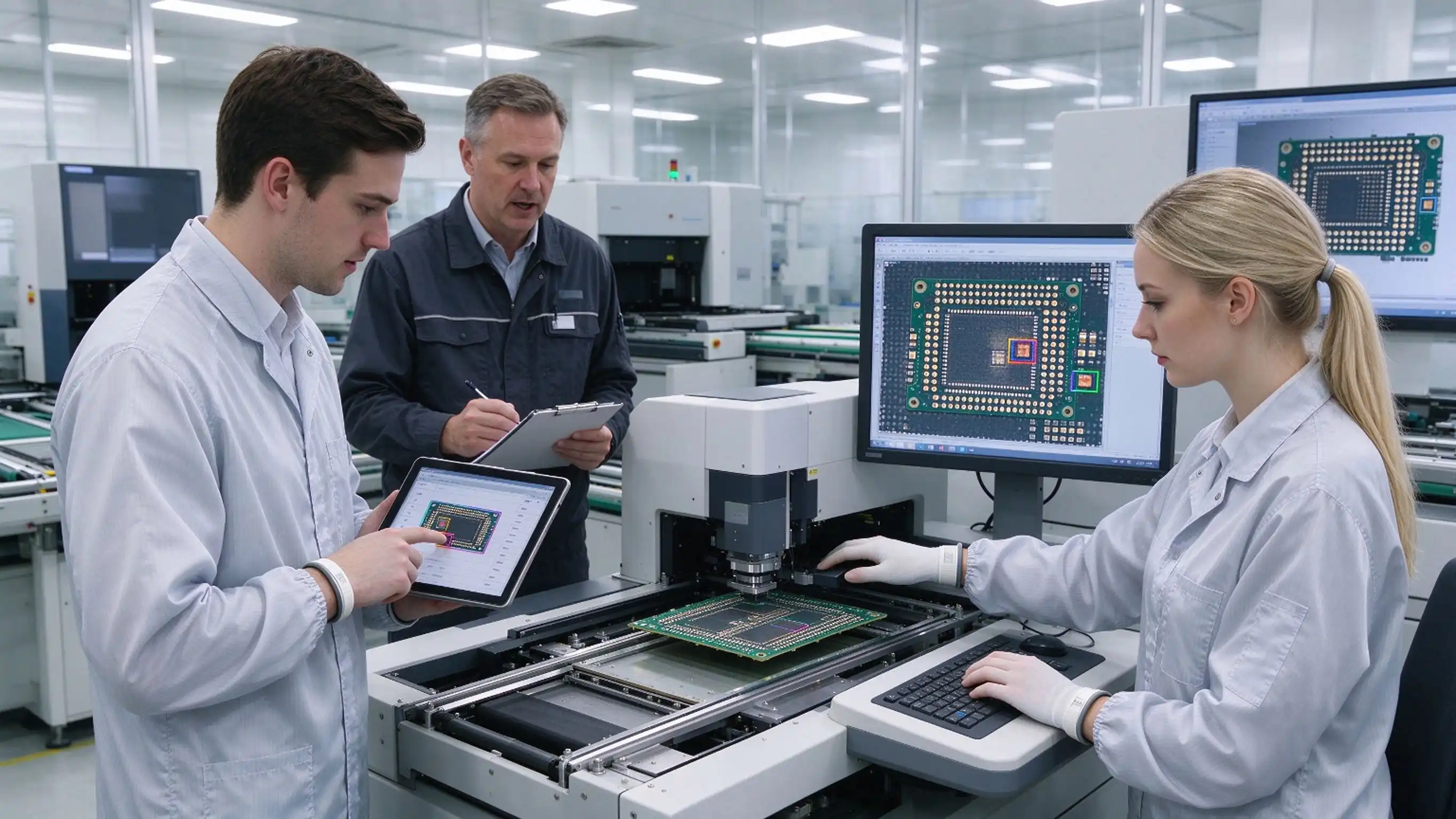
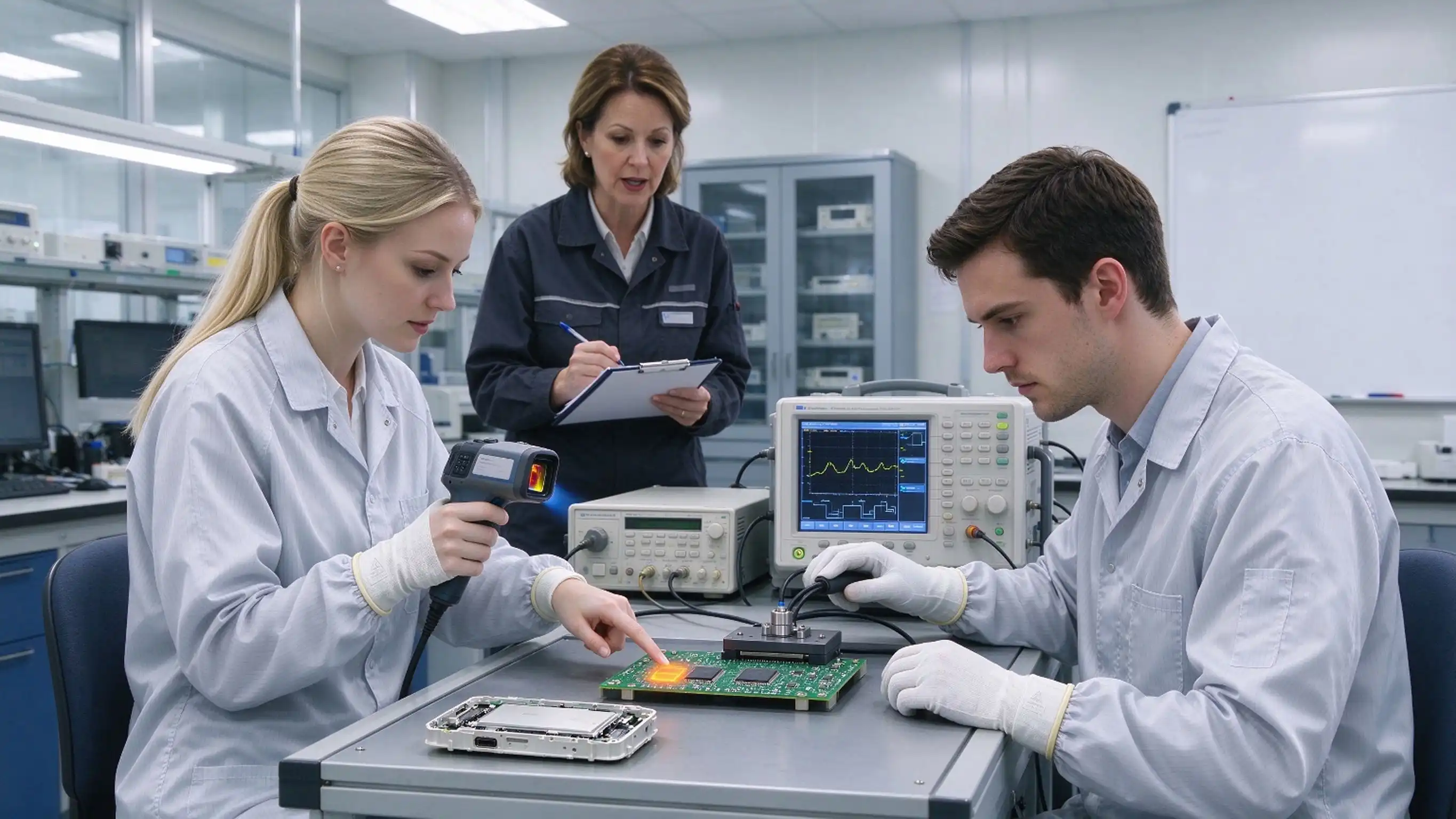
When making gadgets, testing covers a lot of different areas. Functional circuit testing (FCT) mimics real-world situations to check the reasoning and performance of a system. In-circuit testing (ICT) checks the values and continuity of each individual part. Environmental stress screening (ESS), which includes vibration and temperature cycling tests, finds hidden flaws that a regular check would miss. Each method is used at a different point in the production process and is aimed at a different type of failure.
Manual vs. Automated Testing Approaches
Manual testing still has its place in low-volume and prototype work, but it adds a level of uncertainty that isn't acceptable for high-volume production. Automated optical inspection (AOI) and automated X-ray inspection (AXI) can find problems with solder and BGA joints more quickly and more accurately than a human inspector could ever hope to. The move toward automation isn't just about speed; it's also about making quality decisions that can be made over and over again based on data.
Comparison and Selection of Electronic Product Testing Solutions
Evaluating Testing Platforms Against Real Needs
Choose the right testing solution based on the number of products you make, how complicated they are, and the certification markets you serve. A line of consumer electronics that works with Apple or Samsung has to test things in very different ways than a Tier 1 automotive supplier that makes parts for electric cars. Functional testing, safety compliance, and data reporting must all be able to be done on the platform as a single process, not as separate tools.
Key Features Worth Prioritizing
Procurement teams usually look at a number of things before deciding on a testing solution or training program. Here are the main evaluation factors that most workers in the field use:
- Standards alignment: Does the electronic product testing technology solution meet IEC, IEEE, AEC-Q, or MIL-STD standards that are important to your product category?
- Instrument compatibility: How compatible are the instruments? Can students or engineers use different types of instruments, like oscilloscopes, signal generators, and network analyzers, instead of being limited to just one brand?
- Data reporting: Does the platform allow for quality data analysis, SPC charts, and report creation in file types that can be used for source audits?
These factors directly show whether a solution lowers the risk of not following the rules or just makes the process more difficult. If a team skips this evaluation phase, they'll probably have to buy new tools in 18 months.
Cost vs. Long-Term ROI
Each real testing tool costs between $10,000 and $1,000,000 USD. It is not practical for schools with programs that have 200 to 600 students per year to buy and maintain physical labs on that scale. This gap is filled by virtual simulation platforms that mimic oscilloscope operation, signal measurement, and safety testing. These platforms don't require a lot of money, but they still teach graduates how real instruments work.
Procurement Process of Electronic Product Testing Technology
Starting with Clear Technical Specifications
Both the buyer and the supplier waste time on a procurement process that doesn't have clear technical requirements. The buying team should write down all the testing standards that the program or production line needs to meet, as well as the types of students or engineers who will be using the platform and any deployment restrictions, like whether the system can only run in a browser or if a client needs to be installed.
Vendor Assessment and Contract Considerations
Once the requirements are clear, more than just handouts should be used to judge the vendors. Ask for trial access and make sure that course material is updated when standards change (IEC standards usually change every five years). Also, make sure that the platform allows for different access levels for operators, engineers, and managers. The terms of the contract should include how often the material is updated, how quickly technical help is responded to, and how faculty or internal trainers can be trained.
Budget Planning and Deployment Timeline
In China's vocational and applied undergraduate sector, institutional procurement usually happens every 6 to 10 months. The cycle starts with filing the annual project in the first quarter and ends with platform rollout and staff training at the end of the year. When making a budget, you should include fees for licensing the platform, orienting new faculty, and continuing to subscribe to content. For business clients, the agreement cycle is shorter (30 to 60 days), but they are more likely to renew if the platform helps them improve their skills in a way that can be measured.
Latest Trends and Future Outlook in Electronic Product Testing Technology
AI and Data-Driven Quality Decisions
AI is being used more and more on factory floors to help find bugs. Rule-based systems used to miss oddities, but now machine learning models trained on old AOI and AXI image data do. McKinsey's 2022 manufacturing study says that in high-volume electronics assembly lines, AI-driven quality systems have cut the number of false rejections by as much as 40%.
Cloud-Based and Remote Testing Infrastructure
It's no longer a nice-to-have in electronic product testing technology to be able to access testing data and virtual lab settings from afar; it's a must. Browser-based B/S systems let quality engineers, students, and remote reviewers access test processes, look over results, and do training from anywhere. This architecture also lowers the IT costs for schools that use programs on more than one college or work site.
Regulatory Pressure and Sustainability Requirements
Requirements for global product approval are getting stricter. As a result of the EU's Radio Equipment Directive (RED) and updated RoHS standards, as well as China's CCC and the US FCC Part 15 rules, testing professionals need to keep up with a lot of different sets of rules at the same time. Students who take classes that include these certification paths are better prepared to deal with real-life compliance situations, not just hypothetical ones.
Best Practices and Tips for Maximizing Testing Efficiency and Quality
Standardize Before You Automate
Without standard procedures, automation makes things go faster, but the results are still not always the same. Write down your acceptance criteria, calibration plans, and measurement uncertainty limits before you put any automated testing system into use. Even for internal labs that aren't recognized, the IEC 17025 accreditation standards can be used as a guide.
Build Tiered Training Into Your Quality System
It's not possible for one training program to work for operators, engineers, and quality managers all at the same time. Organizations that are good at quality organize training by job. Operators need to know how to use instruments and make decisions about whether to go or not. To do their jobs, engineers need to make test plans, look at data, and write reports. Managers need to plan how to respond to audits and manage the certification process. Programs that focus on all three levels make the system better, not just the individuals who participate in them.
Treat Calibration as Continuous, Not Periodic
A lot of measurement problems in electronics testing are caused by mistakes in the tuning of instruments. Setting up a strict internal calibration plan that is based on how often the instruments are used instead of just calendar dates lowers the error of measurements and makes sure that test data can be used to defend supplier audits and regulatory reviews.
Conclusion
Disciplined testing at every stage of production is what makes electronics of high quality in electronic product testing technology. The difference between companies that have structured testing skills and those that don't gets bigger as products get more complicated and certification requirements rise. One of the best ways to close that gap is to put money into training programs that are in line with international testing standards and are delivered through browser-based platforms that anyone can use. The right curriculum doesn't just teach how to use instruments; it also gives students the confidence to make test plans, understand results, and give answers to audits.
FAQ
1. Can someone with no testing background take this course?
Yes. Analog and digital circuits, electrical measurement, and instrument basics are covered in the electronic product testing technology course at the ECR Academy before moving on to more advanced testing and certification material. The virtual training lab lets you practice over and over again without using real tools, so students can start there.
2. What roles does this course prepare learners for?
People who graduate are ready for jobs like metrologist, new quality engineer, safety compliance test engineer, quality tester, and certification service engineer. Job postings for these roles consistently come from companies that make consumer electronics, Tier 1 suppliers for the auto industry, and third-party testing organizations.
3. Does the course content stay current with standard updates?
Yes. The course is based on the most recent versions of IEC, IEEE, and GB standards, and it includes certification methods like CE, CCC, and UL. Content is changed on a regular basis to make sure that students are working with the most up-to-date needs and not old methods.
Partner with E.C.R Academy — Your Electronic Product Testing Technology Supplier for Professional Skills Development
In the eight years since 2010, E.C.R. Academy has helped over 300,000 certified grads and almost 500,000 trainees in 28 countries. Real-world projects, international standards alignment (IEC, IEEE, CCC, UL, CE), and a browser-based platform without installation make up our electronic product testing technology course. Whether you are a school building a testing lab program or a business trying to make sure all of its engineers get the same quality training, we have a solution that works. You can email us at ecr2008@enteredu.com or go to enteredu.com to talk about your training needs.
References
1. IPC. IPC-A-610 Acceptability of Electronic Assemblies. IPC, 2020.
2. International Electrotechnical Commission. IEC 17025: General Requirements for the Competence of Testing and Calibration Laboratories. IEC, 2017.
3. McKinsey & Company. AI in Manufacturing: Quality Control Applications and Impact. McKinsey Global Institute, 2022.
4. International Organization for Standardization. ISO 9001: Quality Management Systems — Requirements. ISO, 2015.
5. MIL-STD-810. Environmental Engineering Considerations and Laboratory Tests. U.S. Department of Defense, 2019.
6. JEDEC Solid State Technology Association. AEC-Q100: Failure Mechanism Based Stress Test Qualification for Integrated Circuits. JEDEC, 2014.

_1781601799781.webp)