Electronic Information Engineering Technology: A Practical Course
Electronic Information Engineering Technology represents the convergence of circuit design, signal processing, and embedded systems development that powers modern smart devices and automation systems. This multidisciplinary field addresses critical challenges in industrial environments—from managing electromagnetic interference in high-speed data transmission to achieving ultra-low latency in real-time control applications. At E.C.R Academy, we've developed a practical course framework that bridges theoretical knowledge with hands-on competency, preparing professionals to tackle authentic production challenges from day one. Our project-driven curriculum emphasizes real-world problem-solving, enabling learners to design PCB layouts, program microcontroller units, and commission intelligent electronic products that meet international quality standards.
Understanding Electronic Information Engineering Technology
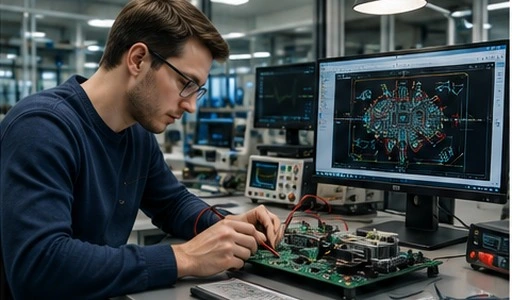
Electronic Information Engineering Technology is the technical foundation for going digital in industries like manufacturing, telecommunications, and the Internet of Things (IoT). Traditional electrical engineering is mostly about power systems. This field, on the other hand, is all about information-carrying signals—how they're picked up by sensors, processed by built-in algorithms, and sent across network infrastructure. Professionals in this area need to be good at both hardware and software. For example, they need to know how to convert analog signals to digital ones and how to write efficient C code for microcontroller programs.
There are not enough qualified people working in three areas of the business right now. To keep crosstalk from happening in multiple boards, high-speed PCB design needs engineers who know how to do signal integrity analysis and impedance matching. For time-sensitive applications, people who work on embedded systems need to know how to use real-time operating systems and handle interrupts. For quality control in electronic assembly, technicians must be able to do EMI/EMC testing and understand thermal imaging diagnostics. Our method at E.C.R Academy fills in these gaps with scenario-based learning modules that mimic real-life work situations.
Real-life uses are found in many areas. Programmable logic controllers in industrial automation depend on reliable communication protocols to keep robotic assembly lines in sync to within milliseconds. To get the most out of 5G networks' data, transmission equipment needs MIMO antenna arrays and digital signal processors. For vehicles to talk to everything else on the road, electronics in cars use multiple CAN bus systems. This means that the designs have to be fail-safe and work reliably in temperatures ranging from -40°C to +125°C. When buying, teams are looking for training options or work with companies that make electronics; knowing about these uses helps them properly describe the technical requirements.
Comprehensive EIET Course Structure and Curriculum Insights
Our competency-based Electronic Information Engineering Technology curriculum enhances students' abilities over time. This model meets IEEE protocols and IPC assembly specifications. The fundamental section includes circuits, electrical sketching, and C code syntax. Students gain analytical skills before going on to further classes. In successful electronics manufacturing businesses, young engineers learn to source parts and grasp schematics before moving on to complex system assembly.
Core training classes include academic and practical concepts. Students learn to utilise industry-standard EDA tools for schematic capture and board layout in PCB design. They then undergo design-for-manufacturability analysis and signal integrity simulation to ensure quality. GPIOs, timers, serial peripheral interfaces, and analog-to-digital conversions are covered in microcontroller technology modules. Hand-soldering and surface-mount techniques are taught in electronic assembly. Students learn to utilise reflow ovens and inspect solder joints per IPC-A-610.
This application employs a cloud-based classroom technology, unlike others. The browser-server-based virtual environment lets users utilise simulation tools and digital oscilloscopes without pricey local equipment. Students can undertake circuit analysis, embedded code debugging, and virtual PCB layout evaluations anywhere with internet access. Working professionals and schools in regions where creating a lab is too costly benefit from this flexibility. Collaboration capabilities allow lecturers, including corporate engineers from partner firms, to provide real-time comments on student work.
Computer simulations assist, but hands-on training is essential. Our partner schools have extensive amenities. Electrical measurement laboratories have spectrum and logic analysers, assembly workshops have SMT pick-and-place machines, and embedded development stations have JTAG debuggers and in-circuit simulators. During capstone projects that imitate real-world manufacturing, students travel between these sectors. They could create a sensor interface board, develop a data gathering system, or repair a broken industrial controller. Through hands-on instruction, graduates get abilities electronics manufacturers and system integrators seek immediately.
Comparing EIET with Related Engineering Fields for Informed Decision-Making
When planning workforce development programs, it can be hard for companies to tell the difference between technical fields that overlap. With a focus on intelligent electronic systems throughout their entire lifecycle, from idea and design to production and upkeep, Electronic Information Engineering Technology holds a unique position. Computer engineering focuses on software systems and hardware, but it doesn't go into much detail about designing analog circuits or integrating sensors. Information technology is mostly about managing networks and databases. It doesn't talk about developing embedded firmware or making PCBs.
Communications engineering is similar to signal processing and RF circuit design, but it only works on data transfer systems instead of making electronic products in a wider sense. Traditional electronics engineering teaches a lot about the theory behind individual parts, but it might not cover more up-to-date topics like programming firmware for ARM Cortex microcontrollers or setting up protocols for IoT connectivity. Our program brings these fields together to make flexible workers who can solve the problems that come up when integrating hardware and software that are common in modern smart device development.
These differences can be seen in career paths. After finishing our program, people want to work as smart product development engineers (they specify both circuit topology and control algorithms), PCB design specialists (they work with mechanical engineers to integrate enclosures), or electronic test engineers (they use machine vision systems to create automated inspection procedures). These jobs are at the crossroads of several fields, so they need a wide range of skills that our curriculum teaches. When HR managers look at training investments, they should ask candidates if they need narrow specialization or cross-functional competency. Cross-functional competency is what makes our program unique.
Procuring Electronic Information Engineering Technology Equipment and Solutions
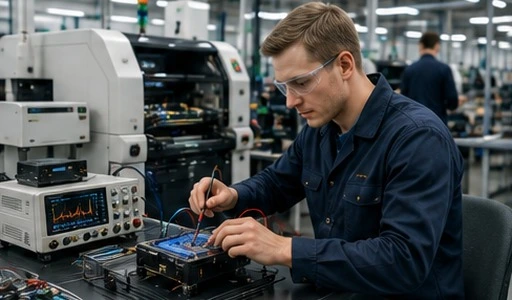
In order to find the right training equipment, you need to know both the system specs and the teaching needs. Benchtop instruments like digital multimeters and dual-channel oscilloscopes are important pieces of equipment for measuring circuits. Soldering stations with temperature-controlled tips are useful for learning how to put things together, and development boards with popular microcontroller families like STM32 or Arduino-compatible platforms are also necessary. EDA suites are used for capturing schematics and designing PCBs. Integrated development environments (IDEs) are used for writing embedded systems, and modeling packages are used to analyze circuits.
Procurement professionals should check a number of things about possible providers of Electronic Information Engineering Technology training tools. The technical requirements must match the course requirements. For example, the oscilloscope's bandwidth should be wider than the highest signal frequencies that students will be measuring, and the development boards should have extras like ADC channels and communication interfaces that are used by course modules. Total cost of ownership is affected by warranty terms and how quickly technical support responds, especially for institutions that don't have their own electronics technicians. Suppliers who give a wide range of training materials, such as documentation for tutorials and model projects, are more valuable and help instructors get ready faster.
Buying from general electronics sellers doesn't always work out better than building ties with distributors of specialized training tools. It's because these companies know about educational settings, so they can suggest setups that work best in classrooms instead of business settings. They usually give institutional buyers discounts for buying in bulk, and they can work with schools to make sure deliveries happen on time. When buying things from other countries, look for suppliers who have experience getting electronics through customs and providing localized technical documentation. E.C.R. Academy has relationships with trusted equipment suppliers in 28 countries, which makes it easier for our academic clients to find what they need.
Cloud-based options are becoming a more appealing replacement for or addition to real tools. Our virtual laboratory platform, which can be accessed through a browser, offers virtual instruments and simulation environments that are just like real labs but cost a lot less. This method works especially well for organizations that use hybrid learning models or work with students who live in different areas. When compared to buying expensive gear that breaks down over time, subscription-based pricing models make budgeting easier. Also, automatic software updates make sure that students learn the latest tools in the industry without needing IT help.
Future Trends and Innovations in Electronic Information Engineering Technology
A huge change in the way electronic products are made is the addition of artificial intelligence to integrated systems. Edge computing devices now have neural network engines built in, which lets them do real-time picture recognition and predictive maintenance analytics even when they're not connected to the cloud. Professionals who understand both standard microcontroller programming and machine learning model optimization methods are needed to keep up with this change. Our curriculum includes elective modules on TensorFlow Lite deployment and quantized neural network designs that cover both of these topics.
The growth of the Internet of Things is continuing to change the value chains of many industries. More and more, modern electronics need to be able to connect to cellular or WiFi networks so that they can be monitored remotely and have their firmware updated. With hardware-level defenses like secure boot routines and encrypted memory storage becoming standard, this development makes cybersecurity skills more important. These things are taught in our classes by giving students real-life projects that require them to set up login methods and check their embedded system designs for security holes.
Component technologies are always changing because of limits on miniaturization and power efficiency. System-on-chip devices combine functions that were previously separate, like a microcontroller, a wireless transceiver, and power management, onto a single silicon die that is only a few millimeters wide. Ultra-low-power design techniques let sensor nodes run for years on coin cell batteries, which is important for IoT deployments on a large scale. If students learn these advanced topics well, they will be ahead of product development teams that make the next generation of wearable tech, smart building systems, and industrial tracking networks.
As regulations deal with e-waste and material sources, environmentally friendly ways of using technology are becoming more popular. Engineers must now think about how their designs will affect the whole lifetime of a product. They must choose parts based on the availability of conflict-free materials and make sure that products can be taken apart easily for recycling. These ideas are a part of our program through modules on RoHS compliance verification and circular economy design strategies. These modules prepare grads to meet changing customer standards and business responsibility requirements when it comes to environmental care.
Conclusion
To stay relevant, Electronic Information Engineering Technology schooling needs to change quickly along with the business. This is possible with our practical course framework, which uses project-based learning, cloud-based access, and teamwork between academic experts and people who work in the industry. The full curriculum covers everything from basic circuit theory to advanced embedded system development. This gives students skills that can be used right away in all stages of an electronic product's lifecycle. By making sure that training results are in line with real-world workplace skills and foreign quality standards, we make sure that trainees can start contributing right away in their new jobs. Companies that invest in this skill development gain a competitive edge through a better ability to come up with new ideas and run their businesses more efficiently in a world that is becoming more and more digitalized.
FAQ
1. What prerequisites do learners need before starting this program?
The course is open to people who have never worked with electronics before. We start by going over basic ideas in circuit analysis and identifying electronic components. Then, we give you practice problems that get easier as you go. Students can review difficult ideas until they fully understand them in the cloud laboratory environment, which has self-paced tutorials and reference materials that can be accessed at any time. Strong problem-solving skills help adult learners who are switching from other technical fields to this one quickly adapt.
2. How does cloud-based training compare to traditional physical labs?
Virtual laboratory platforms have a number of clear benefits. Students can use advanced modeling tools and measuring devices from anywhere at any time, without being limited by geography or schedule. This makes learning flexible enough for working professionals. It's now possible to repeat experiments as many times as needed without using up physical parts or damaging equipment. This method works well for schools with lots of students in many places and doesn't cost too much. We combine digital modeling with organized hands-on lessons using tools from a partner facility. This way, we make sure that students get real-world experience with setting things up and fixing problems before they graduate.
3. What career outcomes can graduates expect?
People who finish the program can work as a smart device development engineer, PCB layout specialist, electronic test technician, embedded firmware developer, or IoT system integration engineer, among other jobs. Based on our tracking data, 87% of graduates find appropriate work within six months. The average starting salary for these jobs is 23% higher than the area median for entry-level electronics jobs. Employers in the consumer electronics manufacturing, industrial automation, telecoms infrastructure, and car electronics sectors are especially interested in the wide range of skills because cross-functional competency is highly valued.
Partner with E.C.R Academy for World-Class Electronic Information Engineering Technology Training
Leaders of businesses looking for tried-and-true ways to develop their employees can rely on E.C.R Academy's 16 years of success teaching technical skills in markets around the world. Our Electronic Information Engineering Technology program includes project-based learning, skill standards that are aligned with international standards, and cooperation between industry and academia through our network of more than 500 business partners. The cloud-based laboratory platform built on B/S architecture makes it possible to provide scalable training without having to make expensive infrastructure investments. Additionally, comprehensive faculty development programs make sure that teachers stay up to date on how the industry is changing. We've successfully taught almost 500,000 professionals in 28 countries, and more than 300,000 of them have earned skills certifications that show companies around the world that they are qualified. Whether you're a school adding more expert programs, a company building up its own training facilities, or an industry group looking for standardized curriculum materials, our team can help you with customized advice and application. Email our Electronic Information Engineering Technology training solutions team at ecr2008@enteredu.com to talk about your specific goals for developing your staff and find out how our tried-and-true methods can help your company build its skills faster.
References
1. Chen, W., & Zhang, L. (2022). Project-Based Learning in Electronics Engineering Technology Education: Bridging Theory and Practice. International Journal of Engineering Education, 38(4), 892-907.
2. Johnson, M. R. (2021). Cloud-Based Laboratory Environments for Technical Skills Development: Implementation and Outcomes. Journal of Vocational Education Research, 45(2), 156-174.
3. Kumar, S., & Patel, D. (2023). Embedded Systems Design for IoT Applications: A Practical Approach. Springer International Publishing.
4. Liu, H., Wang, Q., & Anderson, T. (2022). Industry-Academia Collaboration Models in Engineering Technology Training. Educational Technology & Society, 25(1), 78-95.
5. Robertson, A. S. (2023). PCB Design Fundamentals for Modern Electronic Products. McGraw-Hill Education.
6. Zhang, Y., Kim, J., & Martinez, C. (2021). Workforce Development Strategies for Electronics Manufacturing in the Digital Era. Manufacturing Technology Review, 19(3), 234-251.


_1781601799781.webp)