Agricultural UAV Applications Technology: What Industry Needs Today
Agricultural UAV applications have shifted from experimental tools to operational necessities across modern farming. Today, drone-based plant protection, crop scouting, and precision spraying are embedded in commercial agriculture workflows from grain belts to paddy fields. As rural labor shortages intensify and input costs climb, organizations managing training budgets and workforce development programs need a clear picture of what agricultural UAV technology demands — and what competency frameworks must support it. This article breaks down the technology, the training requirements, and what procurement professionals should prioritize right now.
Understanding Agricultural UAV Applications and Their Benefits
What Makes UAV Technology Indispensable in Modern Agriculture
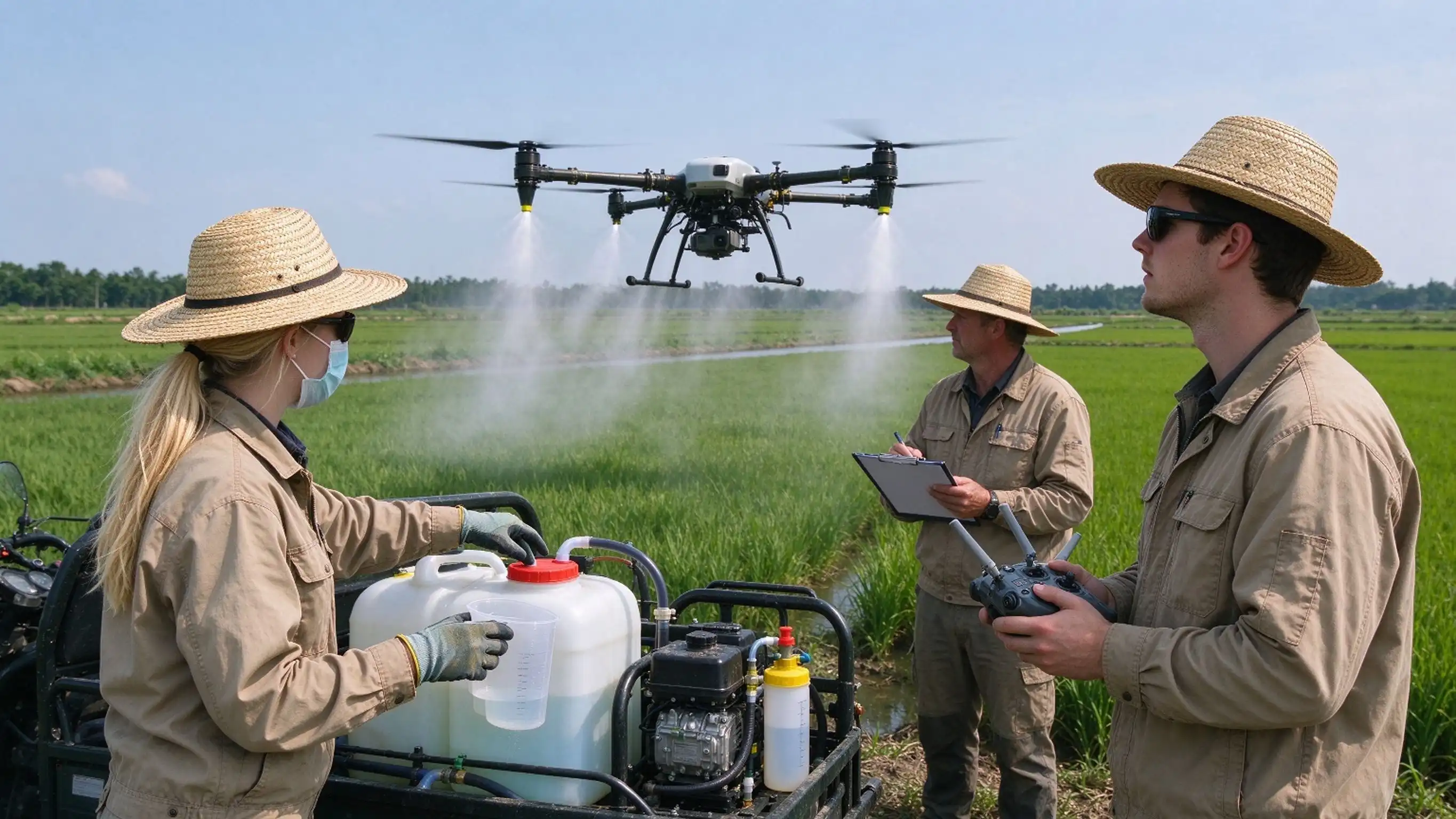
The range of agricultural UAV applications is extensive. Multi-rotor platforms are best for protecting plants because they can hang steadily and carry a variety of payloads. Fixed-wing systems, on the other hand, are better for large-scale mapping missions. Positioning that is enabled by RTK is accurate to the centimeter, which means that autonomous route flight can work even in rough terrain. NDVI maps made by multispectral sensors can find signs of crop stress up to ten days before they show up on the surface. This gives agronomists a very small window of time to act.
Commercial UAVs used for plant security can usually carry between 10 and 40 liters of cargo per flying cycle. Centrifugal atomization technology makes droplets that can be any size between 50 and 500 microns. This lets operators fit the application parameters to the type of pest and the structure of the crop cover. These hardware features directly lead to measurable results: studies show that using UAVs for spraying cuts down on chemical use by about 30% and water use by up to 90% compared to using traditional ground equipment.
These requirements are not vague for procurement professionals who are in charge of buying things for training programs. They spell out the levels of skill that new pilots must reach before they can work safely and successfully in business settings.
How Agricultural UAVs Revolutionize Traditional Farming Methods
From Manual Scouting to Autonomous Precision Operations
In the old way of protecting crops, field scouts walked transects and used ground rigs to make even spray runs. This method doesn't take into account differences in space, packs down the soil, and can't reach steep gardens or wet paddy fields. Agricultural UAV technology gets rid of all of these problems.
Autonomous flight planning software divides field polygons into the best spray routes, taking into account the direction of the wind, the distance of obstacles, and the application zones with different rates. GPS and IMU sensors on board keep the path accurate to within a few centimeters, and 360-degree digital radar avoids obstacles without the driver having to do anything. This gives even coverage over rough terrain that machines on the ground can't reach.
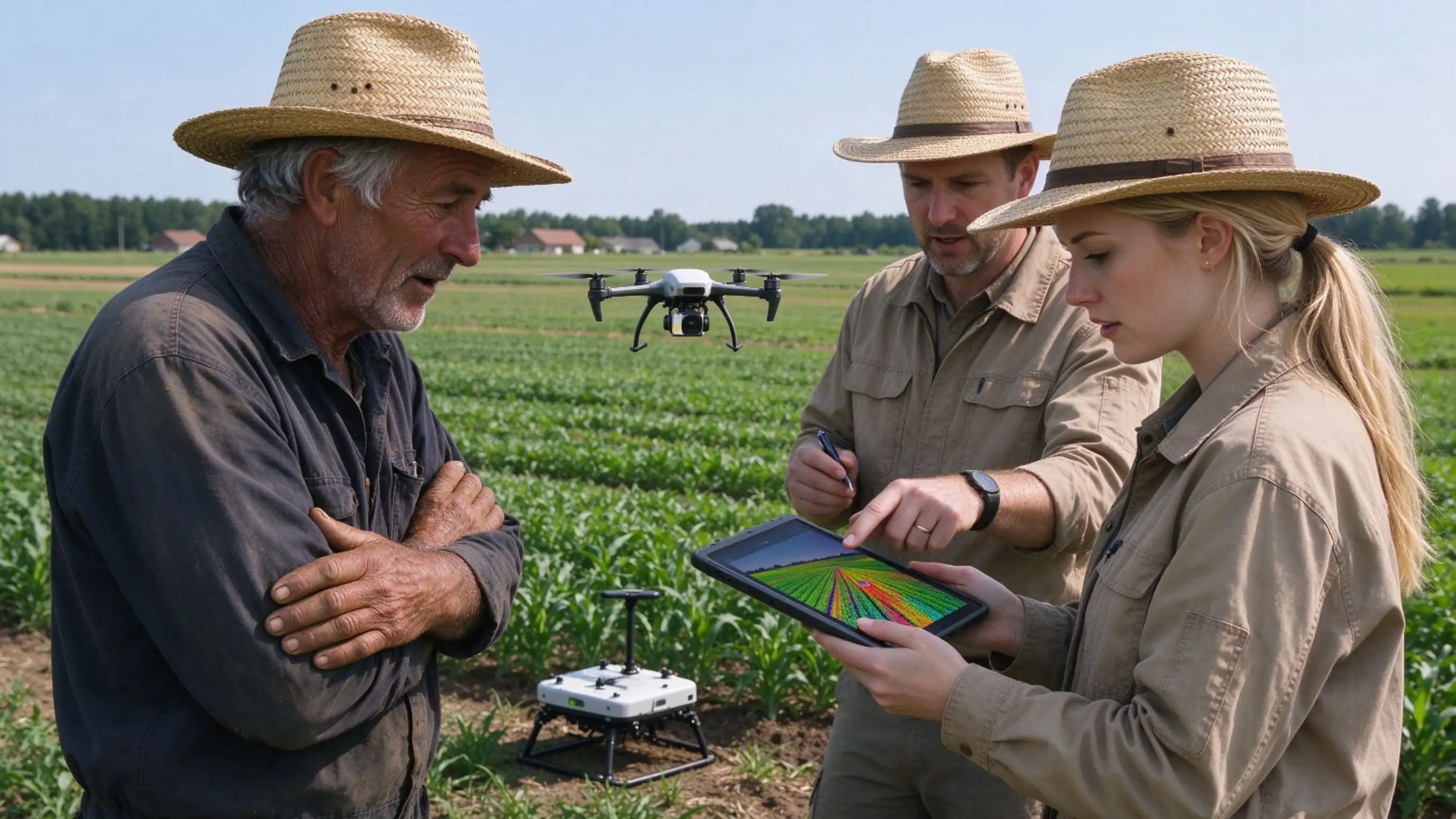
The operational process changes from using resources in a broad way to making focused choices based on data. Multispectral images gathered on one flight are directly used to make prescription maps for the next task, creating a feedback loop that can't be achieved with normal methods. When purchasing managers look at UAV Training programs, they should make sure that the courses cover the whole analytical cycle, not just basic flight operations.
Criteria for Selecting the Right Agricultural UAV Training Program
Matching Curriculum Depth to Workforce Needs
When companies spend money to train people to use UAVs, they have to choose which tools to use because not all of them build the same level of skill. Pilots are trained in a program based on real-life jobs that need to be done in the field. One that only looks at classroom theory creates students who need a lot more help from a mentor before they can contribute effectively.
Here are the most important things that buying workers look at when hiring:
- Curriculum design: Project-based training based on real crop protection situations (like wheat, rice, and corn) builds practical judgment that can't be achieved through classroom modules alone. Learners should move on from understanding platform architecture and how to use a remote controller to planning routes, calibrating variable-rate sprayers, figuring out what's wrong, and maintaining the system.
- Faculty credentials: Teachers with backgrounds in both UAV tech and plant security field experience teach a wide range of topics that aren't covered by either field alone. This pairing is important because faults in the real world are rarely just mechanical or just agricultural.
- Training platform completeness: For a professional program, the hardware needs to be able to support a number of different frame configurations, motor specifications, ESC types, and propeller variants. It also needs to be able to support virtual simulation environments and maintenance inspection modules. This range makes sure that students learn how to use the different kinds of tools they will see in the field.
- Certification pathway: Training that leads to accepted credentials, like AOPA, UTC, or national standards that are similar, gives businesses proof that employees are competent and makes it easier to keep track of compliance.
Collectively, these factors show if an investment in training leads to real improvements in the skills of the workforce or just meets formal standards on paper.
Practical Implementation: ECR Academy's Agricultural UAV Applications Course
A Full-Process Training Framework Built for Industry Outcomes
The agricultural UAV applications course from ECR Academy focuses on the skills gaps that procurement professionals face when putting together drone plant protection teams. The course covers six structured training lessons that teach UAV platform design, flight control debugging, spraying system integration, field operation planning, and multi-sensor data processing.
The classroom is based on a professional UAV platform for protecting farm plants, and it works for the whole training period. The platform for selection and testing can handle three frame layouts, five motor specifications, three ESC types, and four propeller specifications, so it can meet a wide range of training needs for integration and setup. Before students move on to real-life flight environments, the virtual simulation tool lets them practice protecting plants in a variety of crop kinds and terrain conditions. The repair and inspection module covers motor systems, communication modules, power management, and power distribution systems. This way, students get real-world experience with fixing instead of just reading about faults.
When graduates leave, they have shown that they are skilled in all aspects of the operational process, including operating the platform, setting up the spraying system, planning routes for areas with changing terrain, calibrating variable-rate applications, and finding faults. This course prepares students for jobs like Agricultural UAV Plant Protection Pilot, UAV System Integration Engineer, Agricultural Data Analyst, and Plant Protection Solution Designer. These are all jobs that are in high demand in commercial farming and plant protection service companies.
Since 2010, ECR Academy has given professional training to more than 500,000 people in China and 28 other countries. More than 300,000 of these students have earned recognized skills certifications. The school works with more than 500 businesses and has a resource library with more than 60,000 learning materials, such as standards, courseware, and assessment banks.
Future Trends in Agricultural UAV Technology
AI Integration and Autonomous Fleet Operations
As UAVs are used in agriculture move beyond single-aircraft operations, the next step is to use coordinated autonomous groups that are controlled by AI-powered analytics systems. These systems handle multispectral and thermal data in real time, making application prescriptions while the mission is in flight instead of handling them after the fact on the ground. Using past weather data and current NDVI trends in predictive pest modeling will help operators predict outbreaks instead of just reacting to them.
Autonomy is growing along with the variety of sensors that can be used. With hyperspectral cameras, LiDAR terrain mapping, and gas-detection devices, UAVs can do more than just fly around and collect data. They can also check for soil carbon, report on environmental compliance, and check on the health of animals. Companies that are hiring people to work with UAVs should make sure that their training systems are flexible enough to include these new uses without having to go through full learning processes.
Conclusion
Agricultural drone technology is no longer an investment for the future; it is now a necessity for doing business. Every season, the gap between companies that have trained and approved UAV plant security staff and those that don't gets bigger. People who work in procurement and are in charge of developing the workforce need training partners who can provide verified competency, full certification paths, results that are relevant to the job, and audit-ready paperwork. From platform integration to field task delivery, ECR Academy's agricultural UAV applications training is designed to meet all of these needs.
FAQ
1. Can someone with no prior drone experience enroll in this course?
Yes. The first part of the course is an introduction to the UAV platform. It covers hardware design, how to use a remote command, and the basics of the development environment. The steps are planned and organized so that even people who have never flown or worked with technology before can easily understand and follow along.
2. What career roles does this training prepare learners for?
Participants who finish this course will be ready for jobs like Agricultural UAV Plant Protection Pilot, UAV Assembly and Maintenance Technician, System Integration Engineer, Agricultural Data Analyst, and Plant Protection Solution Designer. All of these jobs are in high demand in commercial agriculture.
3. What technical setup does the virtual simulation require?
For best results, you should have at least Windows 10, an Intel Core i5 processor or something similar, 8 GB of RAM, 256 GB of storage, and a graphics card with at least 2 GB of VRAM. The setting works with software for fine-tuning UAV flight controls and full virtual simulation platforms.
4. How does this training support organizational compliance and audit requirements?
The program is based on current UAV operation standards and best practices for protecting plants in agriculture. Verification materials like training records, competency tests, and certification paths are usually needed by government-funded programs and internal audits of businesses.
Partner with ECR Academy for Agricultural UAV Applications Training
ECR Academy is a reliable company that trains businesses, schools, farming groups, and industry associations in 28 countries on how to use UAVs for agricultural purposes. Our project-based curriculum, qualified teachers, and full-process training platform all work together to give you measured skill results that meet compliance and buying needs. Get in touch with our team to talk about a custom agricultural UAV applications training plan for your business. Find out more at enteredu.com or email us at ecr2008@enteredu.com.
References
1. FAO – Unmanned Aerial Vehicles in Agriculture, Food and Agriculture Organization of the United Nations, 2021.
2. Computers and Electronics in Agriculture – Radoglou-Grammatikis, P. et al., "A Compilation of UAV Applications for Precision Agriculture," Elsevier, 2020.
3. Remote Sensing – Tsouros, D.C., Bibi, S., & Sarigiannidis, P.G., "A Review on UAV-Based Applications for Precision Agriculture," MDPI, 2019.
4. Biosystems Engineering – Zhang, C. & Kovacs, J.M., "The Application of Small Unmanned Aerial Systems for Precision Agriculture: A Review," Elsevier, 2012.
5. Journal of Field Robotics – Pajares, G., "Overview and Current Status of Remote Sensing Applications Based on Unmanned Aerial Vehicles," Wiley, 2015.
6. USDA Agricultural Research Service – Precision Agriculture Technologies for Crop Management, United States Department of Agriculture, 2022.


_1781601799781.webp)