Building a Security Monitoring System: Skills You Need to Know
It's not enough to just hang cameras on the walls to make a security system. To connect all of these things into a solution that works, you need to know how to set up networks, commission devices, and integrate systems. You also need to have the guts to figure it out. Intelligent security monitoring technology consists of IoT sensors, AI video analysis, and alarm logic. This implies a system can do more than merely log occurrences, it can discover, verify and report. In this tutorial, I’ll explain the architecture, the technical skills you’ll need, the processes to install, and the big hazards I see. I also discuss how E.C.R. Academy utilizes these talents to make learning meaningful.
Why Intelligent Monitoring Goes Beyond Traditional CCTV?
From Passive Recording to Proactive Detection
When you set up CCTV, you usually record video and watch it later when something goes wrong. Intelligent security monitoring technology has altered that sequence. You need network cameras, video management software, IoT sensors and AI analytics in order to observe immediately when somebody break in, hang around or do anything unsafe. Then they see the warning and do something about it. This is vital, since personnel can't be expected to stare at dozens of displays at the same time. Searchable metadata enables a team to quickly discover an event by time, object type or location, rather than needing to view hours of tape. This leads to quicker reaction and greater evidence.
Where Traditional CCTV Still Makes Sense?
I think AI should not be applied everyplace. A modest system with a recorder and a few cameras may work effectively for a small, low-risk region that merely needs to retain records. Intelligent systems are costly, but are justified when a facility requires linkages to access control and sensors, proactive alarms, or the administration of several locations. Picture a factory with restricted sections, a logistic yard with several entrance points or a college campus with many buildings. You can scale the technology to the risk, keeping costs down and excluding things you don’t need. Look at the place, write down what you want to accomplish and then choose the equipment.
Why Trained People Still Matter?
AI is not a substitute for security personnel. The algorithms conduct the first level of detection all the time but a trained operator examines the situation, manages mistakes and determines what to do next. They may view a shadow, a delivery person, or a maintenance staff as a threat. Skilled professionals additionally install, target and calibrate the gadgets that feed the model. That is why teachings are as vital as tools. Technicians that know the sensors, the wiring and how the system operates can shut false alarms off at the source. The ANSI/SIA CP-01 standard emphasizes the need of the commercial industry developing control panels that do not produce excessive false alarms.
Core Architecture and Key AI Technologies
The Four Layers of a Monitoring System
A system that operates properly includes four levels, all of them related to each other. The perception layer is comprised of the cameras, access points and sensors which collect information. It looks for items that happen close to the camera or on another device. this method little latency is preserved. The platform layer handles video, users, storage and integrations. This is where warnings, dashboards and reports are provided to the individuals who need to act on them. The four all work together to allow data to flow from discovering an issue to dealing with it. What is the best approach to do a deployment? It is contingent upon your privacy policies, the quality of your network and how many sites you are in control of. Cloud, on-premises or hybrid. At each level you require various talents, such being able to connect items and arrange your store.
AI Functions You Should Understand
AI does a lot of the same things. Things like object detection and tracking can distinguish between humans and autos. Intrusion detection monitors a specific line or region. Gates can scan licence plates and behavior analytics can be used to identify whether anyone is lingering or leaving stuff behind. Analytics also may be used in industries to try to identify missing safety gear, such as helmets and vests. You have to setup each function properly. As with any camera, if you draw a line in the incorrect place, or aim it toward a bright window it will miss items and cause false warnings.
Performance Depends on More Than Resolution
Buyers often check at megapixels first, but lighting, viewing angle, lens, compression and weather may all affect the quality of a picture. Standards help you keep things straight. ONVIF profiles S, G and T may be used with devices from various manufacturers. The IP code for ingress of dust and water is given in IEC 60529. The IP67 certification is a measure of how effectively a camera outdoors can deal with water and dust. H.265 video coding uses less bits than H.264 at the same quality level. This implies less space is utilized. And also look out for your privacy. You need to make sure the data is right before you rely on it. You need to know how long you should store data. You need to know who can view the data.
Building the System: From Requirements to Deployment
Start With Requirements and a Site Survey
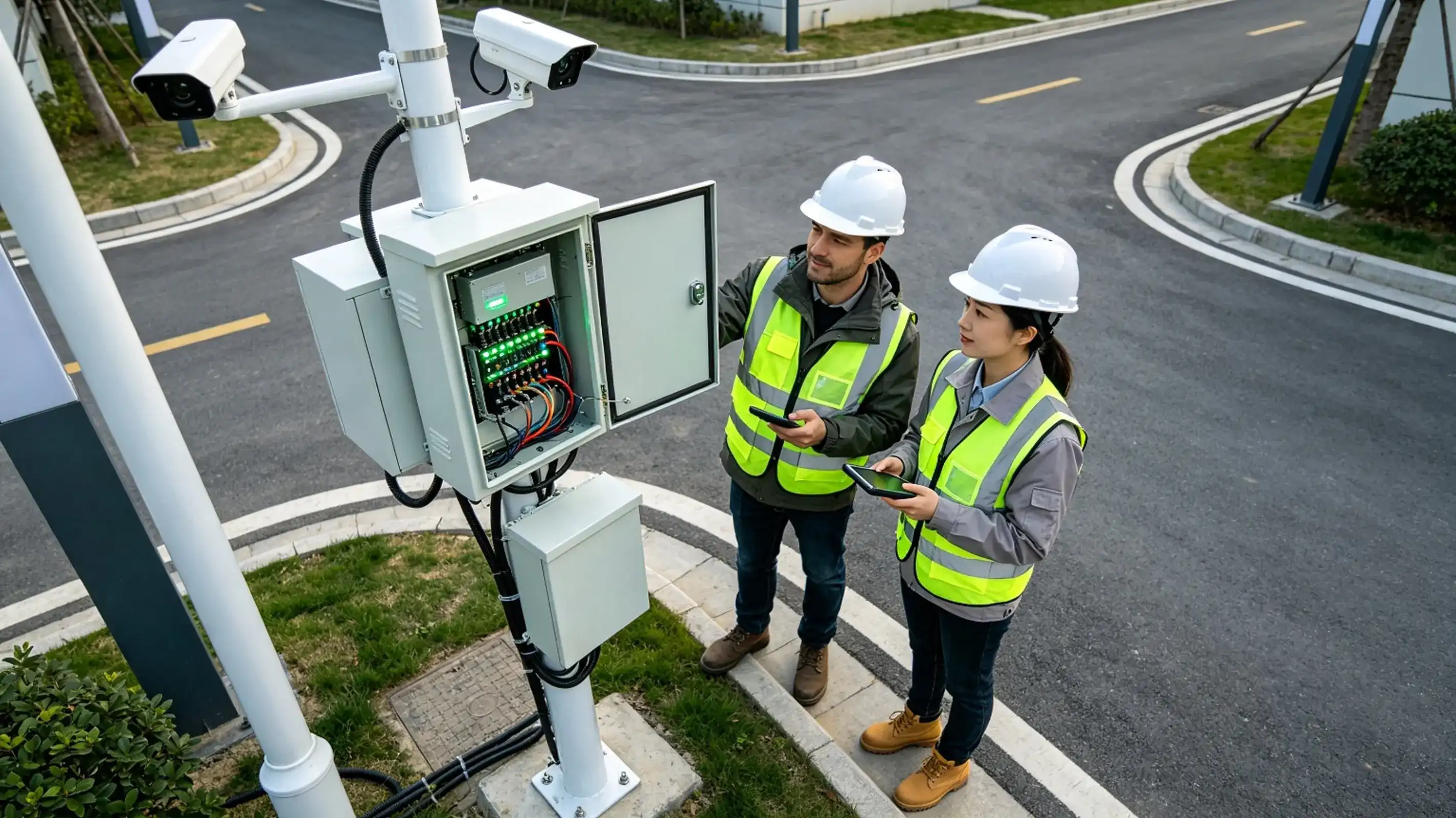
It doesn't come in this order; it comes last. I start by writing down the business goal, the technical limits, and the risks. After that, I look around the site. Places of cameras, lines of sight, nite lighting, cable routes, power sources, and network access points are all checked as part of a survey. It starts with the entrance, loading dock, or server room because they are ranked by risk assessment based on how valuable they are and how vulnerable they are. This step also keeps track of which devices need to stay in use. Teams that don't do this often find out in the middle of a project that an Ethernet cable is too far away or that an extension cord can't hold a camera.
Estimating Data Rate and Storage
A lot of people don't do the simple math needed to plan where to store their things. Let's look at a 4 Mbps stream now. Divide 8 by 0.5 to get 0.5 megabytes per second. After that, multiply that number by 24 hours, which is 86,400 seconds. That's about 43.2 GB of data every day for each camera if they record all the time. Multiply the number of cameras by the number of days the video will be kept to get the size of the recorder. Change the resolution, frame rate, compression, and recording mode, such as "motion-only." Give those streams the extra network space they need on all of your switches and uplinks. If your system is too small, you lose footage or frames when it matters the most.
Commissioning, Testing, and Handover
Commissioning makes sure that once the devices are set up, they all work. Assign tasks and set off alarms, link cameras to security and alarms, and check each feature against the list of needs. Acceptance testing checks the image quality at nite, the time it takes for alarms to go off, and the playback of recordings. During a cybersecurity pass, default passwords are changed, firmware is updated, and access to the network is scaled back. NFPA 731 explains how to set up electronic security systems in buildings, and NIST SP 800-213 tells you how to keep Internet of Things (IoT) devices safe. This makes it easy for installers to follow along. Good documentation helps the maintenance team months after something is given over.
The Skills You Need, and How E.C.R Academy Teaches Them
Sensor Applications and Equipment Installation
The first set of skills is useful in real life. In a production setting, technicians need to understand and be able to read sensors for temperature, pressure, gas, and vibration. They also set up and fix alarm control panels, cameras, digital video recorders, switches, infrared detectors, magnetic door Contacts, and digital video recorders. You should also plan your wiring routes and pick out your gear here. The E.C.R Academy Intelligent Security Monitoring Technology program teaches these skills through project- and scenario-based learning in order to help students make the connection between what they learn in school and what they do at work.
System Integration, PLC, and Microcontroller Control
The second group of skills builds systems out of separate parts. The students learn how to use integration design techniques to put together a full smart monitoring system with access controls, video surveillance, and intrusion alarms. After that, they fix bugs, run the system, and do regular maintenance together. The class also goes over the hardware, programming, and communication of microcontrollers. It also goes over programming and debugging for PLCs used in common safety monitoring and control systems for production. These topics are important for factory safety departments that need to automatically gather monitoring data, send it, and process it. Engineering drawing, CAD, and electrical application technology all help with the work.
Training Platform, Faculty, and Career Paths
Video surveillance, intrusion alarms, sensor applications, and network and structured cabling are some of the things that students can practice in the four training rooms. Besides setting it up, they also run it and keep it in good shape. Business engineers and college experts teach the course together, so lessons are a mix of what is learned in school and what is done in the real world. You can learn how to become a security system installation and maintenance technician, a safety production monitoring staff member, an intelligent monitoring system operation and maintenance engineer, a security system debugging technician, and more. People in the US can get up-to-date information on people who set up fire and security alarms by reading the Bureau of Labor Statistics Occupational Outlook Handbook.
Industry Applications, Selection, and Common Risks
Applications by Industry
Every site has its own needs. In order to keep workers safe, factories use PPE detection and protection for certain areas. Warehouses and logistics centers keep an eye on the gates and loading docks for vehicles, and sometimes they can read license plates. Stores use lines to study, hospitals and schools deal with visitors, and construction sites need to be watched from afar in more than one place. For AI to work best, it needs to be linked to a measurable outcome, like a faster response, fewer lost assets, or better safety compliance. It's just as important to be able to analyze data as it is to be able to install things. Teams must read monitoring data and act on it.
How to Choose and Buy a System or Training Program
Price is not the only thing you should look at. Ask vendors about how well the system works, how many false alarms it sends, how long it takes for alerts to arrive, how it works with other systems, how secure it is, how much it costs to support, how long it lasts, and how much it costs to own the whole system. Ask for a pilot before you go live. Find out if the platform is like real engineering work, if the course covers everything from installation to system integration, if the teachers have worked in the field before, and if the content is kept up to date as needs change. More information about the site, the number of items needed, how they will be delivered, the level of service, and training that will be given should be included in a written request for quotes. This is better for everyone.
Common Risks and How to Avoid Them
A few mistakes are what ruin most projects. Not enough storage space, bad lighting, and bad planning for integration are at the top of the list of things that should not be there. Some teams only look at the resolution or think that more cameras make them safer. Some people forget who owns the data or never check how well the supplier supports them. To stay away from these problems, set performance goals that can be tracked, use role-based access, encryption, network segmentation, regular software updates, retention schedules, and audit logs. A lack of skills is another risk. It will be hard for a team that set up the system well but can't keep it running or look at its data once it's up and running. Training fills that gap right away.
Conclusion
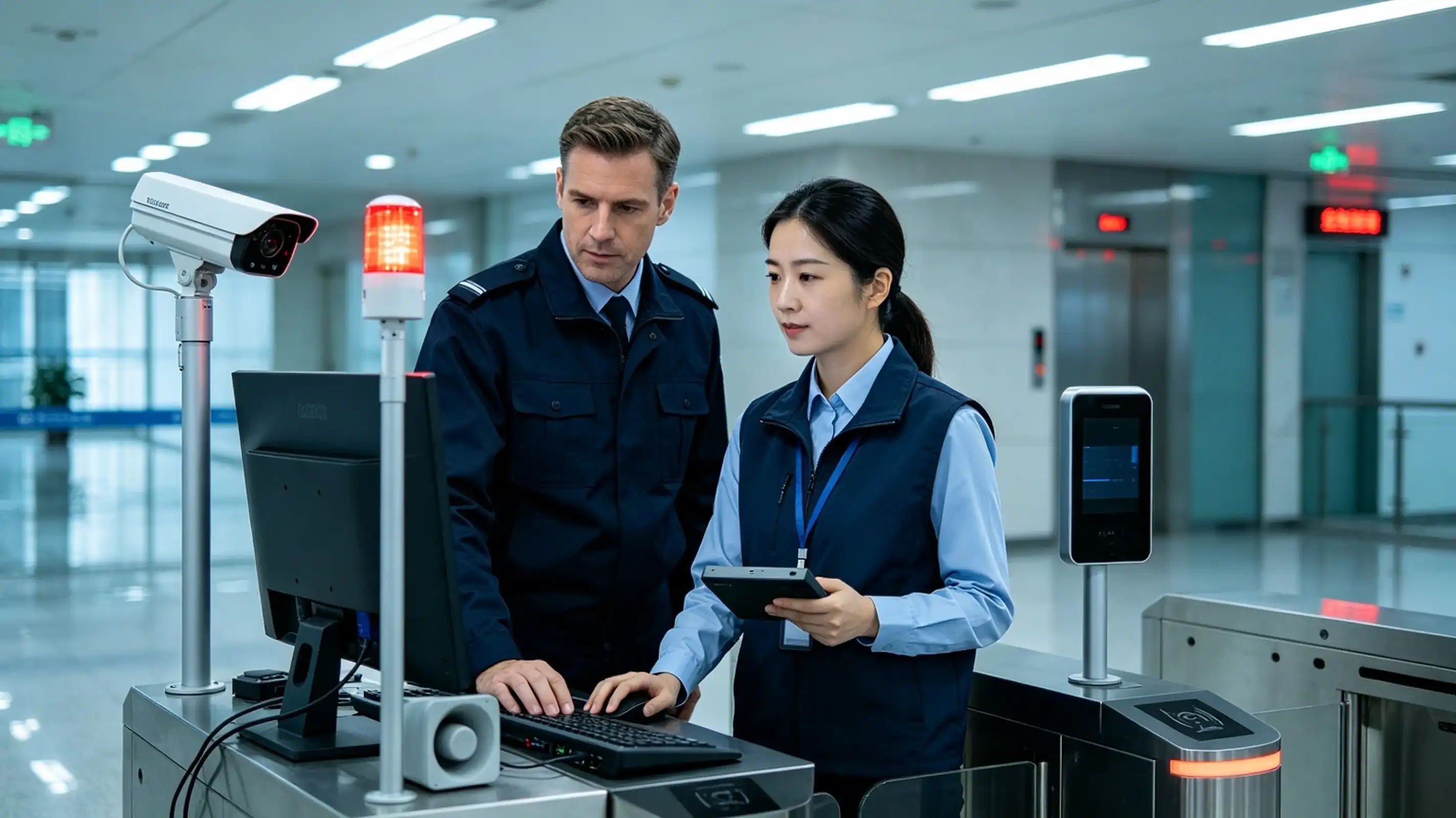
To make a security monitoring system, you need skilled people, good architecture, and careful deployment. Intelligent security monitoring technology expands beyond CCTV by incorporating AI analytics, sensors, and integration. Cams, storage, networks, and alerts all need to follow a written list of rules and an inspection of the site in order for it to work. When it comes to performance, lighting, placement, configuration, and testing are more crucial than just resolution. People who buy AI should make sure that each function has a measurable result because each industry has different needs. They should also look at suppliers' accuracy, customer service, and price, and be wary of bad placement, poor storage, and weak security. Sensors, installation, commissioning, integration, and PLC control are all things that technicians who know about them can fix. This means that a direct way to fill the skills gap is through project-based, hands-on training.
FAQ
1. Can beginners study this program?
Yes. First, the program goes over basic electrical and electronic technology, as well as the theory behind sensors. After that, smart monitoring technologies take students step by step. You should be interested in the field and know some basic math and physics.
2. What roles can learners pursue after the program?
You can learn how to become a security system installation and maintenance technician, a safety production monitoring staff member, an intelligent monitoring system operation and maintenance engineer, a security system debugging technician, and more.
3. What equipment will learners study?
The program talks about a lot of different kinds of systems, such as alarm control panels, access control devices, PLC controllers, microcontroller development boards, and sensors.
4. Does the program cover installation only?
It doesn't just teach students how to mount devices; it also teaches them how to run the system, keep it in good shape, and keep an eye on data analysis.
Partner with E.C.R Academy for Intelligent Security Monitoring Technology Training
Want to buy training materials from a company that sells intelligent security monitoring technology? Since 2010, E.C.R. Academy has taught and tested more than 500,000 people in China and 28 other countries. We also work with more than 500 shops. People in businesses, schools, and industry groups can all use our program. You can tell them how many people are on your team and what their goals are by going to enteredu.com or emailing ecr2008@enteredu.com.
References
1. U.S. Bureau of Labor Statistics, Occupational Outlook Handbook: Security and Fire Alarm Systems Installers, 2024.
2. National Fire Protection Association, NFPA 731: Standard for the Installation of Electronic Premises Security Systems, 2020.
3. National Institute of Standards and Technology, Special Publication 800-213: IoT Device Cybersecurity Guidance for the Federal Government, 2021.
4. Security Industry Association, ANSI/SIA CP-01: Control Panel Standard – Features for False Alarm Reduction, 2010.
5. International Telecommunication Union (ITU-T), Recommendation H.265: High Efficiency Video Coding, 2013.
6. International Electrotechnical Commission, IEC 60529: Degrees of Protection Provided by Enclosures (IP Code), 2013.