Inside Photovoltaic Engineering Technology for Power Station Design
Photovoltaic engineering technology sits at the intersection of semiconductor physics, electrical systems, and large-scale energy infrastructure. Whether you are planning a utility-scale ground-mounted station or a distributed grid-connected system, understanding how solar power systems are designed, built, and maintained determines whether a project succeeds or stalls. This guide walks through the technical foundations, current industry trends, procurement considerations, and performance strategies that matter most to engineers and institutional buyers working in the solar energy sector today.
Fundamentals of Photovoltaic Engineering Technology
How PV Energy Conversion Actually Works
The photovoltaic effect is what turns sunlight into direct current electricity in a solar cell. Electron-hole pairs are made when photons hit a semiconductor junction. An internal electric field keeps them apart. Commercial N-type TOPCon cells now have conversion rates higher than 24%. HJT cells, on the other hand, have low temperature coefficients of around -0.29%/°C, which makes them good for places with a lot of heat. Engineers can choose the best cell technology for a given climate and load profile by understanding these physical qualities.
Core System Components and Their Functions
Solar panels, string or central inverters, mounting structures, combiner boxes, power distribution cabinets, and tracking systems are all parts of a full PV power station. Each part has to be chosen based on the site's factors, grid connecting standards, and the amount of energy that is expected to be produced. A big part of the lifecycle costs and operational dependability are determined by the balance of system (BOS) elements, which include AC/DC cabling, protection devices, and SCADA platforms. If you choose parts that meet the certification standards for IEC 61215 and IEC 61730, they will work for 25 to 30 years with less than 0.4% annual degradation.
Engineering Drawing, CAD, and Simulation Tools
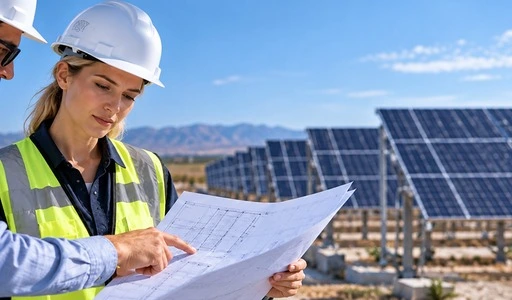
How well you can use engineering drawings, CAD tools, and PV simulation systems affects how well you can build a system. Before putting in a single panel, these tools let engineers model array setups, figure out series-parallel string links, check for shading losses, and guess how much energy the panels will produce each year. Capacity design and cost-benefit analysis are based on data from a site survey and an assessment of the solar resources on the site. Students learn how to use these tools while working on real projects. When they finish these programs, they are ready to start working on building sites or in design offices right away.
Trends and Challenges in PV Power Station Design
Technology Transitions from PERC to Next-Generation Cells
Things have moved quickly in this field. Five years ago, PERC technology was the most popular. These days, TOPCon and HJT modules are required for most large contracts. Perovskite-silicon tandem cells are getting close to being ready for use in businesses; in the lab, they are more than 33% efficient. This rate of change is really hard for places that are making training plans. Within one school year, curriculum content that is linked to PERC production parameters becomes out of date. Programs that want graduates to stay job-ready need to use tools for constant updates instead of static textbooks.
Smart Grid Integration and Big Data Monitoring
These days, power plants are not just inactive tools for making electricity. Intelligent microgrids now use cloud-based SCADA platforms to manage grid dispatch, store energy in batteries, and make PV panels. Inverter health, string performance, and grid frequency response are all tracked by remote monitoring systems in real time. There is a real skills gap that companies keep pointing out, and training programs in photovoltaic engineering technology that cover cloud computing, big data analysis, and clever microgrid operation can help fill that gap. The International Renewable Energy Agency (IRENA) says that the number of people working in solar energy needs to rise to 18 million by 2030 in order to meet deployment goals.
Material Degradation and Long-Term Reliability
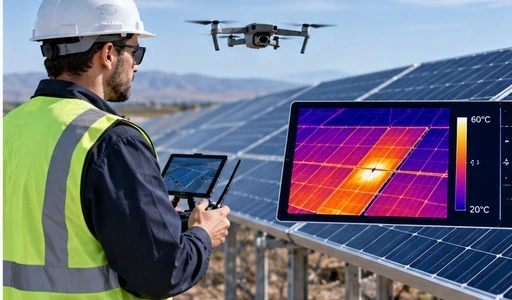
Potential Induced Degradation (PID) and Light-Induced Degradation (LID) are still operational concerns, especially for older PERC installations. These risks can be reduced in modern modules by adding gallium, using better insulating coats, and encasing materials like POE (Polyolefin Elastomer). Infrared thermography from a drone has become a normal O&M method for finding hot spots that are caused by a failed bypass diode or localized shade. Engineers who know how to use these diagnostic tools keep stations running and protect their long-term value.
Comparing PV Engineering Solutions for Power Stations
Ground-Mounted vs. Distributed Grid-Connected Systems
In places with a lot of sunlight, utility-scale ground-mounted stations that use bifacial modules and horizontal single-axis trackers (HSAT) have the lowest Levelized Cost of Energy (LCOE). Distributed grid-connected systems, which can be put on commercial roofs or built into factories, allow for faster permits and lower transmission losses for use on-site. The best option relies on the type of load, the availability of land, the capacity of the grid to link, and the incentives set by local policy. Any choice to buy something should be based on a full cost-benefit analysis that includes expected income, capital expenditures, and operations and maintenance costs.
PV Technology vs. Solar Thermal for Industrial Applications
Concentrating solar thermal (CST) systems make heat instead of power and can be used for process heat above 150°C in industry. For large-scale power generation, photovoltaic systems now offer faster installation, lower costs per watt, and more options for where to put them. According to IRENA data, the global weighted average cost of utility PV dropped to about $0.033/kWh in 2023. This made it the cheapest way to make electricity in most countries. Before choosing a technology path, procurement teams should look at these lifecycle economics along with technical needs.
Floating PV and Specialized Deployment Environments
There is a 5–10% increase in efficiency with floating photovoltaic (FPV) installations on reservoirs and water retention ponds because they cool the water without using electricity. This is because less water evaporates. For these systems to work, the units must be approved to IEC 61701 for resistance to salt mist and humidity. Building-Integrated Photovoltaics (BIPV) is another way to put solar panels in cities where roof room is limited. There are different engineering, purchasing, and maintenance needs for each type of deployment. Training programs should cover these through dedicated simulation exercises and real-life equipment practice.
Procurement and Supplier Selection for PV Power Stations
Key Certification and Quality Verification Criteria
Before sending purchase orders, B2B buyers should make sure that sellers have up-to-date IEC 61215, IEC 61730, and any necessary UL approvals. Electroluminescence (EL) testing done before shipping finds tiny cracks and cell problems that can't be seen with the naked eye. Using AAA-class solar models for flash testing proves that the real Pmax, Voc, and Isc numbers are the same as what is written on the label. Testing a structure's strength against a 5,400 Pa snow load and a 2,400 Pa wind load is needed to make sure it can stand up to harsh weather. These steps of proof keep buying teams from having to buy broken equipment that breaks down faster than the warranty says it will.
Evaluating Training Program Suppliers for Institutional Buyers
For vocational schools and enterprise training centers in photovoltaic engineering technology, evaluating suppliers is more than just looking at hardware. A good training program provider should show that their courses are in line with recognized occupational standards, let practicing engineers teach alongside their students, and keep up with changes in technology by using a structured content update schedule. Institutional buyers need both technical depth and ties with other businesses. ECR Academy has both, with 16 years of professional experience and connections with over 500 businesses in 28 countries. The facilities for the program, which include labs for making PV modules, training rooms for clever microgrids, and a grid-connected station with at least 60 kW of power, are more like what it's like in the real world than like simple classroom models.
Conclusion
To plan and run a PV power plant in photovoltaic engineering technology, you need to be good at system planning, construction management, and ongoing O&M. You also need to be able to keep up with how cell technologies and grid needs change quickly. The change from PERC to TOPCon and HJT, along with the addition of smart microgrids and big data monitoring tools, makes all jobs in the solar energy industry more technically demanding. Businesses and institutions that put money into training programs that are in line with current industry standards give their teams a clear edge when it comes to project quality, safety, and the long-term performance of their assets.
FAQ
1. Can someone with no prior background take this PV engineering program?
Yes. The program begins with foundational topics including electrical engineering, electronic technology, and engineering drawing, then builds toward system design and O&M. Comprehensive lab facilities and experienced instructors support learners at every stage.
2. What career roles does this program prepare graduates for?
Graduates are prepared for positions including PV Power Station Planning and Design Engineer, Installation and Commissioning Engineer, Operation and Maintenance Engineer, Intelligent Microgrid O&M Engineer, and PV Project Management Engineer.
3. How does this program differ from a traditional electrical power program?
This program addresses the complete lifecycle of PV power stations — from site survey and system design through construction, commissioning, and fault diagnosis — with direct alignment to new energy industry occupational standards. Traditional power programs do not cover PV-specific skills at this depth.
Partner With E.C.R Academy for PV Engineering Technology Training
The photovoltaic engineering technology supplier program offered by E.C.R. Academy has been successfully tested over 16 years, with relationships with more than 500 businesses and service in 28 countries. Our industry-aligned curriculum, which is taught by both business engineers and academic experts, gets students ready for real-life station settings right from the start. Get in touch with our team to talk about partnering with an institution, licensing a curriculum, or delivering training to an entire company. You can email us at ecr2008@enteredu.com or visit enteredu.com.
References
1. International Renewable Energy Agency (IRENA). Renewable Power Generation Costs in 2023. IRENA, 2024.
2. International Electrotechnical Commission. IEC 61215: Terrestrial Photovoltaic Modules — Design Qualification and Type Approval. IEC, 2021.
3. International Electrotechnical Commission. IEC 61730: Photovoltaic Module Safety Qualification. IEC, 2023.
4. Solar Energy Industries Association (SEIA). Solar Industry Research Data: U.S. Solar Market Insight. SEIA, 2024.
5. Fraunhofer Institute for Solar Energy Systems ISE. Photovoltaics Report. Fraunhofer ISE, 2024.
6. IRENA. Renewable Energy and Jobs — Annual Review 2023. International Renewable Energy Agency, 2023.


_1781601799781.webp)