Building Industry Skills Through Automotive Electronic Technology Applications
Building industry skills through automotive electronic technology applications means teaching people to assemble, debug, test, and inspect the electronic systems inside modern vehicles. I see repair chains, dealer groups, and colleges facing the same pressure. Electric and connected vehicles now reach their bays, and technicians need hands-on training with battery management, vehicle networks, and smart sensors. A structured program turns scattered knowledge into repeatable job skills. In this guide, I explain the core technology, the standards behind it, how to compare options, where the field is heading, and how to buy components and training with confidence.
Understanding Automotive Electronic Technology Applications
What the Field Covers
Automotive electronics are the sensors, control units, wiring, software and power electronics that allow automobiles to go, stop, charge and talk to each other. Electronics control the engine, ABS, airbags, and body systems in most automobiles. An electric automobile has a charger, a battery management system, an inverter and a motor controller to assist drive the wheels. Vehicles with connection or driver-assistance capabilities may also be fitted with radar, cameras and network interfaces. The International Energy Agency reported over 14 million electric vehicles were sold worldwide in 2023. That’s roughly 18% of all the new automobiles sold in the globe. This expansion means there are more electronic systems coming to repair bays and parts stores every year. Technicians need to stay up-to-date on their training so they can accurately diagnose and maintain these systems.
Core Components: ECUs, Sensors, and Actuators
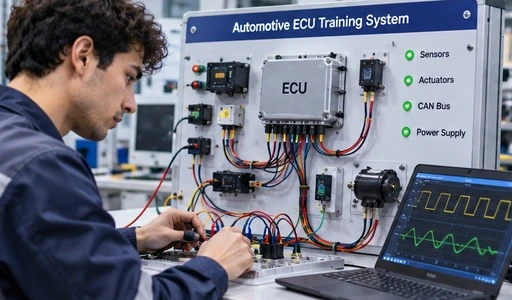
Three fundamental parts make up vehicle electronic systems. An electronic control unit (ECU) may collect information from sensors, operate software and transmit orders. Sensors detect parameters including temperature, pressure, wheel speed and voltage to the battery cells. An actuator (fuel pump, throttle motor, control valve, etc.) is told to do something and it does it. If you know the process , technicians can follow the system from input to output to find the issue . This saves time and prevents needless parts replacement. We teach this diagnostic strategy in class, including hands-on bench work. Learners will study the body, drivetrain and engine electrical control systems. They test sensors and actuators, and then utilise diagnostic equipment to interpret fault codes and confirm their results.
Safety and Efficiency Gains in Daily Use
Automotive electronics help cars work more securely and effectively on a daily basis. An electronic braking system uses data from the wheel-speed sensors to determine when a wheel is likely to lock up and may change brake pressure. Software may alert you or apply the brakes on devices meant to help avoid crashes. Electronic fuel injection systems employ sensor data and control logic to regulate fuel supply instead of fixed mechanical methods. Hybrid and electric powertrain electrical energy flow is managed by power control systems. Each of these systems may be subject to flaws which need thorough diagnosis. A service business with skilled specialists may discover issues faster, save needless repairs and eliminate recurring work that can impair both operational efficiency and customer confidence.
Building Technical Skills Through Systematic Deconstruction of Automotive Electronics
Common Pain Points: System Complexity and Interoperability
There are three factors that stress the people who are in charge of training. First, automotive technology is becoming increasingly fragmented, with different needs for battery electric, hybrid and linked cars. That makes it difficult to recycle the same lesson plan without adjusting it to other platforms. Second, electronic control units from various manufacturers must exchange data and interact across common vehicle networks. A failure of one network element may influence the other linked systems. Third, those working on high voltage systems have significant safety responsibilities and need particular training. Training should develop standards so that technicians at different locations may follow identical safety and diagnostic procedures. Such stability is especially important in case of service chains. The same standards may be more easily maintained between sites by using written inspection records and a flexible training style. Simply seeing demonstrations is not enough; learners must repeatedly exercise the same diagnostic techniques and testing processes.
Standards That Guide Component Development
Everyone who is being trained in automotive electronic technology applications can benefit from understanding the relevant standards. ISO 26262 addresses the functional safety of electrical and electronic systems in road vehicles and defines the Automotive Safety Integrity Levels (ASILs) A to D. ISO 11898-1 specifies the data link layer and physical signalling of Controller Area Network (CAN) systems, which are used extensively in vehicles. AEC-Q100, the Automotive Electronics Council’s qualifying criteria for integrated circuits used in automotive applications. For example, Grade 1 components are certified to an operating temperature range of around -40 °C to +125 °C. SAE J3016 describes six levels of driving automation, from Level 0 to Level 5. Understanding the applicable standard for a component helps technicians understand specifications, connect with suppliers, and identify whether a failure may be due to design, application, installation, or operating circumstances.
How E.C.R Academy Teaches Assembly, Debugging, Testing, and Inspection
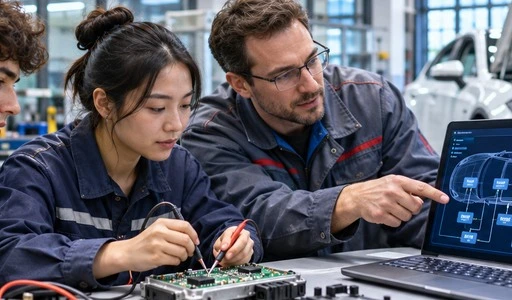
The E.C.R. Academy’s automotive electronics course is centred on four essential skills: assembly, debugging, testing and inspection. Students will practice disassembling and reassembling mechanical and electrical systems. They also learn hand connecting PCBs, building circuit boards and troubleshooting computers, motors, batteries and smart sensors. The training sessions include electrical systems, engine systems, chassis systems and body control systems. Besides CAN, LIN and basic automotive Ethernet car networks are also tested. Inspection modules include electrical wiring, cable routing and fastening, electrostatic discharge avoidance, safety measures, current input and component ageing. Schools and corporations might work together to provide students experience of projects in real-world contexts. All instructors are technically trained and have hands-on industry experience so students will be able to link classroom activities to actual service and maintenance.
Comparing and Selecting Automotive Electronic Technologies for Procurement
Conventional Versus Electric Vehicle Electronics
A traditional car has major components such as the engine, gearbox and 12-volt electrical system. Electric cars still retain the 12-volt system, but additionally include a high-voltage battery, battery management system, inverter, drive motor and onboard charger. Technicians working on electric platforms need to know how to securely inspect insulation, monitor battery cells, and regulate temperature conditions. Conventional platforms, however, need diagnostics pertaining to fuel supply, combustion, emissions, and exhaust systems. Some recent electric platforms run on 800-volt designs, whereas many existing versions run on systems around 400 volts. This means service shops have to change both their equipment and their safety practices. Both vehicle types employ electrical networks, thus skills like reading CAN data and understanding diagnostic issue codes still apply to both platforms. My recommendation is start out with a common electronics base and add separate high-voltage modules where electric-vehicle training is needed.
Evaluating Suppliers and Certifications
When I look at parts suppliers, I start with those having proven quality systems and a reputable automotive track record. Control modules and sensors are procured from top Tier-1 firms like Denso and Bosch. This is a good starting point for purchasers to evaluate component quality and supply consistency. For integrated circuits I ensure that the parts have AEC-Q100 certification, or other suitable automotive qualification proof. I also analyse the automotive quality management standard, IATF 16949, to determine the suitability of a supplier's quality system for automobile manufacture. Also I enquire about customisation of components if a project requires special connections, interfaces, or firmware settings. Finally, I look at overall cost, not just unit cost. Lead times, return conditions, technical assistance and after-sales service might alter the true cost of a component. Buyers should get written replies from the provider on each of these criteria before making an order.
Choosing a Training Provider
Just as when you buy components, be cautious when you buy training. This is my demand for schools and service clubs. To what extent can learners transfer what they practise in training (e.g. reading problem codes, soldering) when they return to the workplace? “There should be a lab bench and training equipment that correlates to the systems technicians need to work on, such as battery management, drive motors and sensor systems. Do teachers know the technical subject and the needs of an industrial workplace? Can the consistent records of training units and evaluations be used across locations? The E.C.R. Academy responds to these demands with a customisable course set-up, five training labs, double-qualified teachers and ties to training routes for NEV and intelligent connected vehicle certificates. Buyers should seek out a course overview, a list of laboratory equipment and a sample evaluation record before making any selection.
Future Trends in Automotive Electronic Technology
Software-Defined Vehicles and Centralized Computing
Car producers are shifting away from a model of electronic control units that individually do one function. Many of the newer designs depend instead on domain controllers and centralised computers with increased processing power. That enables software to control more car operations. OTA updates may also fix software bugs and improve system performance. These changes bring with them additional needs, such as cybersecurity, monitoring systems that can read data across numerous networks, and regulated ways to update software. So, the repair teams need to do more than just swap out an electronic control unit. Technicians also need to verify connection lines, software versions, configuration settings and the behaviour of the system. Diagnostic tools will have to function across linked car systems since parts vendors and service organisations increasingly will require such capabilities. Technicians previously trained in may, LIN and automotive Ethernet may also use these abilities when car designs change.
ADAS, Smart Sensors, and V2X
In automotive electronic technology applications, more advanced vehicle models use radar, cameras, and, in some systems, lidar for driver-assistance functions. These sensors provide information to software that determines when to issue a warning or initiate a vehicle response. SAE J3016 defines six levels of driving automation, from Level 0 to Level 5. Most vehicles currently on public roads still require the driver to remain responsible for the driving task. Vehicle-to-everything communication, or V2X, allows vehicles to exchange information with other vehicles, infrastructure, pedestrians, and network systems, although implementation varies by region and application. It is important to install, calibrate, and test each sensor correctly because a small alignment or configuration error can affect system performance. Training should therefore cover sensor installation, calibration, testing, and verification. Learners can use smart-sensor training benches in our labs to practice these procedures in a controlled environment.
Preparing Teams for Shifting Technology Routes
There is no way to tell for sure which software architecture or engine technology will dominate every industry -- hence I would encourage establishing transferable technical abilities. Technicians must interpret electrical circuits, solder components, measure signals using an oscilloscope, troubleshoot vehicle networks, and keep inspection records for battery-electric, hybrid and connected cars. When new car models are released, organisations may create short, targeted training sessions on the technology technicians will really face. Annually review the training plan to see how well it fits the cars entering the service area. Teams should also be provided with adequate electrical safety training to enhance the safety of the workplace. NFPA 70E is guidelines for electrical safety in the workplace, and local authorities may have extra requirements for licensing, high voltage work and other regulated activities. Training providers may enhance technical abilities but organisations should also verify the precise legal and safety standards that apply to their unique activities.
Practical Guide to Procuring Automotive Electronic Components and Systems
Verify Authenticity and Warranty
Selling counterfeit or faulty electrical parts may cost retailers money and put professionals and consumers at danger of injury. Before you order, be sure that the component is sold with a documented guarantee that tells you what it covers and how long the coverage lasts. Keep records on traceability of bought parts. Verify component label information against manufacturer’s published information and, where appropriate, test samples. Many electrical problems may be diagnosed before a part is put into a vehicle by using a signal generator, oscilloscope and voltmeter. Record the results of inspection for each new batch. If a component breaks later on , these records may assist identify the root of the issue . Our inspection training also teaches learners how to record test findings in a uniform and verifiable fashion.
Find Suppliers Through Verified Channels
Select providers who have well defined verification methods and transparent company information. Useful sources for identifying automotive components suppliers include trade exhibitions, industry organization directories and listings of recognised manufacturers' dealers. Customers may also compare items side-by-side and ask technical enquiries before purchase. Commercial conversations will not start until the relevant technical documentation for each element are ready. It is also advisable to ask for recommendations from previous customers who bought comparable amounts and to confirm that the supplier is a real company. See the seller’s policy on refunds, software upgrades, technical support and after sales service. Training providers should also approach partner organisations for recommendations and details about labs and teacher backgrounds. Since 2010, E.C.R. Academy has educated and tested over half a million individuals in China and 28 other countries. Buyers may also enquire about its industry relationships, since the school has partnered with over 500 firms.
Pricing, Order Volume, and Custom Programs
Best to compare prices with full buying knowledge. Suppliers may provide the same product but at various unit costs, lead times, shipping terms and warranty conditions. Buyers should consider all these variables. It's also useful to determine how much you will need before ordering in bulk. But ordering a lesser amount from the start might lower the danger while you’re confirming the quality. Get all negotiated terms in writing including inspection, return and delivery conditions. The same is true when you are building a personalised training program. First, let’s define the number of learners, their ability levels and their training objectives. If a college requires lab equipment to support a program or a service chain wants a standardised course at many sites, these needs should be identified before the program is established. Real figures simplify the process of determining what components, equipment and training services are required, and how they should be provided.
Conclusion
Automotive electronic technology applications are now important for vehicle safety, efficiency, and connectivity, so training in these applications is essential. The main diagnostic chain that every technician should understand consists of ECUs, sensors, and actuators. Groups can work more effectively when they understand standards such as ISO 26262, ISO 11898-1, AEC-Q100, and SAE J3016. Electric and conventional vehicles have different powertrain and high-voltage requirements, but they also share foundational electronic networks and diagnostic methods. This makes it practical to establish a common electronics foundation and add dedicated electric-vehicle modules when needed. Buyers should verify both component suppliers and training providers, review their documentation, and confirm that their claims can be supported. As vehicle technology evolves, technicians still need strong skills in testing, inspection, assembly, and troubleshooting. Schools and service chains can build these skills through flexible, hands-on training that combines practical equipment, structured projects, and consistent records.
FAQ
1. What does the E.C.R Academy course teach?
The course covers assembly, debugging, testing, and inspection of automotive electronic products. Learners work with mechanical and electrical structures, manual soldering, vehicle networks, fault diagnosis, and quality inspection, using five training laboratories.
2. Does the course cover new energy vehicle technology?
Yes. It includes power battery management, drive motor control, intelligent sensor assembly and adjustment, and vehicle network communication. It connects with certificate pathways such as NEV assembly, adjustment and testing, and intelligent connected vehicle testing and adjustment.
3. Who delivers the training?
Dual-qualified teachers with enterprise practice experience teach the course, combining full-time and part-time instructors. Delivery uses project-based and scenario-based learning through school–enterprise cooperation.
Start Building Industry Skills With E.C.R Academy
E.C.R. Academy turns what students learn in school into skills they can use on the job. It does this with five training labs, dual-qualified instructors, and training aligned with relevant certification pathways. Tell us how many people work at your service shop, college, or organization, what their current skill levels are, and what their training goals are. This will help us identify an automotive electronic technology applications course provider that fits your needs. You can learn more about the course content and laboratory setup by emailing ecr2008@enteredu.com or visiting enteredu.com.
References
1. International Energy Agency, Global EV Outlook 2024 (2024)
2. International Organization for Standardization, ISO 26262-1: Road Vehicles — Functional Safety (2018)
3. International Organization for Standardization, ISO 11898-1: Road Vehicles — Controller Area Network (CAN) — Part 1: Data Link Layer and Physical Signalling (2015)
4. Automotive Electronics Council, AEC-Q100 Rev. J: Failure Mechanism Based Stress Test Qualification for Integrated Circuits (2023)
5. SAE International, J3016: Taxonomy and Definitions for Terms Related to Driving Automation Systems for On-Road Motor Vehicles (2021)
6. National Fire Protection Association, NFPA 70E: Standard for Electrical Safety in the Workplace (2024)