Electronic Information Engineering Technology: From Circuits to PCB
Electronic information engineering technology is a hands-on field where circuit ideas are transformed into functional electronic products. Parts and circuit laws are the first thing students learn. Then students go into schematics, PCB layouts, programming microcontrollers, assembling things, and testing. Why is the jump from circuits to PCB important? Each board must run on paper, in simulation, and in production. This guide is designed to assist instructors, training managers and procurement teams to learn more about the topic, prepare a lab and assess a course before they purchase it. I also discuss the benefits of the E.C.R. Academy course.
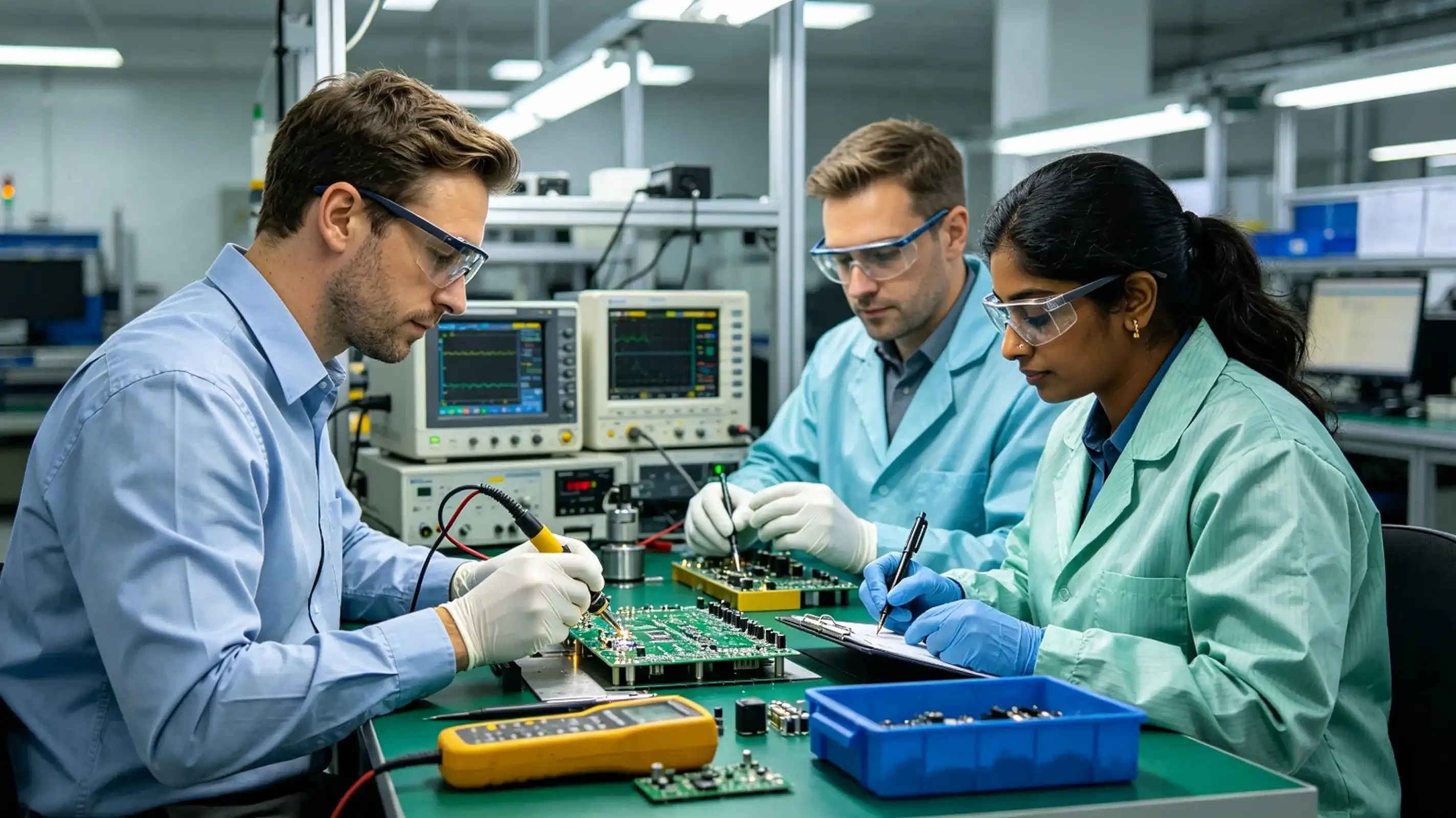
Understanding Electronic Information Engineering Technology from the Ground Up
What Is Electronic Information Engineering Technology?
A useful, cross-disciplinary field, electronic information engineering technology. It includes sensors, communication systems, PCB design, embedded software, electrical circuits, smart devices. Use is the key. Students do not only study theory, they develop, test and manage real electronic systems. Typical project cycle is: requirements analysis, circuit design, simulation, PCB prototype, firmware development, system integration and deployment. Each step builds on the preceding thus a poor choice early on will show up later as a failed test or an expensive redesign. This industry deals with educating people in automation, Internet of Things (IoT), embedded systems, smart manufacturing and creation of electronic products.
What Do Students Learn in Electronic Information Engineering Technology?
A excellent curriculum includes both theory and organized hands on instruction. Students usually study PCB design, microcontrollers, embedded systems, sensors, communication concepts, signal processing, industrial control and testing goods. They also learn to utilize simulation and programming tools, debugging platforms, measurement tools, schematic and PCB design software. Order matters. You should identify the pieces and undertake tests on a breadboard to start. Then students go on to incorporating sensors, embedded programming, constructing PCB prototypes and eventually testing. With this order newcomers immediately feel good about themselves. Design expertise is vital on the job, but so are documentation practices and troubleshooting abilities.
From Circuits to PCB: The Complete Electronic Product Development Workflow
The architecture and system requirements are first designed by the engineers. Then they choose the parts, model the circuits, do schematics and do the PCB layout. After the prototype is assembled, they test the hardware, the firmware and the connectivity capabilities. Design for manufacturing , design for testing , availability of parts , safety and maintenance should be taken care of before production begins and not after it. Industry reports might assist in this respect. The IPC-2221 standard specifies the generic design criteria for printed circuit boards, whereas IPC-A-610 is the standard for the acceptability of electronic assemblies. This process provides students with a complete project framework in the classroom. They observe how a concept for a single circuit becomes a documented product that can be built.
Applications, Careers, and Future Direction
Applications of Electronic Information Engineering Technology
There are many industrial and business uses for this field. It makes sensing, motor control, industrial communication, machine monitoring, and predictive maintenance possible in intelligent manufacturing. To gather information about how things work in IoT systems, sensors, gateways, networks, cloud platforms, and visualization tools all work together. Electronics in cars, medical devices, smart appliances, security systems, and consumer goods all use electronic information engineering technology. Hardware, edge computing, embedded vision, sensor fusion, and artificial intelligence are all used together in newer applications. Because of this range, training labs should have projects that show how connected, data-driven systems work instead of exercises that only use isolated circuits.
Electronic Information Engineering Technology Career and Education Paths
Hardware design, embedded software, PCB engineering, product testing, automation, Internet of Things (IoT) applications, technical support, manufacturing engineering, and lab teaching are all jobs that graduates can get. Academic credentials are important. Project experience, programming skills, measurement skills, and the ability to write clear technical documents are also very important. Practical application is usually a big part of vocational programs, while math, theory, research, and system design are often taught in more depth in undergraduate programs. Certifications, competitions, internships, and portfolios are all good ways for students to improve their profiles. There should be schematics, PCB files, source code, test reports, and notes on how the student fixed real problems in a good portfolio. The U.S. Bureau of Labor Statistics puts out information about the job outlook for electrical and electronics jobs that are related. This information can help you plan your career.
Future Trends in Electronic Information Engineering Technology
Circuit experiments that work on their own are giving way to connected, smart, software-defined systems. More and more, IoT connectivity, edge computing, real-time data processing, AI, and cybersecurity are being built into embedded platforms. So, engineers need to know how to design circuits, write firmware, use communication protocols, analyze data, put together systems, and test them. As a result, training centers should have modular, upgradable tools that work with a range of technologies and levels of learners. I recommend three steps: check the current assets, make an investment plan for several years, and give open interfaces the most attention. Then, give students projects in embedded, PCB, IoT, and intelligent systems along with basic electronics so they can see how these areas are linked.
Planning and Buying for an Electronic Information Engineering Training Laboratory
How to Plan an Electronic Information Engineering Training Laboratory
Set specific objectives for your teaching or your research or your company training. Then, specify the courses, student levels, student numbers, project complexity, and technologies the lab must accommodate. A versatile facility offers diverse spaces for basic electronics, analog and digital circuits, microcontrollers, embedded systems, PCB prototyping, sensors, the Internet of Things (IoT), communications, testing, storage and teacher demonstrations. Select the correct tools for today’s sessions and for when the curriculum increases in the future. The effectiveness of the lab over time also depends on safety features, the arrangement of the workstations, power protection, maintenance schedules, software administration, replacement parts and instructor training. If you don’t have enough chairs, cloud-based practice may help free up bench space.
How to Choose Electronic Information Engineering Laboratory Equipment
The price alone is not a reliable predictor. Associate all kinds of equipment with specific courses, experiments, student numbers, and learning objectives in electronic information engineering technology programs. Fixed-function experiment boxes are well suited to standard first-year classrooms. Modular building blocks and development boards make teaching embedded systems, IoT, and project-based learning simpler. Look at how secure it is, how stable the hardware is, how well the software interacts with it, how much it costs, how quick it is to install, and how much instructor support it has. A solid bid will explicitly indicate what is going to be provided, including the hardware, software, manuals, training, logistics, and acceptance criteria. Ask about everything that is not included in the quotation before you sign it.
How a Professional Supplier Can Support Laboratory Construction
A good provider is more than simply a carrier of products. Depending on the project, help may involve determining requirements, setting up the lab and equipment, bespoke modules, delivery and installation, teacher training, curricular materials, and after-sales service. I encourage customers to look at the supplier’s capacity to create things, expertise with embedded and PCB engineering, quality control procedures, track record of exports and OEM or ODM capabilities. Documentation requires the same kind of attention. Setting up the equipment and getting it to work takes less time when manuals, circuit diagrams, experiment guides, software instructions, maintenance procedures, and troubleshooting tools are available.
ข้อผิดพลาดทั่วไปในการจัดซื้อจัดจ้างและวิธีหลีกเลี่ยง
Most difficulties start when a buyer decides on price, appearance, or general claims. Things that don’t fit with the teachings are left as they are. Not playing well together, missing pieces and poor documentation make it difficult to teach and maintain software. Before buying, construct a course-to-equipment matrix, evaluate operating systems and development environments, verify that extension ports function, and review the warranty and support conditions. Performance may be verified by pilot test, sample inspection, factory audit or online demonstration. Write acceptance criteria that covers things like how well it works, how many you need, any extras, software, paperwork and the condition of delivery. These inspections make delivery less of a surprise.
The E.C.R Academy Electronic Information Engineering Technology Course
Course Overview and Curriculum
The course is created by เอซีอาร์ อะคาเดมี according to the developments in the electronic information sector including digitalization, networking and intelligence. It covers the most essential skills to design, develop, manufacture and test smart electrical devices. The basis modules include basic circuits, electronic engineering sketching, C programming, analog electronics and digital electronics. Some of the most critical abilities include PCB design, MCU technology, electrical assembly, sensor technology and embedded technology. Lessons are project-oriented and scenario based, based on real production projects and daily duties from the workplace. The course is assessed to international standards for technical abilities and is taught by a joint teaching team of academic specialists and enterprise engineers.
Skills Learners Build
The course addresses the whole life cycle of an electronic device. Students study schematics and assembly designs, test and choose common parts, and utilize measurement instruments to locate and correct issues in circuit construction. Designers utilize standard software for schematics and single-sided and double-sided layouts of PCBs. Then they examine the integrity of the signals, and undertake DFM analysis. They learn how to utilize MCUs, and simultaneously, how to use I/O ports, interrupts, timers, serial communication, A/D conversion and develop C programs for smart control. In their maintenance and assembly operations, they execute hand soldering and SMT assembly, evaluate critical performance parameters and repair items using fault diagnostic processes.
Cloud-Based B/S Lab Environment
A B/S (Browser/Server) architecture is used for the platform. Learners work on their skills in a web browser, without having to install any software on their computers. A virtual simulation environment brings together teaching materials from business and school, so people can learn and grow at any time and in any place. Hands-on facilities go well with the cloud. Some of these labs are electrical and electronic, EDA, electronic technology comprehensive, MCU, testing and maintenance, embedded technology, information system integration, and testing and maintenance. It may be easier to get a seat in a physical lab with this mix. Still, the quality of the network at each site i
s important, so I suggest testing access during a pilot.
Practical Training and Career Paths
The complete curriculum is built on hands on instruction. It includes both on-campus and off-campus labs, internships and capstone projects. Internships are with firms that produce electronic information in appropriate jobs for at least six months. Graduates may expect to pursue careers as development engineers, PCB design engineers, assembly and commissioning engineers, testing and certification engineers, maintenance technicians, system integration engineers, IoT device engineers and embedded development engineers. The training begins with the fundamentals of circuits and anybody may join up. Since its inception in 2010, the E.C.R. Academy has supported the training and evaluations of almost 500,000 individuals in China and 28 other countries.
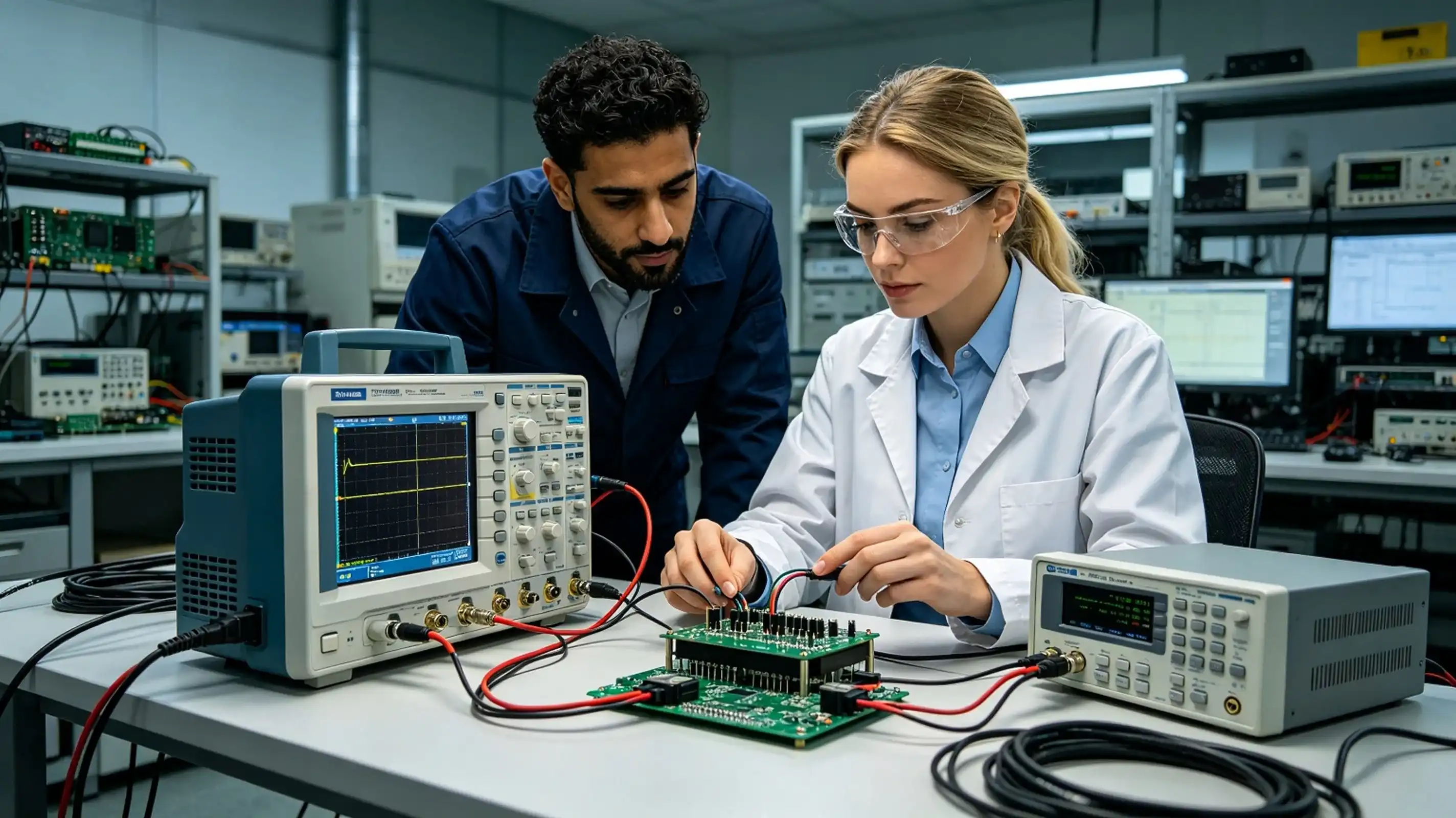
สรุป
Circuit theory and finished, testable products are connected by electronic information engineering technology. Learning starts with parts and breadboards and moves on to schematics, PCB layout, firmware, assembly, and testing. Standards like IPC-2221 and IPC-A-610 show the way. Career paths and lab needs are shaped by how electronics are used in manufacturing, the Internet of Things (IoT), cars, and medical devices. Clear goals are the first step in good planning. To avoid problems, equipment should be matched to courses, supplier support and documentation should be checked, and pilots and acceptance criteria should be used. With cloud access, hands-on labs, and internships, project-based training keeps theory connected to practice. From this, we can see that building skills throughout the whole product lifecycle makes people ready for a lot of different technical jobs.
คำถามที่พบบ่อย
1. Can I enroll in the course with no prior background?
Yes. Beginners can join because the program starts with basic circuit knowledge and gives them guided hands-on practice. Students can gradually improve their professional skills with the help of online learning materials and a virtual lab.
2. What career paths are available after the course?
Smart electronic product designers, development engineers, PCB design engineers, assembly and commissioning engineers, testing and certification engineers, maintenance technicians, system integration engineers, IoT device engineers, or embedded development engineers are all jobs that graduates can learn how to do.
3. How is practical training structured?
During the whole program, training takes place. It has lab sessions, internships, and capstone projects both on and off campus. Labs include work with electricity and electronics, designing PCBs, putting together electronics, making smart products, and integrating application systems. Internships at companies that make electronic information last at least six months.
4. Do learners need to install software?
No, the B/S platform works in a web browser, so students can practice online without having to install anything on their own computers.
Request Electronic Information Engineering Technology Courses from E.C.R Academy
Are you looking for a company that sells electronic information engineering technology and has project-based classes and a browser-based lab? You and your team can talk to E.C.R. Academy about the course's goals, class sizes, and lab needs. Send us an email at ecr2008@enteredu.com with your goals, and we'll get back to you with good options. Number of learners and roles you want them to play. For more information, go to enteru.com.
อ้างอิง
1. IPC-2221B Generic Standard on Printed Board Design, 2012
2. IPC-A-610 Acceptability of Electronic Assemblies, 2020
3. Occupational Outlook Handbook: Electrical and Electronics Engineers, U.S. Bureau of Labor Statistics, 2024
4. The Art of Electronics, Horowitz and Hill, 2015
5. Printed Circuits Handbook, Coombs and Holden, 2016
6. Making Embedded Systems, Elecia White, 2024