Digital Design & Manufacturing Technology: CAD/CAM Training Guide
Digital design & manufacturing technology connects 3D design, process simulation, CAM programming, and shop-floor control in one workflow. CAD/CAM training teaches people to model a part, test how to make it, write CNC programs, run a production line, and check quality. In this guide, I compare digital and traditional methods, show how training turns into daily practice, and share tips for buying training services. I also describe the full-process course from ECR-akatemia, built for schools, manufacturers, associations, and regional training centers. If you are planning a program or upgrading a team, start here.
Digitaalisen suunnittelun ja valmistusteknologian ymmärtäminen
Kuinka CAD ja CAM toimivat yhdessä
Computer-aided design (CAD) lets an expert make 3D models, images, and parts. "Computer-aided manufacturing," or CAM, turns that model into CNC code and cut routes. If the part geometry is already drawn when it's on the screen and then moved to the spindle, it doesn't need to be drawn again. Different apps can share product data with each other if they have the same file type, such as STEP under the ISO 10303 standard. With CAD, you can say "what are we making?" and with CAM, you can say "how will the machine make it?" This question and the checks that go with it, such as simulations, accident reviews, and inspections, should both be taught.
Digital Twins and Simulation Tools
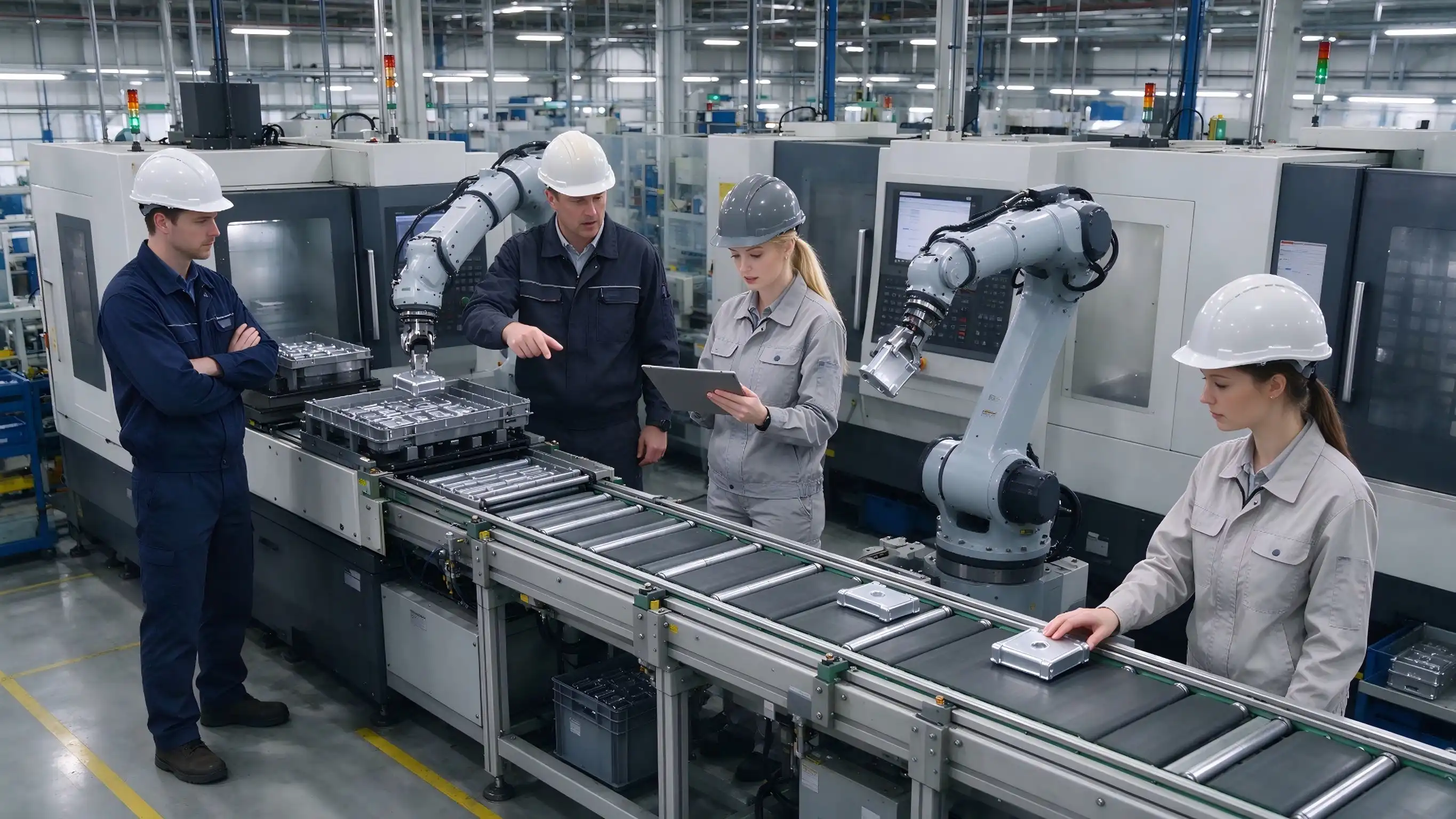
A digital twin is a computer copy of a product, machine, or production line that looks just like the real thing. A chapter written by Michael Grieves and John Vickers in 2017 that got a lot of attention talked about the idea. Since then, people have looked into how businesses use it. When it comes to training and modeling, the idea is the same. Before touching a machine, trainees test cuts, lines, and movements on a screen. Because a bad setup in a virtual cell doesn't lose any stock, that order lowers risk and waste. A good habit is to check first and cut second. Things like process modeling and virtual commissioning are often taught in lessons on digital production.
AI, Cloud, and IoT Trends
Three trends have changed CAD/CAM tools over the past few years. Even though AI gives design ideas and toolpath choices, a trained person still looks over the final product. In the cloud, teams can share models and keep track of the different versions that are used on different sites. IoT monitors on tools tell software about what's going on in the shop, so planners can see what's being made. Some skills that don't change much are being able to read a picture, make a good model, plan a safe process, and check the quality. That means people who want to buy software should first learn how it works and then how to use its menus. Digital design & manufacturing technology depends on these core principles.
Comparing Digital Design & Manufacturing with Traditional Methods
Lead Time, Customization, and Growth
When things were done the old way, you would draw, make a sample, try it, fix it, and then do it again. Making each loop costs cash and time. Digital design & manufacturing technology workflows move a lot of these loops to the screen. The toolpath can be quickly updated and the simulation can be run again if the team wants to change a part of the model. With a digital template, you can make changes without having to start from scratch. This makes it easier to handle small orders and custom orders. A company can also add new items with less work. It's still not possible to work in a shop without computer tools. A skilled person checks to see if a result from a simulation makes sense on a real computer.
Cloud-Based vs. On-Premise Platforms
Most of the time, cloud CAD/CAM is a paid service that runs on computers far away. This makes it easy for teams that work in different places to share information and make changes. When you run on-premise software on your own computers and servers, you have more control over where things live. Mold makers and other shops that need to keep ideas secret like having that much power. A factory may not think the same way a school does about license fees and labs. You should ask five things: where does the data live, who pays for changes, how many people can use the tool, what gear is needed, and how does it connect to machines and MES?
Cost, ROI, and Software Providers
The price of the ticket is not as important as making a fair comparison. To teach people, buy tools, get help, connect machines, and spend time while people learn costs a lot of money. Then look at the return: fewer rounds of changes, less waste, less time spent programming, and faster onboarding. CAD/CAM suites like Siemens NX, Mastercam, Autodesk Fusion, and SOLIDWORKS are easy to remember. Pick the one that works best with your goods and machines. Trainees are often forgotten when people make budgets. It doesn't help engineers much if they only use a small part of a strong license. People don't have to learn as much when they move from one standard school to another if they take lessons that teach the same ideas.
Implementing CAD/CAM Solutions: From Training to Execution
The Skills Behind a Working CAD/CAM Team
The E.C.R. Academy course follows the real work order. Of course, computer drawing and modeling of the thing are used first. The next step is to use 3D cameras and point cloud data to do reverse modeling. In CAPP and PLM tools, the students are still working on digital process design. They are also still modeling virtual production lines. Part machining and CNC programming include programming for milling, turning, and machining centers, as well as programming for CAD/CAM files automatically for parts that are hard to make. The last parts talk about MES-based production control and digital checking using coordinate measuring tools, sensors, and machine vision. Each lesson is about keeping workers safe. This makes a worker who knows about design, models, control, quality, and machining.
Delivery Through Projects, Mentors, and Platforms
It is easy to see and do standardized project-based learning because it makes sure that every group follows the same framework of theory plus practice. Teacher and business engineers work together to teach the course, and skilled master coaches help students with their work and give them job tips. Five training platforms back up the work. In a room, there are virtual simulation computers that can be used to make digital things and play games. In a room for managing and controlling production lines, there are digital lines and a MES. Some of the machines that are in a digital manufacturing center are CNC lathes, milling machines, machining centers, additive manufacturing tools, and software that can simulate the machining process. By training first with virtual-physical equipment, students can be ready to use real equipment.
Troubleshooting Challenges and Measuring ROI
Industries that train people to make things often run into three issues: lines can't be stopped for long periods of time; trainees have trouble using what they've learned; and companies are worried about privacy. A lot of work doesn't have to be stopped for virtual practice because students work in simulations first. Projects based on real parts bridge the gap between class and the shop. Based on your own tools and processes, you can have in-plant programs made just for you. You should write down a promise to keep the plans secret before you share them. Pick a few key performance indicators (KPIs) to keep an eye on before training begins. These could be the amount of time spent writing each part, the first-pass yield, the scrap rate, the setup time, and the time it takes for new workers to reach full production. Check them out again in 90 days. Digital design & manufacturing technology training success is measured by these targets.
Procuring Digital Design & Manufacturing Services and Solutions
How to Evaluate Training Providers
Start by being fit. Does the class fit your job, the tools you use, and the way you work? Then look at the people: who teaches, and have they ever worked in business? Because you need to have hands-on time, check out the tools and apps that are available. Find out what kind of record or prize kids get and how they use it. Last but not least, look at the provider's past work. Nearly 500,000 people in China and 28 other countries have been taught and tested by E.C.R. Academy since 2010. It is known that more than 300,000 of these people have achieved skills certifications. We've also teamed up with more than 500 businesses and hired more than 3,300 experts. Digital design & manufacturing technology providers should have a strong track record.
Hinnoittelumallit ja sopimusehdot
It's possible to teach digital design & manufacturing technology in a number of different ways. Businesses from all over the world can license E.C.R. Academy's courses and platforms. They also train workers on enterprise production lines through project-based training, and they work with other businesses to make a digital manufacturing program under their own name. The model you choose should have a scope, delivery dates, instructor qualifications, equipment needs, shift scheduling, privacy, the right to make changes, and help after the start. Write it all down. If money is tight, ask about a test or a later start time. It is best to have clear rules that protect both sides so that disagreements don't happen again.
Building Skills Inside Your Own Team
When people hire new people, they often train the ones they already have. People who can show you a model, a program, and an inspection report from the same part are the best ones to hire. You've done a lot of things, but that project shows more than that. First, give internal teams a short class. Then, give them a real job to work on. They should learn from a more experienced operator. When enterprise engineers and teachers work together to teach in schools, the lessons are very similar to what is done in the shop. The U.S. Bureau of Labor Statistics' Occupational Outlook Handbook is a good place to find out how many jobs are available in machining and tooling.
Future Outlook and Strategic Advantages of Digital Manufacturing
AI and Digital Twins in Predictive Maintenance
AI and digital twins are being used more in maintenance, design checks, and lifetime records. When machine data is put into a twin, it can show patterns of wear that help teams figure out how to fix things before they break. A study that looked at how digital twins are used in business says that they can be used for creation, production, and service, but every company uses them in a different way. Data is only useful if people know how it was collected, so the lesson is helpful for them. In order to make sense of this, the training links the real line to MES scheduling, monitoring tools, and managing production data. A professional should know how to read both the data and the machine, not just the data. This expertise is a cornerstone of digital design & manufacturing technology.
Kestävä kehitys ja älykkäät tehtaat
Sustainability is now a big part of many plant plans, along with cost and quality. This course from the E.C.R. Academy teaches students how to make production cleaner, recycle resources, and make smart, responsible products. In real life, simulations help reach these goals because they let you make test cuts with a toolpath or line plan that has already been checked. This saves time and material. Some of the things that smart businesses have are flexible manufacturing systems, industrial software, and the ability to check their emails online. Students can talk about energy, scrap, and reliability as one subject instead of three when they click on these links. Workplace safety is still a part of that picture.
Matching Investment to Business Goals
Before you buy any program, write down your goal in simple terms. This could be the whole training process that a college wants, from making plans to checking them. People who make things might want to program faster and set up the line more easily. A training center in the area might want a course that many businesses in the area can use. There is a different plan and model for each goal. People who finish our course may be able to get training certificates in digital factory production line assembly, adjustment, operation, and maintenance, as well as 3D mechanical product design. You can learn more and move up in your job with these records. Pick goals that can be tracked, start with a test group, and then talk with your partners about how things went.
Yhteenveto
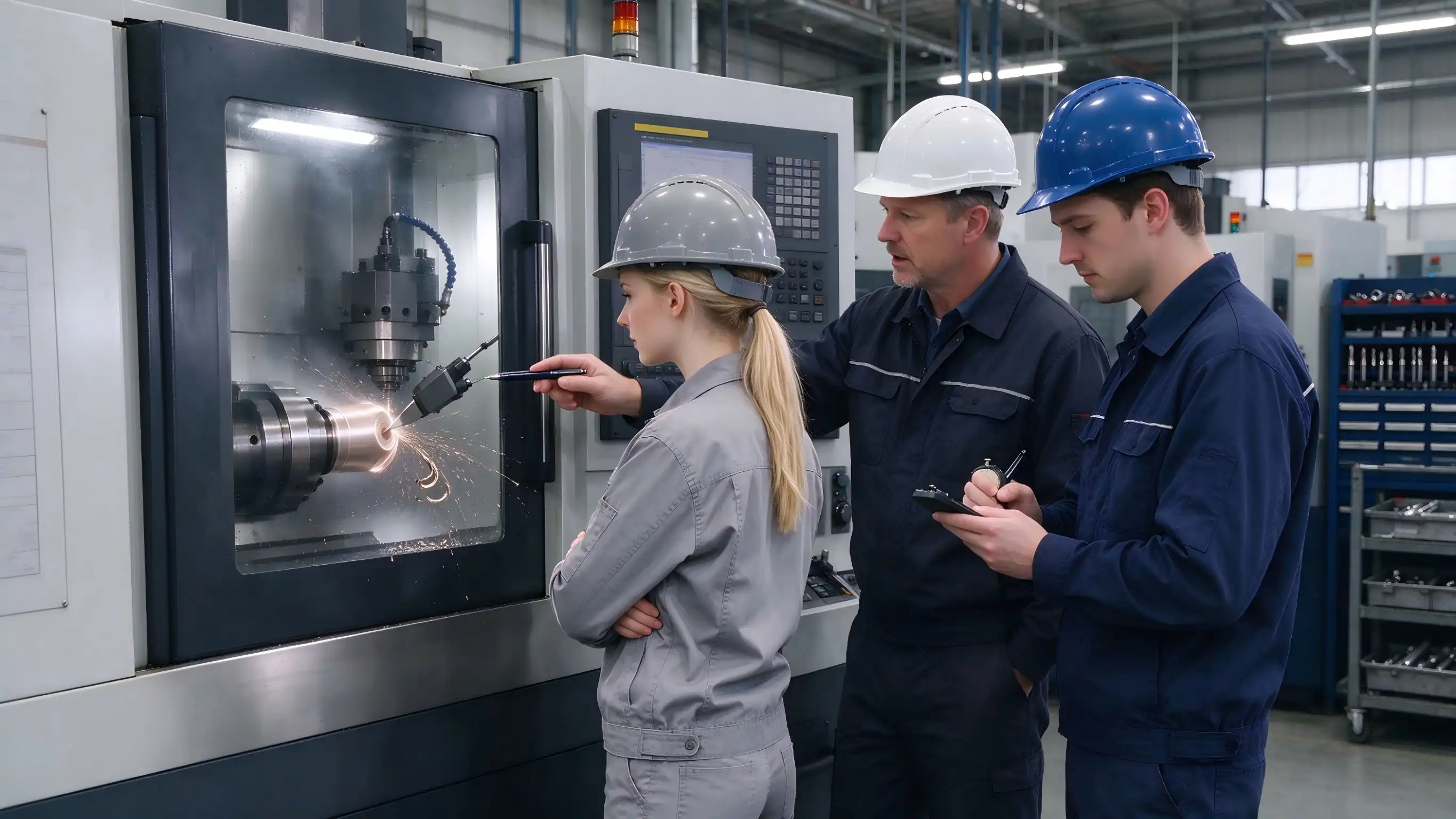
Kanssa digitaalinen suunnittelu ja valmistusteknologia, CAD modeling, simulation, CAM programming, production control, and inspection are all done in the same step. Instead of going through steps one at a time, this way lets you make your own decisions, cuts down on trial loops, and moves testing to the screen. Buyers should compare cloud and on-premise tools, add up the total cost of training and support, and keep an eye on KPIs such as the amount of time spent programming, the amount of time spent scraping, and the amount of time spent setting up. Design, simulation, CNC machining, MES control, and digital inspection can all be done with hands-on tools in good schools. Project-based learning and mixed teacher teams are also used. When there are clear contracts, goals that can be measured, and a test start, there is less risk. Over time, it will be most helpful to have people who know how to use AI, digital twins, and sustainability.
FAQ
1. What background should learners have before joining?
You should be able to read part drawings, draw simple machines, know basic metals and how to work with them, and know how to use a computer. There is help for people who aren't very strong to finish the core modules.
2. Can learners with no digital design experience study this course?
Yes. It goes from easy to hard topics with the help of pictures and real-life cases. The kids can do hands-on work, study in small groups, and get help from a teacher. Software that simulates situations and teaching tools help make the first practice safer.
3. Does the course cover green and intelligent manufacturing?
Yes. There are smart programming methods, live inspection technology, flexible manufacturing systems, production that is cleaner, and processes that use less carbon. There is also milling that uses less energy.
Contact E.C.R Academy for Digital Design & Manufacturing Technology Training
CAD/CAM program for your school, workplace, or training center in the works? Digital design & manufacturing technology is taught in full at E.C.R. Academy through five training platforms, project-based learning, and lessons taught by a teacher, an engineer, and a mentor. Since 2010, we've taught almost 500,000 people. Send an email with your goals and plan to ecr2008@enteredu.com if you need a source. We'll get back to you with training options and ways for us to work together. Visit enteru.com selvittää lisää.
Viitteet
1. Fundamentals of Modern Manufacturing: Materials, Processes, and Systems (Groover), 2020
2. Digital Twin: Mitigating Unpredictable, Undesirable Emergent Behavior in Complex Systems (Grieves and Vickers), 2017
3. Digital Twin in Industry: State-of-the-Art, IEEE Transactions on Industrial Informatics (Tao et al.), 2019
4. ISO 10303-21: Industrial Automation Systems and Integration, Product Data Representation and Exchange, 2016
5. Occupational Outlook Handbook, U.S. Bureau of Labor Statistics, 2024
6. Additive Manufacturing Technologies (Gibson, Rosen, and Stucker), 2021