How Virtual Reality (VR) Product Design & Development Supports Industry Growth
Virtual reality (VR) product design & development is reshaping how industries train workers, prototype products, and deliver experiences. According to Grand View Research, the global VR market was valued at $59.96 billion in 2022 and is projected to grow at a compound annual growth rate of 27.5% through 2030. Across sectors such as healthcare, manufacturing, education, and cultural tourism, organizations that build structured VR development capabilities are gaining measurable advantages in speed, cost reduction, and talent readiness. Understanding this field is the first step toward building a program that produces results.
Understanding VR Product Design & Development
What the Field Actually Covers
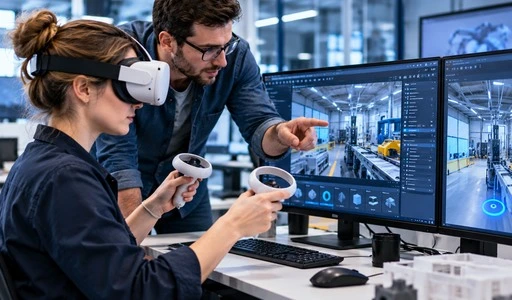
VR creation is not a single field of study. It brings together interaction design in 3D, software engineering, user experience planning, and software engineering into a single production process. A finished VR product usually goes through analyzing user needs, building scenes, programming interactions, and deploying in a browser or on a device. At each stage, different technical skills are needed, and gaps at any stage have a direct effect on the quality of the product and the time it takes to deliver it.
The Core 3I Framework: Interaction, Immersion, Imagination
There are three main ideas that make interactive product creation work well. When people interact with virtual items and platforms, they move their bodies to affect them. Immersion is a measure of how real the world feels in terms of space. Imagination limits the kinds of situations that can be imagined that aren't limited by reality. When learning is based on these three principles, programs and platforms make graduates and teams that can work in different industries without having to learn the basics all over again for each project.
From Concept to Browser-Based Deployment
A VR app that is ready for production goes through preparing scene assets, setting up lighting and rendering, designing the user interface and interactions, fixing bugs in the logic, and finally publishing. This whole pipeline can run in a web browser on modern platforms based on B/S design. This gets rid of the need for installation and makes lab control easier. This architectural choice is important for companies that hire new workers quickly and for schools that manage labs with multiple seats.
Best Practices & Tools for Effective VR Scene and Interaction Design
Design Around the User First
Most VR projects fail because they are seen as 3D modeling exercises instead of problems with how people interact with the VR. Motion-to-photon latency longer than 20 milliseconds can be painful for the vestibular system, and interaction flows that aren't planned well break immersion right away. Before working on any assets, it's best to map out user journeys, make sure that space layouts work with real ergonomic constraints, and test on a range of common hardware configurations before publishing.
Leading Development Engines and Platforms
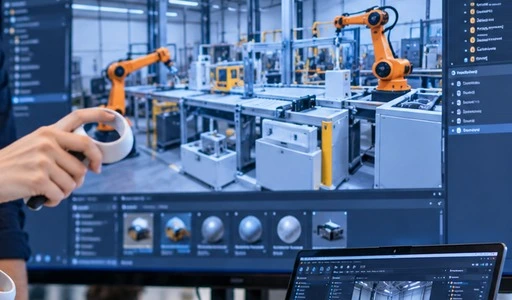
Unity and Unreal Engine are still the usual ways to make high-fidelity VR material for virtual reality (VR) product design & development, and each has its own strengths. Unity is good for education, training simulations, and fast development. Unreal is better for photorealistic visualization of buildings and products. Third group is made up of systems that work with WebXR: browser-native 3D creation using HTML5 and WebGL. In this group is VeryEngine, the tool used in ECR Academy's VR program. It lets you edit scenes in real time, manage 3D assets lightly, and keep local and server resources in sync all through a browser—no client installation needed.
Iteration Speed and Testing Protocols
Rapid iteration tells the difference between VR products that work and prototypes that have been thrown away. Instead of waiting until everything is put together, development teams should do preview-test-revise cycles within each module. The real-time preview feature in VeryEngine helps this process by letting engineers and students see the rendering results right after changing. Frame stability, trigger reaction accuracy, UI reading at headset resolution, and loading performance across network conditions are all things that should be tested in a structured way.
Key Industry Growth Drivers Enabled by VR Product Design
Training Simulation Across High-Stakes Sectors
Medical facilities now have surgery training rooms with sub-millimeter tracking that let doctors practice procedures without putting patients at risk. Defense and aerospace companies practice flight and emergency situations in virtual worlds that accurately reflect changes in the weather and broken equipment. Before making the real thing, industrial manufacturers hold design review sessions inside virtual prototypes. This way, ergonomic flaws in CAD models can be found for a lot less money than making physical mock-ups.
Here are three areas where organized, intensive development training has been shown to pay off:
- Healthcare: Surgical simulation programs reduce procedural errors during early clinical practice. Studies published in the Journal of Surgical Education show VR-trained residents achieve competency benchmarks 29% faster than those trained through observation alone.
- Cultural tourism: Immersive scenic area experiences increase secondary visitor spending. 5A-level scenic sites using VR exhibit spaces report higher dwell times and repeat visit rates compared to static digital displays.
- Education and corporate training: Companies that replace part of their onboarding with structured VR modules cut new-hire time-to-productivity by weeks, not days.
These real-world results show that the supposed return on investment in developing VR talent is not just a theory. Companies and schools that turn out skilled graduates and engineers get real project income and client retention benefits.
Addressing Hardware Constraints and Scalability
Hardware development is still a real problem. Within two years, Meta Quest 3, PICO 4, and Apple Vision Pro all added new ways to interact with games. The real answer is not to teach processes that are specific to a device, but to teach development logic that works on any platform. Because the delivery layer stays in the browser and isn't tied to a specific headset SDK, B/S architecture and WebXR-aligned development standards make sure that content made today will still be accessible as hardware changes.
How to Select the Right VR Product Design & Development Partner
What Qualification Criteria Actually Matter
When looking at a VR training or development program provider, there are three things that always set trusted partners apart from general technology providers. First, does the curriculum match up with current delivery standards in the industry, not just academic theory? Second, do the professors have real-life experience as engineers who have sent VR projects to real clients? Third, does the platform follow modern building standards? For example, does the B/S deployment work with cloud infrastructure and multiple terminals?
In-House Teams vs. Structured Training Programs
It usually takes 12 to 18 months to hire people and train them so that they can work as part of an in-house VR team. That time frame can be cut down by a lot with a structured training program in virtual reality (VR) product design & development that goes over the whole workflow, from building the scene to deploying it on the web. The VR Product Design & Development course at ECR Academy is taught by enterprise engineers and academic instructors who follow international technical skill standards. It bridges the gap between knowing how to use Unity at school level and being able to deliver projects on time.
Initiating a Partnership the Right Way
Procurement pros should ask for a curriculum map that shows how each lesson fits with each job role, as well as sample project outputs from earlier groups. They should also make sure that the platform used for training is the same one that their teams will use on real client projects. You can talk to someone about the program at ecr2008@enteredu.com, and you can find out all about it at enteredu.com.
Future Trends in VR Product Design & Industry Impact
How Will Browser-Based VR Development Make Immersive Technology More Accessible?
Browser-based development is making the design & development of VR products available to educational institutions, companies, and training organisations. B/S-based platforms enable learners to develop, examine and test interactive 3D experiences via a web browser without the need for a client installation. This method makes it easier to access development tools and allows cooperation across multiple learning and working contexts. As VR is more and more used in digital education, virtual displays, and industrial training, practical development skills will be more important. At ECR Academy, students learn how to turn immersive ideas into useable digital products via the use of practical projects and browser-based technologies.
Why Will Industry Collaboration Become Essential to VR Product Innovation?
The future of VR product design & development will rely on tighter working relationships between education providers, technological businesses and industry professionals. With the increasing specialisation of application situations, developers are unable to rely just on technical expertise, but need to comprehend user needs, interaction logic, and actual project restrictions. Bringing academics and industry engineers together, they can assist the learners make the dots between design ideas and real-world development procedures. Learners may practise the construction of virtual sceneries, integration of multimedia information, development of interactive functionalities and optimisation of user experiences with project-based instruction. This approach is supported by ECR Academy via its network of corporate partners and technical specialists, providing learners with the opportunity to build skills that mirror genuine digital industry demands.
How Can Project-Based VR Training Prepare Talent for Emerging Digital Industries?
With the growth of immersive experiences in education, cultural tourism, digital exhibits, and simulation-based training, the need for professionals who can design and implement working VR apps is anticipated to rise. Employers are looking for somebody that can do more than graphic design but also 3D asset prep, scene building, interface planning, interaction development, testing and publishing. Project-based learning provides students with the opportunity to work on these activities as integrated steps of product creation, not as separate technical exercises. ECR Academy collaborates with educational institutions and corporate partners to provide more industry-relevant training routes via the combination of theoretical teaching with practical assignments and globally recognised technical skills standards. This technique may enhance worker preparedness and fuel the ongoing evolution of immersive digital experiences.
Järeldus
Virtual reality (VR) product design & development is having real effects on business in areas like teaching, product design, and getting people involved. The industries that have put in people who know about the whole production process, not just the headset gear, are the ones that are adopting it the fastest. Companies trying to cut down on the time it takes to train new employees and groups that want to own their own VR content all need the same thing: people who can create, build, test, and share VR products from start to finish. That lack of skills is exactly what organized, project-based VR schooling fills.
KKK
1. Can someone with no prior coding background complete this course?
The course starts with basic VR product functions and then moves on to building scenes, making interactions, and finally releasing the end product. VeryEngine's visual editing interface and natural human-computer interaction design make it easier for people from both art and engineering backgrounds to learn how to use it.
2. How long does it typically take to reach job-ready capability?
The length of the program depends on how the students are organized into cohorts, but the curriculum is set up so that students can finish a full VR product project cycle during the course, from analyzing requirements to posting in a browser.
3. Milliseid rolle saavad lõpetajad täita?
Graduates are ready for jobs in the culture and tourist industries as a VR Product Designer, Interaction Designer, VR Development Engineer, 3D Scene Modeler, VR Application Architect, and Digital Exhibition Designer.
Start Building VR Talent with E.C.R Academy
Since 2010, E.C.R. Academy has helped almost 500,000 students in 28 countries. By enrolling in our virtual reality (VR) product design & development program, businesses and institutions can quickly get work-ready products that meet international technical standards and are built on a browser-native platform that works with your current infrastructure. To get a program review or supplier quote right away, email our team at ecr2008@enteredu.com või minge enteru.com.
Tehtud tööd
1. Grand View Research. Virtual Reality Market Size, Share & Trends Analysis Report. 2023.
2. Seymour, N. E., et al. "Virtual Reality Training Improves Operating Room Performance." Annals of Surgery, 2002.
3. Radianti, J., et al. "A Systematic Review of Immersive Virtual Reality Applications for Higher Education." Computers & Education, 2020.
4. PwC. Seeing Is Believing: How VR and AR Will Transform Business and the Economy. 2019.
5. Journal of Surgical Education. "Simulation-Based Training and Procedural Competency Outcomes." 2021.
6. International Telecommunication Union. IMT-2020 (5G) Standards and Low-Latency Application Frameworks. 2022.

_1781601799781.webp)